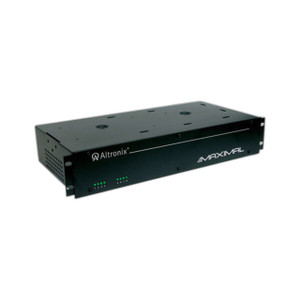
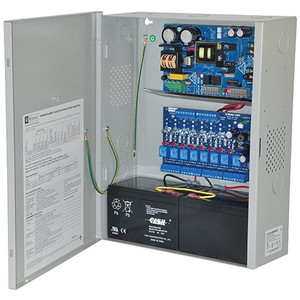
Altronix LINQ8ACMCB 8-Output Network Access Power Controller
Overview
The Altronix LINQ8ACMCB is a board-format, network-managed power distribution controller built to handle the specific demands of professional access control deployments. It delivers eight individually supervised PTC Class 2 power-limited outputs—meaning each channel can be remotely managed, monitored, and cycled without affecting the others. This matters in multi-door facilities where you need granular control over magnetic locks, electric strikes, door readers, and request-to-exit devices without the complexity of a separate relay bank or the single-point failure risk of a monolithic power supply. The board integrates into access control systems and OEM enclosures, reducing wiring complexity and enabling real-time fault detection and audit logging for compliance.
Key Features
- 8 Individually Protected PTC Class 2 Outputs — Each output is independently rated and monitored. PTC (Positive Temperature Coefficient) protection means inherent overcurrent shutdown without nuisance breaker trips, keeping your system online even during a transient fault on a single door strike or lock.
- Network Supervisory Control — Monitor each output state in real time via your access control management software. Know instantly if a door lock loses power, has failed, or is drawing abnormal current. This visibility is critical for audit trails and rapid troubleshooting in enterprise facilities.
- Board-Form Factor — Compact PCB design allows OEM integration into larger access control panels, cabinet mounting on DIN rail, or retrofit into existing enclosures. No bulky external power supply to find shelf space for.
- Distributed Power Architecture — Centralizes power control for multiple doors or zones without requiring individual power supplies at each device location. Reduces cable runs, consolidates current-limiting logic, and simplifies future upgrades when you add more doors.
- Individual Output Supervision — Real-time reporting on each channel's operational status. Know if a lock is drawing power, if a fault condition has occurred, or if an output has been manually overridden. Critical for compliance documentation and security incident investigation.
- Integration with Standard Access Control Platforms — Works with Altronix managed power infrastructure and third-party access control systems that support industry-standard protocols. Seamless pairing with door controllers, reader interfaces, and network management software you already use.
Integration & Compatibility
The LINQ8ACMCB board is designed to pair with network access control systems, door controllers, and managed power gateways. Its eight outputs accommodate fail-safe and fail-secure magnetic locks, electric strikes, request-to-exit buttons, and other Class 2 powered devices typical in modern access control. Integration requires appropriate power input (voltage and current capacity depend on your load profile), network connectivity for management and event reporting, and installation in an enclosure that meets local electrical codes.
This is not a standalone unit—it's a component for integration into a larger security infrastructure. Installers must provide the power enclosure, DIN-rail mounting hardware, terminal blocks for field wiring, and proper ventilation per code. Retrofit scenarios are common: it can replace legacy relay banks or augment existing panels when you're expanding a facility and need additional supervised outputs without replacing the entire control system.
Typical Deployments
- Multi-door enterprise access control with centralized, supervised power distribution
- Campus security systems where per-door monitoring and remote power cycling are mandatory
- OEM integration into hybrid security appliances and custom access panels
- Retrofit upgrades to legacy access control installations requiring visibility into power faults
- Distributed security architectures where audit compliance requires real-time output state logging
Why This Approach Matters
The LINQ8ACMCB eliminates the guesswork around power faults in access control. Traditional setups use bulk power supplies with minimal per-device feedback—you don't know a lock has lost power until someone can't get through a door. Network supervision of each output changes that equation. You get alerts, audit trails, and the ability to remotely power-cycle a stuck lock without a technician visit. In enterprises where access control is part of physical security compliance, this level of visibility is not optional.
Frequently Asked Questions
Q: Can the LINQ8ACMCB be installed in an existing access control enclosure?
A: Yes. It's a board component designed for mounting in cabinets, DIN-rail enclosures, or OEM host systems. Installers provide the enclosure, power input, network connectivity, and wiring termination. It's commonly used in retrofit scenarios to add supervised outputs to legacy panels.
Q: What does PTC Class 2 protection mean in practical terms?
A: PTC devices automatically limit current when temperature rises due to overcurrent, then reset when the fault clears. For access control, this means a shorted lock or strike doesn't take down other outputs on the board. You get fault isolation without manual breaker resets.
Q: Does the LINQ8ACMCB require a separate management software license?
A: The board integrates with your existing access control management platform or network gateway. Licensing depends on the host system—consult your access control panel vendor for specific requirements.
Q: What's the maximum power budget per output?
A: Each output is Class 2 power-limited, meaning it's designed for typical lock and strike devices (usually 12 or 24 VDC at currents under 500mA per output). For exact limits, refer to your LINQ8ACMCB datasheet and coordinate with your system integrator—load capacity depends on total panel power input and output configuration.
Q: Can I mix fail-safe and fail-secure locks on the same LINQ8ACMCB board?
A: Yes. Each output operates independently, so you can assign fail-safe locks to some outputs and fail-secure locks to others. Your access control logic determines the behavior of each door; the board simply provides supervised power.
Q: Is the LINQ8ACMCB NDAA-compliant?
A: Compliance depends on the larger system and your specific procurement requirements. Consult Altronix technical documentation and your compliance team for formal certification details.
Ted PerryPerspective based on aggregated IP Security Depot and affiliated engineering team experience.
I've specified the Altronix LINQ8ACMCB in several campus access control expansions where we needed to add supervised power distribution to existing door controller infrastructure. The board's eight individually managed PTC Class 2 outputs gave us the granularity we needed without overcomplicating the panel layout or power budget. Network visibility into each output's state transformed our fault response time from hours to minutes.
Technical Highlights:
- Per-Output Fault Isolation: PTC Class 2 protection means a shorted magnetic lock on output 3 doesn't cascade to outputs 1, 2, or 4-8. You lose one door temporarily, not the entire system. In a 16-door facility, that's the difference between one access point offline and a partial building lockdown.
- Real-Time Power Monitoring: Network supervision of each output delivers instant alerts when a lock loses power, draws abnormal current, or experiences a fault condition. We paired it with our access control logging system for audit compliance—every power event is timestamped and reported.
- Retrofit Integration: The board-form factor meant we could integrate it into our existing DIN-rail cabinet without replacing the entire enclosure. Terminal blocks made field wiring straightforward; installers didn't need custom fabrication or new panel cutouts.
Deployment Considerations:
- This is a component, not a standalone unit. You must provide the enclosure, power input (voltage and current rating matched to your lock load), network connectivity to your access control management software, and proper ventilation per electrical code. Budget for integration labor, not just the board cost.
- Load per output is Class 2 power-limited—typically 12 or 24 VDC at under 500mA per output. If you're running high-current fail-secure strikes or large electromagnetic locks, verify your actual current draw against the specification. Underestimating load is a common integration mistake.
- Network supervision requires your access control platform or gateway to support the LINQ8ACMCB protocol. Older legacy systems may not—confirm compatibility with your controller manufacturer before specifying.
The LINQ8ACMCB works best in enterprise and campus facilities where you need visibility into power distribution, fault isolation across multiple doors, and audit-level reporting. If you're running a simple 2-door system with no monitoring requirements, it's overkill. But in a 50-door multi-building deployment where compliance audits demand proof that every lock was online when a security event occurred, this board delivers that visibility at a reasonable integration cost.