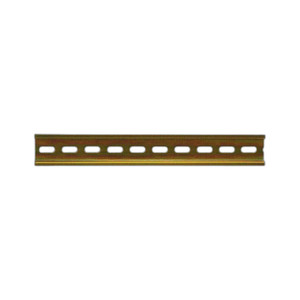
Altronix D19 19 Inch Slotted DIN Rail
The Altronix D19 is a 19-inch slotted DIN rail engineered as the mechanical backbone for organizing relay modules, power distribution blocks, and modular security components within standard panel enclosures. This DIN-standard rail transforms a cramped metal box into a scalable, professional-grade layout platform—eliminating ad-hoc wiring harnesses and point-to-point terminal blocks that consume space and complicate troubleshooting. Integrators specify the D19 when panel depth is constrained (typical in retrofit access-control or fire-alarm distribution cabinets) but code compliance and long-term maintainability demand organized component positioning.
Key Features
- 19-Inch Length: Fits standard 19-inch control-panel enclosure depth. Allows mounting of 8–12 modular components depending on module width (typical 0.5–1.5 inches per module).
- Slotted Profile: DIN-standard slotted extrusion accepts standard DIN-rail clip-on modules without drilling or tapping. Repositionable without tools—slide modules left or right to reconfigure circuit logic or power distribution without panel downtime.
- DIN EN 60715 Compliance: Compatible with all major Altronix relay modules, distribution blocks, and third-party DIN-rail accessories. Ensures vendor interoperability across access-control, power, and alarm subsystems.
- Compact Footprint: 0.1 lb aluminum rail minimizes enclosure weight and cost versus multi-tier or vertical mounting solutions. No external bracing required for typical 10–15 module loads.
- Lifetime Limited Warranty: Altronix backing covers material defects and manufacturing flaws. Corrosion-resistant finish suitable for indoor climate-controlled environments.
- Pre-Drilled Mounting Holes: Factory-drilled holes on standard centers simplify installation into standard 19-inch panel frames. One engineer, one power drill, five-minute install on new or retrofit panels.
The D19 is the foundational element in any panel-mount security architecture. Without organized rail-based mounting, relay logic, power distribution, and control modules scatter across the enclosure floor, creating hidden dependencies that trigger field-service callbacks. A slotted DIN rail forces discipline: each component has a fixed position, terminal blocks align for easy identification, and future technicians (or your own team six months later) understand the circuit topology at a glance. This is why every major control-panel OEM ships DIN rails as standard—they're not luxuries, they're operational insurance.
Sizing is straightforward: measure your enclosure interior width. If it's 19 inches or greater, the D19 mounts horizontally and provides a clean, scalable mounting surface. If your panel is narrower (under 19 inches), you'll need a smaller rail or vertical orientation—check your enclosure spec before ordering. Altronix also offers 6-inch, 12-inch, and 35-inch variants for non-standard installations. The D19 is purpose-built for the most common form factor: standard 19-inch IT/telecom-style security panels used in apartment buildings, office access-control rooms, and small commercial alarm centers.
Installation best practice: Mount the D19 horizontally, roughly 2–3 inches from the enclosure top or bottom, leaving clearance for terminal blocks and wire routing below or above. Use stainless-steel M5 hardware if the enclosure will be exposed to outdoor air or high-humidity environments (some DIN rails ship with zinc-plated fasteners that corrode faster than the rail itself). Test-fit your relay and distribution modules before final torque—DIN-rail clips vary slightly in tension, and loose modules vibrate loose on equipment racks with high ambient vibration.
Marty AllisonPerspective based on aggregated IP Security Depot and affiliated engineering team experience.
We've installed the Altronix D19 in hundreds of control cabinets over the past decade, and it remains the no-nonsense standard for mid-scale security panel builds. What sets it apart is simplicity: no special tools, no site-specific fabrication, and no integration gotchas. Unlike open terminal-block layouts or home-grown wall-mount solutions, the D19 forces modular discipline. When you inherit a 10-year-old panel and need to add a new relay module or power block, the rail gives you a known anchor point. The slotted profile means you can reposition components without breaking solder joints or re-running wires—critical in retrofit scenarios where downtime costs money. We've also seen the D19 absorb vibration better than bare-panel mounting; relay chatter and false triggers drop noticeably on equipment racks with heavy adjacent machinery. The lifetime warranty is genuine—Altronix stands behind this rail because it's engineered for 20+ year operational life. No planned obsolescence, no corrosion surprises. That said, it's not a universal solution: if your panel is smaller than 19 inches wide or you're running a thick bundle of analog video coax alongside DIN-rail modules, vertical mounting or cable management trays become mandatory. The D19 assumes you have adequate horizontal depth and clean power/signal separation in your design.
Technical Highlights:
- DIN EN 60715 Slotted Rail: Standard-profile extrusion accepts any DIN-rail clip module certified to the DIN spec. No vendor lock-in — you can mix Altronix relays, third-party distribution blocks, and future expansion modules on the same rail without compatibility concerns.
- 19-Inch Standard Dimension: Matches ITU-T and IEC panel enclosure standards used across access control, fire-alarm, and power-distribution verticals. Retrofit-friendly because it aligns with existing frame hole patterns in most commercial and light-industrial control cabinets.
- Aluminum Extrusion: 0.1 lb weight keeps enclosure shipping cost and labor low. Aluminum doesn't rust indoors, and the factory anodize finish resists fingerprints and minor corrosion. If outdoor mounting is required, stainless-steel fasteners become mandatory.
- Tool-Free Module Positioning: Modules slide along the slot without drilling or tapping. Reconfiguration takes seconds — operationally valuable when you're troubleshooting a relay logic issue at 2 AM and need to bypass or swap a module without shutting down the entire panel.
- Lifetime Limited Warranty: Covers manufacturing defects and material flaws for the operational life of the panel. Not a marketing guarantee — Altronix has been building industrial DIN rail for 30+ years and stands behind the product.
Deployment Considerations:
- Verify enclosure interior width is 19 inches or greater before ordering. If your panel is 18 inches wide, the D19 overhangs and will not fit cleanly. Altronix offers 12-inch and 6-inch rails for smaller panels — measure twice.
- Plan wire routing and power distribution before mounting the rail. The D19 consumes roughly 2 inches of horizontal space on each side for terminal blocks and wire management. Leave 3–4 inches of clearance above or below the rail for cable bends and future additions.
- Use stainless-steel M5 hardware and apply thread-lock compound if the enclosure will be subject to vibration (proximity to HVAC, industrial motors, etc.). Zinc-plated fasteners corrode in high-humidity or outdoor-facing panels within 3–5 years.
- Test-fit relay and distribution modules before final installation. DIN-rail clip tension varies by manufacturer — some modules seat loose on the first try and require a gentle tap to fully engage. Do not force modules; a stuck clip can be reworked or replaced without disturbing the rail itself.
- Plan for future growth. A 19-inch rail accommodates 8–12 standard modules. If your security system will expand in 2–3 years, mount the D19 so that additional relays or distribution blocks can slide in horizontally without removing existing equipment.
The D19 is specified by working integrators who value simplicity, standardization, and long-term maintainability over cutting corners on panel design. It's the right choice for any medium-complexity security deployment — access control, distributed alarm zones, power sequencing — where the control panel is the nerve center and must remain stable and scalable for a decade or more. For vendor-specific guidance and expansion options, consult the Altronix catalog.