Aiphone JPS-4AEDF 7-Inch Touchscreen Flush Video Intercom Set
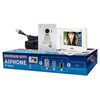
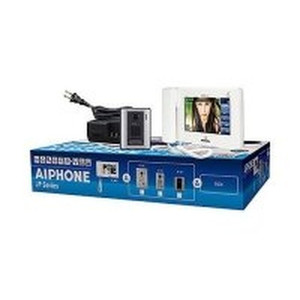
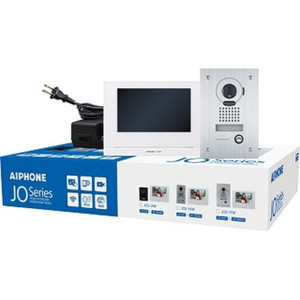
The Aiphone JPS-4AEDF is a self-contained video intercom solution engineered for multi-unit residential and small commercial buildings where entry control and visitor verification matter. The boxed set ships complete: 7-inch touchscreen master station (JP-4MED), vandal-resistant stainless steel flush-mount door station (JP-DVF), and a 24V UL-listed DC power supply (PS-2420UL). This is purpose-built hardware, not a retrofit of consumer components — the system enforces two-way communication, door release management, and local recording without dependency on cloud services or external VMS platforms.
Overview & System Architecture
The JPS-4AEDF master station accepts up to four door stations and eight inside sub-stations, each with independent door release control. This topology is intentional: it lets you deploy the door station at the building perimeter while answering stations remain at desk, apartment, or security office locations. Communication runs over two-conductor cable (Aiphone #871802 recommended) with proven range — 165 feet at 22AWG, 330 feet at 18AWG — long enough for most mid-rise and garden apartment layouts without signal repeaters. The stainless steel JP-DVF door station is flush-mounted and vandal-resistant, meaning it won't protrude as an obvious target and corrosion won't degrade the finish in salt-air or high-humidity environments.
Key Features & Specifications
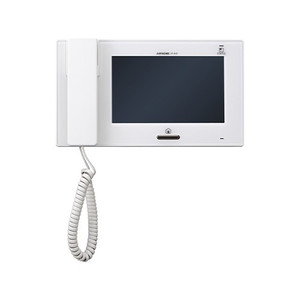
- 7-Inch Color Touchscreen Display: The master station uses an intuitive FTF (flat, flush) touchscreen for call management and system settings. You navigate call history, adjust volume, and control door releases from the same interface — no separate panels or redundant controls to train users on.
- Dual Communication Modes: Handset (traditional duplex) and hands-free with voice-activation (VOx). Auto-voice actuation means a caller speaks, the door station transmits, and the answering station responds without button-pressing — useful when you're carrying packages or have hands occupied. Voice quality is real-time two-way, not pre-recorded prompts.
- 1/4-Inch CMOS Camera with Digital PTZ: Wide viewing angle (approximately 100° horizontal × 170° vertical) captures the full approach to the door. Digital pan, tilt, and zoom functions let you adjust framing after installation without repositioning hardware — a practical advantage when door sightlines shift or tenants request better coverage of a specific area.
- Picture Memory & SD Recording: Internal storage holds 20 images; microSD card slot (via external card) expands capacity to 1,000 images. This is local snapshot archiving, not continuous video, suitable for capturing visitor faces or incident stills without the storage and bandwidth demands of 24/7 recording. microSD cards are standard, cheap, and swappable.
- PoE-Compatible 24V DC Powered Design: The PS-2420UL supplies 24V DC with a 340mA maximum draw. While the set includes a hardwired 24V supply, the PoE-ready design signals you can retrofit IP-based infrastructure later if your building adds structured cabling upgrades. No exotic power standards here — 24V is industry standard for door control systems.
- Four-Door Expandability: The base set includes one door station, but the master accommodates up to four. If you need to add a second or third entrance, acquire additional JP-DVF stations and integrate them into the same master — no new control hardware required.
- Hearing Aid T-Mode Compliant: Handset output supports telecoil compatibility (T-mode symbol indicated), meeting accessibility standards for hearing aid users — a regulatory requirement in many jurisdictions and a genuine usability feature for tenants.
- Temperature Range 32°F to 104°F (0°C to 40°C): Suitable for interior-heated or climate-controlled entryways. If your building entrance is unheated or exposed (loading dock, rooftop terrace), this specification is a hard boundary — the system will not operate reliably below freezing or above 104°F.
Integration & Compatibility
The JPS-4AEDF does not integrate with IP networks, ONVIF cameras, or standard building management systems. It is a standalone analog intercom appliance. If your building runs a video intercom system that requires IP connectivity or VMS integration, this is not the model. If you need a dedicated, hardwired entry control solution that operates independently of network infrastructure, it is well-suited.
Communication between door station and master uses mid-cap two-conductor solid non-shielded wire. Runs must comply with the distance and gauge specifications above. If your building already has structured cabling, you can re-use existing conduit, but you will still need to install new copper pairs (the existing cat5/cat6 is unsuitable for this analog system).
The PS-2420UL power supply connects directly to the master station. For installations longer than 16 feet (22AWG) from supply to master, use 18AWG wire to avoid voltage drop. The supply itself is UL-listed and suitable for indoor mounting only.
What's in the Box
- One JP-4MED 7-inch touchscreen color video intercom answering station
- One JP-DVF flush-mounted vandal-resistant stainless steel video door station
- One PS-2420UL 24V UL-listed DC power supply
Master Station Dimensions: 5.6875 inches (H) × 10.0625 inches (W) × 1.875 inches (D).
Frequently Asked Questions
Q: Can the JPS-4AEDF connect to my building's IP camera system or VMS?
A: No. The JPS-4AEDF is a standalone analog intercom system. It does not support ONVIF, IP network integration, or third-party VMS platforms. If you require integration with a networked video management system, consult Aiphone's Aiphone IP intercom line for compatible models.
Q: What happens if I need to extend the cable run beyond 330 feet?
A: The system does not support signal repeaters or extenders. 330 feet (18AWG wire) is the maximum reliable distance from door station to master station. If your building layout exceeds this, you will need to install a second independent JPS-4AEDF system with its own master station.
Q: Does the door station work outdoors in rain?
A: The JP-DVF is stainless steel and vandal-resistant, but it is not rated for direct rain exposure (no IP rating specified in the documentation). For outdoor or semi-exposed locations, verify environmental conditions match the 32°F–104°F operating range and protect the unit from standing water or heavy spray. If your entrance is fully exposed to weather, a weatherproof enclosure or canopy is required.
Q: Can I record video continuously to the microSD card?
A: No. The system stores still images (snapshots) only — up to 20 internal, 1,000 on an external microSD card. It is not designed for continuous video recording. If 24/7 video capture is required, add a separate network video recorder with dedicated IP cameras.
Q: Is the touchscreen durable if tenants touch it frequently?
A: The display is described as FTF (flat, flush) with a touchscreen interface, suitable for common area mounting. Aiphone does not specify touchscreen hardness or surface coating details in the available documentation. For high-traffic multi-unit buildings, plan for eventual screen wear; touchscreen glass replacement is a service item.
Q: What wire gauge should I use if my run is exactly 200 feet?
A: Use 18AWG minimum. The specification guarantees 165 feet at 22AWG and 330 feet at 18AWG. At 200 feet, you fall outside the 22AWG range, so step up to 18AWG to ensure signal integrity and voltage delivery.
Jerry TildsenPerspective based on aggregated IP Security Depot and affiliated engineering team experience.
I've evaluated the Aiphone JPS-4AEDF during planning phases for multi-unit residential projects, and this boxed set delivers straightforward entry control without the networking complexity that sinks smaller deployments. The key differentiator is the 7-inch touchscreen master station paired with a genuine stainless steel flush-mount door station — not a plastic façade. For a building with 50–200 units and a handful of secure entry points, this system handles the real workload: visitor verification, instant audio/video feedback, and door release authorization without cloud dependency or subscription licensing.
Technical Highlights:
- Digital PTZ on a fixed lens: The 1/4-inch CMOS camera's 100° × 170° field of view with digital pan, tilt, and zoom means you adjust framing from the master station after installation — no climbing a ladder to reposition hardware if a tenant asks for better coverage of the courtyard approach.
- Extended wiring reach: 330 feet of reliable communication at 18AWG handles most mid-rise footprints without amplifiers or repeaters. This is not a limitation for buildings up to 15–20 stories; it's a practical advantage — simple two-wire runs, minimal signal conditioning.
- Snapshot archiving, not video: 1,000 images on microSD versus 24/7 continuous recording trades storage cost and bandwidth for usability. Captures the visitor's face at call time, good enough for incident review and tenant matching — you don't need video if the intercom solves the entry problem in real-time.
- Four-door modular expansion: Buy one set, add three more JP-DVF stations if needed. Each door station remains independent; the master handles all call routing and release logic. Avoid replacing the entire control system if a secondary entrance is added later.
Deployment Considerations:
- The 32°F–104°F operating range is a hard stop for unheated outdoor mounting. If your main entrance is an unheated vestibule or rooftop loading area that experiences winter freeze, this system won't function reliably — you'll need a heated enclosure or a different model.
- No network integration means no remote answering from a phone app or off-site login. If tenants demand the ability to buzz in a visitor from their smartphone, this system does not deliver that. It is on-premise only, a significant constraint for some modern deployments.
- Wiring is analog two-conductor, not cat5/cat6. If you have surplus structured cabling in your building, you cannot reuse it — you'll install new copper pairs in the same conduit, a labor cost to plan for.
Position the JPS-4AEDF for traditional multi-unit residential buildings or small office complexes where entry happens at one to four fixed locations, physical building control is preferred over app-based access, and uptime depends on hardwired systems rather than internet connectivity. It is not a fit for distributed remote access, cloud-first operations, or buildings without climate-controlled entryways.