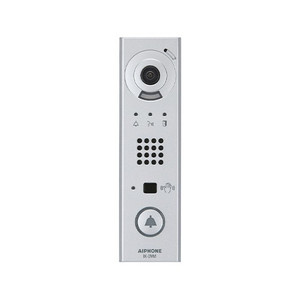
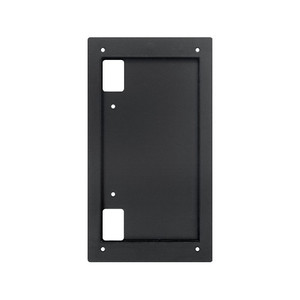
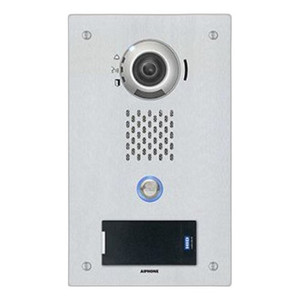
Aiphone 238425 OPT CONN IX-DVM Optical Connection Module
The Aiphone 238425 is an optical connection module designed to extend IX-DVM intercom system reach beyond standard copper cabling limitations. This accessory bridges audio and control signals over fiber optic cable, delivering two critical advantages: immunity to electromagnetic interference (EMI) in electrically noisy environments, and the ability to span distances that would degrade performance or require expensive active repeaters on copper runs.
Key Features
- Optical Fiber Connectivity: Converts IX-DVM signaling to fiber-optic protocol, enabling installations where standard twisted-pair cabling introduces hum, noise, or regulatory concerns. Particularly valuable near high-voltage switchgear, industrial motor drives, or radio transmission equipment.
- Extended System Range: Fiber eliminates distance-limited copper constraints, supporting longer building-to-building or campus-scale interconnections without active buffering or signal regeneration equipment.
- EMI Isolation: Optical coupling provides galvanic isolation between IX-DVM endpoints, preventing ground-loop noise and transient voltage coupling that can degrade voice clarity or introduce control errors.
- IX-DVM Compatibility: Integrates directly with Aiphone's IX-DVM intercom platform — the module handles protocol conversion transparently, so endpoint configuration and user experience remain unchanged.
- Modular Integration: Ships as a discrete module, allowing retrofit into existing IX-DVM deployments without wholesale equipment replacement or downtime.
Integration & Compatibility
The 238425 module pairs with IX-DVM intercom systems to enable fiber optic links between master stations, sub-stations, or remote call points. Before deployment, confirm your IX-DVM configuration (master/sub-station topology, channel count, control protocol version) matches the module's intended role. Optical fiber specifications—mode type (single or multimode), termination standard (ST, SC, LC), and cable diameter—must be specified during procurement or installation planning. The module itself handles bidirectional audio and control; you will need to source the optical cable, connectors, and patch hardware separately according to your site survey and distance requirements.
When to Choose This Module
Select the Aiphone 238425 if your IX-DVM deployment spans distances greater than 500 meters or crosses electrically noisy environments where standard copper runs introduce audible interference. It is also the correct choice when building-to-building isolation is a regulatory or operational requirement. If your installation is confined to a single floor or short campus distances (under 200 meters) and copper noise is not an issue, standard IX-DVM cabling will be simpler and more cost-effective.
Consult your systems integrator or Aiphone applications engineer to verify optical module compatibility with your specific IX-DVM firmware version and to confirm fiber specifications match your network infrastructure.
Frequently Asked Questions
Q: Does the Aiphone 238425 require a matching module at both ends of the fiber run?
A: Yes. Optical conversion requires modules at both the source and destination IX-DVM endpoints. The module is not a standalone converter; it is part of a paired optical link.
Q: What fiber specifications does the 238425 support?
A: The datasheet specifies supported fiber types and connector standards. Confirm with your system integrator during design phase — fiber mode (single or multimode) and core diameter directly affect link distance and loss budget.
Q: Can I mix the 238425 module with standard copper IX-DVM cabling in the same system?
A: Yes. The module integrates as one link type within a larger IX-DVM deployment. You may use copper runs where distance and noise permit, and fiber links where needed.
Q: What is the typical fiber link distance supported by the 238425?
A: Distance depends on fiber type, connector loss, and cable quality. Single-mode fiber supports longer runs (several kilometers) than multimode. Your integrator will calculate the link budget based on your fiber plan.
Ted PerryPerspective based on aggregated IP Security Depot and affiliated engineering team experience.
The Aiphone 238425 is a straightforward optical isolation module for IX-DVM intercom systems. It addresses a real constraint in larger deployments: copper runs over long distances or through electrically hostile environments introduce noise and impose distance limits. If you are building a campus-scale or multi-building IX-DVM system, optical conversion at each end of a long link removes those constraints and simplifies installation planning.
Technical Highlights:
- Galvanic Isolation via Fiber: Completely decouples endpoints electrically, preventing ground-loop hum and transient coupling — especially important near high-voltage distribution or RF transmission sites.
- Distance Agnosticism: Fiber eliminates the distance penalties of copper; single-mode fiber easily spans multiple kilometers without signal regeneration equipment.
- Transparent to IX-DVM Protocol: The module handles optical-to-electrical conversion internally; the IX-DVM system sees a standard link, so no firmware changes or endpoint reconfiguration are required.
Deployment Considerations:
- Always deploy in matched pairs — you need a module at both ends of every optical link. Single modules are not useful in isolation.
- Fiber procurement and termination are your responsibility; the 238425 does not include cable, connectors, or installation labor. Budget for qualified fiber techs if your integrator does not perform optical splicing in-house.
- Link distance and loss budget depend critically on fiber type and connector quality. A hasty fiber spec choice can waste time and money on repeaters or re-termination later.
Deploy the 238425 when your site survey reveals that standard copper cabling cannot bridge your IX-DVM master-to-remote distance without active buffering, or when the environment introduces unacceptable EMI. For small, single-building installations, copper is simpler and cheaper; save this module for the deployments where fiber's distance and noise immunity genuinely pay dividends.