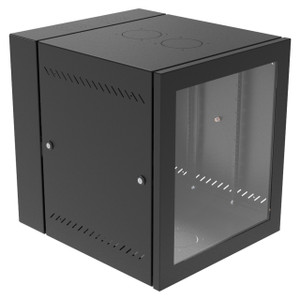
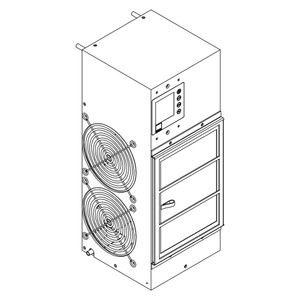
Vertiv GL4500V In-Row Rack-Mount Cooling Unit 4500 BTU
Overview
The Vertiv GL4500V is a rack-mount in-row cooling unit from the Great Lakes Ice Qube series, designed to manage heat loads in enclosed network and equipment racks without relying on room-level HVAC to do the heavy lifting. At 4,500 BTU of cooling capacity running on a standard 120V AC circuit drawing 9.5 amps, the GL4500V slots directly into a rack footprint and conditions the air closest to where heat is actually generated — inside the enclosure itself. This is the targeted approach: instead of cooling an entire server room to compensate for a hot cabinet, you address the thermal problem at the source.
The Great Lakes Ice Qube series positions itself as a rack-integrated thermal solution for telecom closets, industrial control panels, outdoor enclosures, and edge compute deployments where room cooling is either unavailable, impractical, or insufficient for localized hot spots. If you have a single rack or a small cluster generating sustained heat loads in a space without precision HVAC, in-row cooling like the GL4500V is the architecture to evaluate.
Key Features
- 4,500 BTU Cooling Capacity: 4,500 BTU is the thermal ceiling this unit can reliably remove. Before specifying the GL4500V, calculate your rack's total watt load and convert — roughly 3.41 BTU per watt. A 1,200W rack (~4,090 BTU) sits comfortably within this unit's range; a 1,500W rack (~5,115 BTU) exceeds it and needs a larger unit or supplemental cooling.
- 120V AC / 9.5 Amp Input: Operating on a standard North American 120V circuit at 9.5 amps means the GL4500V can run on a dedicated 15A branch circuit with headroom, or share a 20A circuit if load calculations support it. No special electrical infrastructure or three-phase power required — a significant advantage for retrofits and edge deployments where electrical upgrades are costly.
- Digital Temperature Controller with Alarm: The built-in digital controller lets you set a target temperature setpoint and triggers an alarm when thresholds are breached. In a telecom closet or remote edge cabinet that isn't staffed full-time, that alarm output is the difference between catching a cooling failure before equipment shuts down and discovering the problem after. Verify the alarm output type (dry contact vs. network) against your monitoring infrastructure before deploying.
- Built-In Condensate Management: Cooling units produce condensate as a byproduct of heat exchange, and unmanaged condensate inside a rack is a serious reliability hazard. The GL4500V integrates condensate management directly, eliminating the need to run external drain lines or deal with drip trays separately. This is particularly relevant for enclosed or semi-sealed installations where routing drainage is difficult.
- Rack-Mount Form Factor: Designed to mount within a standard equipment rack, the GL4500V occupies rack space like any other 19-inch component. Confirm the unit height (U-count) and depth clearance requirements against your specific enclosure before ordering — in-row cooling units typically require specific airflow baffling or blanking panels to direct conditioned air effectively.
- Ice Qube Series Lineage: Positioned within Vertiv's Great Lakes Ice Qube product line, which targets industrial and infrastructure rack cooling rather than data-center-scale precision cooling. This means the design priorities include durability and simplified operation over the advanced monitoring and hot/cold aisle integration features found in larger Vertiv thermal management platforms.
Integration and Compatibility
The GL4500V is designed for rack cooling applications within standard 19-inch equipment enclosures. It operates independently of building management systems by default, though the digital alarm output can be wired into a facility monitoring panel or a network infrastructure management device if your site supports it. Power integration is straightforward: a standard 120V outlet or dedicated branch circuit is sufficient. When deploying alongside high-density switching or compute gear, review the power and cooling planning requirements for your rack to confirm the GL4500V's BTU rating covers your actual load with appropriate margin — a 10–20% thermal buffer above calculated load is standard practice. For broader Vertiv thermal management options including larger-capacity in-row and precision cooling units, evaluate the full Great Lakes Ice Qube lineup to match cooling capacity to actual rack heat loads.
Frequently Asked Questions
Q: What is the cooling capacity of the GL4500V and how do I know if it is sufficient for my rack?
A: The GL4500V provides 4,500 BTU of cooling. To determine if this covers your rack, sum the wattage of all installed equipment and multiply by 3.41 to convert to BTU. A rack drawing 1,200W produces approximately 4,090 BTU of heat — within the GL4500V's range. A rack drawing 1,400W or more (roughly 4,775 BTU) would exceed the unit's capacity and require a higher-BTU model or supplemental cooling.
Q: What electrical circuit does the GL4500V require?
A: The GL4500V runs on standard 120V AC and draws 9.5 amps. A dedicated 15-amp branch circuit provides adequate headroom. No three-phase power or special electrical infrastructure is required, which makes it well-suited for retrofit installations and remote edge sites.
Q: How does the GL4500V handle condensate?
A: The GL4500V includes built-in condensate management, so you do not need to install external drain lines or maintain separate drip trays. This is an important consideration in enclosed rack installations where routing drainage is impractical.
Q: What does the digital temperature alarm do and how is it monitored?
A: The built-in digital temperature controller lets you configure a temperature setpoint and triggers an alarm when that threshold is exceeded. This is critical for unmanned locations such as telecom closets and edge cabinets. Confirm the alarm output type and wiring requirements against your monitoring platform before installation.
Q: Can the GL4500V be installed in a standard 19-inch equipment rack?
A: Yes — the GL4500V is designed as a rack-mount unit for standard 19-inch enclosures. Verify the specific U-height and depth clearance requirements for your enclosure, and plan airflow baffling or blanking panels to direct conditioned air effectively within the cabinet.
Q: Is the GL4500V intended for data center environments or smaller deployments?
A: The Great Lakes Ice Qube series is designed primarily for telecom closets, industrial control enclosures, edge compute cabinets, and similar environments where room-level HVAC is absent or insufficient. It is not a precision data center cooling unit and lacks the advanced monitoring integrations found in larger Vertiv infrastructure cooling platforms.
The GL4500V is the unit I reach for when someone has a single hot cabinet in a space without precision HVAC — a manufacturing floor telecom closet, a remote utility cabinet, an edge compute node in a warehouse. At 4,500 BTU on a 120V/9.5A feed, it solves a very specific problem: you cannot cool the room, so you cool the rack. That constraint defines where this unit belongs and where it does not.
Technical Highlights:
- 4,500 BTU Capacity: Covers racks up to roughly 1,300W before you lose margin — calculate actual load first, build in 15–20% buffer, and step up to a higher-BTU Ice Qube variant if your load is pushing 1,400W or above.
- Digital Temperature Controller with Alarm: The setpoint-and-alarm architecture is what makes the GL4500V viable in unstaffed locations. Without it, a compressor fault or refrigerant issue becomes a data loss event before anyone notices. Wire the alarm output into your site monitoring infrastructure on day one.
- Built-In Condensate Management: This is a detail that gets missed in spec comparisons but causes real problems in the field. Unmanaged condensate inside a sealed cabinet damages equipment quietly over months. The integrated handling eliminates that failure mode without requiring field-routed drain lines.
Deployment Considerations:
- Airflow baffling matters: in-row cooling only works if conditioned air is directed through equipment rather than recirculating inside the cabinet. Blank unused rack Us and verify your enclosure supports proper front-to-back or bottom-to-top airflow paths before the unit ships.
- The 9.5A draw is not trivial on a shared circuit — confirm branch circuit capacity and check whether your enclosure's PDU can accommodate the additional load without exceeding circuit breaker ratings.
For a telecom distribution frame, a security head-end rack, or an edge compute enclosure in an environment without dedicated HVAC — anywhere you need localized rack-level cooling on a standard 120V feed — the GL4500V is a straightforward fit. It is not the answer for high-density compute rows or environments that need BMS integration and precision cooling telemetry.