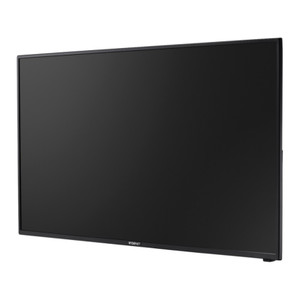
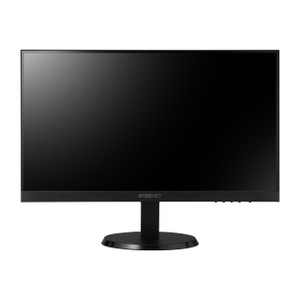
Hanwha SMT-3233 32-Inch 1080p LED Surveillance Monitor
The Hanwha SMT-3233 is a 32-inch LED display built for security control rooms and monitoring stations where you need a dedicated, always-on screen that handles both legacy analog and modern digital video sources without a separate converter or distribution amp. At 1920x1080 resolution with a 1200:1 contrast ratio, it delivers enough detail to read plates and facial features without the cost or complexity of a 4K panel — the right call for most fixed-camera surveillance environments. The SMT-3233 (often searched as SMT 3233) ships in a white housing that blends cleanly into retail or corporate environments where a black industrial panel would stand out.
Key Features
- Quad-input flexibility (HDMI, DVI, VGA, BNC): Four independent input types on a single monitor mean you can connect a modern NVR via HDMI, a legacy DVR or analog matrix via BNC, and a workstation via VGA — all without an external switch box. In a hybrid migration where analog and IP cameras coexist on the same wall, this prevents the 'which screen goes to which source' scramble that wastes response time during an incident.
- 1920x1080 (2MP) native resolution: Matches the output of the most common IP camera streams (1080p) pixel-for-pixel, so you're not upscaling a 1080p feed onto a 4K panel and losing sharpness or wasting processing overhead. For a 32-inch monitor at typical operator viewing distance (1.5–2.5m), 1080p hits the practical resolution limit of human vision — going higher doesn't improve what the operator sees.
- 1200:1 contrast ratio: Higher contrast makes it easier to distinguish movement in shadowed areas of a frame — parking structures, loading docks, stairwells — without cranking brightness to eye-fatiguing levels. On 8-hour or 24-hour monitoring shifts, a display that doesn't wash out shadow detail reduces the chance an operator misses a low-contrast event.
- 8ms response time: Fast enough to render moving subjects without motion blur or ghosting artifacts in playback and live view. PTZ camera pans and vehicle movement track cleanly without the smearing you see on consumer-grade panels with 16ms or slower response.
- Built-in 2W + 2W stereo speakers: Eliminates the need for external desktop speakers at operator workstations where audio from intercoms, access control events, or VMS alerts needs to come through. 2W per channel is adequate in a typical office or security booth; open or noisy environments (warehouses, lobbies) will still need powered external speakers.
- 16:9 aspect ratio: Standard widescreen matches the output geometry of virtually every modern IP and analog camera without pillarboxing or letterboxing. Your video management software layouts fill the screen predictably.
- 100x100mm VESA mount pattern: Compatible with the overwhelming majority of commercial monitor arms, wall plates, and ceiling mounts — no proprietary bracket required. Whether you're mounting to a control-room console arm or a wall plate in a guard station, standard hardware applies.
- 30,000-hour panel life: At 24/7 continuous operation, that's roughly 3.4 years before the backlight reaches half-brightness. For a primary monitoring display that runs continuously, factor this into your lifecycle planning — this is a working display, not a commercial-grade panel rated for 50,000+ hours.
- White housing: Matches retail interiors, healthcare facilities, and corporate environments where black or dark-grey commercial panels look out of place. Integrators deploying into modern open-plan offices or hospital nursing stations will appreciate not having to explain a jarring aesthetic mismatch to the end customer.
Integration and Compatibility
The SMT-3233 sits downstream of your NVR, DVR, or VMS workstation — it doesn't process or record video itself. The BNC input makes it directly compatible with legacy analog camera systems and analog matrix switchers, a practical advantage on retrofit projects where the recording infrastructure is being upgraded incrementally. HDMI connects to any current-generation NVR or PC output without adapters. DVI covers workstations and encoders that lack HDMI. The 16:9 1080p panel geometry aligns with Hanwha Vision IP cameras and NVR outputs natively, and the monitor will accept any HDMI or DVI source — it is not locked to Hanwha equipment. Pair it with a compatible network video recorder for a complete recording and display solution. For multi-monitor control room builds, consider a surveillance monitor selection guide to match display count and layout to camera channel density. If your deployment includes PoE cameras feeding an NVR, a PoE switch for the camera network is the natural companion purchase.
Frequently Asked Questions
Q: What video inputs does the SMT-3233 support?
A: The SMT-3233 includes four input types: HDMI, DVI, VGA, and BNC. This covers modern NVRs and computers (HDMI/DVI), older workstations (VGA), and legacy analog DVRs or matrix switchers (BNC) — all on one monitor.
Q: Can the SMT-3233 be wall-mounted?
A: Yes. The SMT-3233 has a standard 100x100mm VESA mount pattern, which is compatible with the vast majority of commercial monitor arms, wall plates, and ceiling mounts available from third-party suppliers.
Q: Does the SMT-3233 have built-in audio output?
A: Yes. It includes built-in stereo speakers rated at 2W per channel (2W x 2), suitable for operator workstations in quiet to moderately loud environments. For noisy settings, an external powered speaker is recommended.
Q: What is the native resolution of the SMT-3233?
A: The SMT-3233 has a native resolution of 1920x1080 (Full HD / 2MP) with a 16:9 aspect ratio, matching the output of the most common 1080p IP and analog HD camera systems.
Q: How long will the SMT-3233 panel last in a 24/7 surveillance environment?
A: The panel is rated for 30,000 hours of operation. Running continuously at 24 hours per day, that equates to approximately 3.4 years before the backlight reaches half its original brightness level.
Q: Is the SMT-3233 compatible with NVRs and VMS software from other manufacturers?
A: Yes. The SMT-3233 is a display-only device with standard HDMI, DVI, VGA, and BNC inputs. It works with any NVR, DVR, or VMS workstation that outputs a standard video signal — it is not restricted to Hanwha equipment.
The SMT-3233 gets specified a lot in hybrid retrofit projects — and for good reason. The BNC input is the key differentiator: you can connect a legacy analog matrix switcher or DVR directly without any external converter, which matters when a customer still has a functioning analog back-end they're not ready to replace. At 32 inches and 1920x1080, it's correctly sized for a single-operator workstation where the primary job is watching live feeds, not managing a multi-screen video wall.
Technical Highlights:
- Quad-input (HDMI/DVI/VGA/BNC): Handles the full range of source types in a single panel — critical on phased migrations where analog and IP infrastructure coexist for 1–3 years before full cutover.
- 1200:1 contrast ratio: Noticeably better shadow rendering than budget consumer panels in the same size range; low-light camera footage in parking garages or stairwells reads more clearly without brightness compensation.
- 8ms response time: Keeps PTZ pans and fast-moving subjects clean in live view — no trailing artifacts that would cause an operator to second-guess what they're seeing.
Deployment Considerations:
- The 30,000-hour panel life is the spec to watch for 24/7 monitoring stations — plan for replacement at roughly the 3-year mark in always-on environments, and factor that into lifecycle cost when comparing against panels rated at 50,000 hours.
- The 2W x 2W speakers are fine for a quiet security booth or back-office workstation; don't spec this as the audio output for a lobby kiosk or warehouse monitoring post — you'll need powered external speakers in those environments.
The SMT-3233 fits best in retail security offices, healthcare nursing stations, and mid-size commercial control rooms where a hybrid analog-plus-IP source mix is the current reality and a clean white form factor matters to the end customer. It's not a 24/7 broadcast-grade panel, but for a working surveillance monitor at a single-operator station, it covers the bases without over-engineering the display layer.