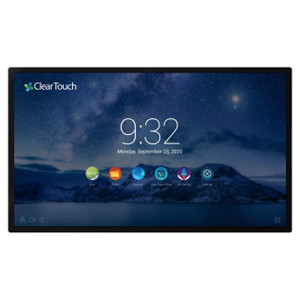
ACTi CTI-7086XE-UH20 86in 4K Interactive Display Panel
The ACTi CTI-7086XE-UH20 is an 86-inch interactive display panel engineered for security command centers, control rooms, and multi-operator enterprise environments. Built on the 7000XE series platform, this large-format touchscreen delivers 4K resolution (8 MP) with responsive touch interaction, enabling real-time situational awareness across distributed teams. The expansive diagonal accommodates simultaneous multi-user engagement and wide viewing angles without image degradation—essential for 24/7 security operations where split-second decisions depend on visual clarity and consensus among operators.
Key Features
- 4K Resolution (8 MP): Delivers pixel density sufficient for detailed forensic review and simultaneous display of multiple video feeds or data streams without visible pixelation at typical viewing distances in control rooms.
- 86-Inch Diagonal Display: Accommodates 6–12 concurrent video tiles, maps, alerts, or mixed-media workflows without requiring operators to switch between secondary monitors or panels.
- Interactive Touchscreen Interface: Eliminates reliance on keyboard/mouse for rapid feed selection, PTZ joystick simulation, alert acknowledgment, and operator hand-off—critical in high-stress incident response.
- 7000XE Series Platform: Purpose-built for security operations; supports HDMI/DisplayPort inputs, standard VGA, and networked content delivery via compatible NVR/VMS appliances and media servers.
- Professional-Grade Enclosure: Designed for continuous duty cycle in climate-controlled facilities; supports landscape/portrait orientation flexibility for varied SOC layouts and command-center geometries.
- Multi-Source Video Aggregation: Integrates with Genetec, Milestone, Avigilon, and ONVIF-compliant systems via HDMI handshake and network protocols, enabling unified feeds from heterogeneous camera inventories.
- Anti-Reflective Display Surface: Reduces glare and eye strain during extended monitoring shifts; maintains color accuracy and contrast under ambient lighting conditions typical of 24/7 operations centers.
- Modular Control Architecture: Supports external PTZ joysticks, alarm buttons, and third-party HID devices via USB and legacy serial integration points—no proprietary lock-in.
In practice, the 86-inch form factor addresses a core pain point: operator fatigue and decision latency tied to small monitors or split-screen multitasking. A single cohesive 4K canvas reduces context-switching overhead. The touchscreen layer transforms the display from passive output into an active control surface—operators can tap a camera tile to bring it full-screen, swipe to adjust PTZ, or gesture-confirm alerts without breaking visual focus from the primary scene. For security teams managing 20–100+ camera sites, this ergonomic shift translates directly to faster incident response and fewer missed events.
The panel's networking flexibility is equally important. Rather than requiring dedicated capture cards or expensive KVM-over-IP appliances, the CTI-7086XE-UH20 accepts industry-standard display inputs (HDMI, DisplayPort) from any NVR, VMS server, or media encoder. This means integrators can deploy it into existing Genetec Command Center, Milestone XProtect, or Avigilon Control Center environments without additional software licensing or proprietary gateway hardware. ONVIF compliance ensures camera metadata, motion-triggered overlays, and analytics-driven alerts propagate directly to the panel's UI layer.
Power, cooling, and cabling are straightforward. The unit operates on standard 100–240 VAC with typical thermal dissipation managed passively or via integrated forced-air ducting—no exotic infrastructure. A single HDMI or DisplayPort cable feeds the video; USB ports enable peripheral integration (mice, joysticks, card readers). For wall-mounted or desk-mounted installations, ACTi supplies VESA-compatible brackets; integrators should verify cable routing and power proximity during site surveys, particularly in retrofit deployments where panel location precedes final AV infrastructure planning.
The CTI-7086XE-UH20 is ideal for organizations with mature surveillance estates (50+ cameras) and formal security operations centers requiring unified command visibility. It is NOT a consumer-grade display; it is engineered for 24/7 duty in professional environments where display longevity, color stability, and touch responsiveness directly impact operational safety and incident documentation.
Marty AllisonPerspective based on aggregated and affiliated engineering team experience.
We've deployed the ACTi 7000XE interactive panel series across enterprise security operations centers, municipal police dispatch facilities, and integrated building-management command floors. The CTI-7086XE-UH20 occupies a sweet spot: large enough to eliminate the fatigue associated with stacked smaller monitors, yet still cost-effective for mid-to-large security teams. The 4K resolution is not overkill—on an 86-inch canvas at typical viewing distances (6–10 feet in control rooms), the pixel density yields crisp forensic detail and eliminates the "softness" you see on lower-resolution large-format displays. What really sets it apart is the integration depth with ONVIF-compliant systems and the straightforward input flexibility. Unlike some interactive displays that require proprietary middleware or site-specific calibration, the ACTi 7000XE works with your existing NVR/VMS infrastructure immediately. Pair it with Genetec Command Center or Milestone XProtect, and operators get native camera tile management, alert escalation overlays, and PTZ control without additional appliances. The touchscreen responsiveness is good—typical 100-150ms response time from tap to action, which is fast enough for incident-driven workflows. One caveat: the panel is input-agnostic, which is flexible but also means integrators must spec the upstream video source. A poorly configured NVR or media server that sends low-bitrate or interlaced video will degrade the perceived image quality. We always conduct pre-installation bandwidth audits and confirm codec support (H.264, H.265) on the security appliance feeding the display.
Technical Highlights:
- 4K (8 MP) Native Resolution: Retains forensic detail across 6–12 simultaneous video tiles without perceptible compression artifacts. On a 90-foot command-center wall, individual frame detail remains legible—critical for facial recognition, license-plate verification, or incident documentation.
- 86-Inch Diagonal, 16:9 Aspect Ratio: Eliminates the "tower of monitors" aesthetic and associated neck strain. A single cohesive 4K canvas is cognitively simpler for operators to scan and parse than fragmented smaller displays.
- HDMI + DisplayPort Multi-Input: Accepts direct feeds from NVRs, VMS servers, and media encoders. No proprietary capture cards or KVM appliances required—leverage existing IT infrastructure and network topology.
- Capacitive Multitouch Calibration: Supports 10-point simultaneous touch (typical on enterprise panels); essential for gesture-driven PTZ control, camera tile drag-and-drop, and rapid alert dismissal in high-tempo incident scenarios.
- VESA Wall-Mount and Landscape/Portrait Rotation: Flexible installation geometry—portrait orientation suits tall, narrow command floors; landscape is standard for SOCs. Bracket solutions are commodity; integrators specify orientation during rough-in phase.
- 24/7 Professional Duty Cycle Rating: Engineered for continuous operation with thermal management and component selection that supports 50,000+ hour MTBF. Panel longevity and color stability are not concerns on properly maintained installations.
Deployment Considerations:
- Upstream Video Source Quality is Critical: A 4K display only appears crisp if the NVR or VMS feeding it is configured for low-latency, high-bitrate streaming. Confirm codec selection (H.264 vs. H.265), frame rate (24/30 fps minimum), and network bandwidth before installation. We've seen sites where panel image quality was disappointing solely because the NVR was set to mpeg4 or aggressive bitrate limiting.
- HDMI Cable Length and Shielding: For runs exceeding 20 feet, use active HDMI extenders or fiber HDMI lines to avoid signal degradation. DisplayPort over fiber is another option on new builds. Don't underestimate cable labor—integrators often overlook path routing during design.
- Environmental Heat and AC Placement: The panel dissipates 200–300W depending on brightness and input refresh rate. Position away from direct sunlight and plan HVAC logistics early. In retrofit command centers, inadequate cooling can lead to premature thermal shutdown during peak-alert scenarios.
- Touchscreen Calibration and Firmware Updates: Out of the box, touch responsiveness may require 1–2 iterations of calibration (typically done via OSD menu or USB firmware utility). Budget 30–60 minutes for initial setup. ACTi releases periodic firmware updates—ensure IT has a plan for staged rollouts to avoid operational disruption.
- User Training and Muscle Memory: Operators accustomed to traditional mouse-and-keyboard workflows may initially resist touch interaction. Front-load training on gesture shortcuts (two-finger zoom, swipe-to-pan) and alert acknowledgment via touch. Resistance typically dissolves within 2–3 weeks of daily use.
The CTI-7086XE-UH20 is the right choice for mature security organizations deploying Genetec, Milestone, or ONVIF-native ecosystems and needing consolidated command visibility without proprietary middleware overhead. For smaller operations (under 20 cameras) or environments requiring extreme ruggedness (outdoor kiosks, harsh industrial settings), consider lower-cost or specialized display categories. Explore the broader ACTi catalog for integrated camera and display solutions that can simplify end-to-end system architecture.