Panduit ULC372 72V LFP Lithium Battery Card for 3kVA UPS Systems
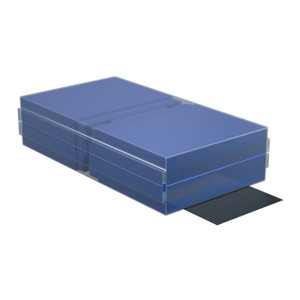
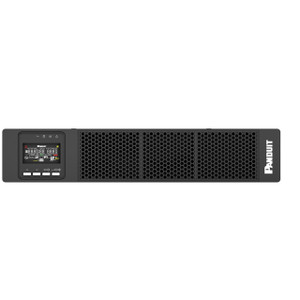
The Panduit ULC372 is a hot-swappable 72-volt lithium iron phosphate (LFP) battery card engineered for continuous-uptime operation in Panduit's 3kVA UPS product line. Designed as a direct replacement or expansion module for models U03S12L, U03N12L, and U03N11L, this battery card delivers the power-density and cycle-life advantages of lithium chemistry in a compact 3.07" × 7.58" form factor that integrates seamlessly into existing rack-mount UPS chassis. Mission-critical IT environments—datacenters, telecom closets, edge compute nodes, and industrial control systems—gain extended runtime capacity and simplified maintenance through field-replaceable battery cards that eliminate the weight, footprint, and thermal penalties associated with traditional valve-regulated lead-acid (VRLA) battery banks. The ULC372 ships as a single-unit package ready for installation by qualified technicians during scheduled maintenance windows or emergency battery-swap procedures, supporting the zero-downtime requirements of 24/7 operations where even brief power interruptions result in revenue loss, data corruption, or safety incidents.
Key Features
- 72V lithium iron phosphate (LFP) chemistry for 2,500+ cycle life vs. 300-500 cycles in comparable VRLA batteries
- Hot-swappable card design enables battery replacement without powering down connected loads or UPS chassis
- Compatible with Panduit U03S12L, U03N12L, and U03N11L 3kVA UPS systems for plug-and-play installation
- Compact 3.07" H × 7.58" W (78mm × 192mm) dimensions fit standard UPS battery bays without chassis modification
- Lithium chemistry reduces total weight by up to 70% compared to equivalent lead-acid battery capacity
- Built-in battery management system (BMS) monitors cell voltage, temperature, and state-of-charge for predictive maintenance
- Operating temperature range supports deployment in HVAC-controlled IT environments and temperature-variable edge locations
- Field-replaceable design reduces MTTR (mean time to repair) and eliminates costly service calls for battery end-of-life swaps
The shift from lead-acid to lithium iron phosphate battery chemistry represents a fundamental change in UPS system economics for IT and datacenter operators managing multi-year total cost of ownership. Traditional VRLA batteries in 3kVA UPS systems typically require replacement every 3-5 years due to capacity fade and internal resistance growth, with each replacement cycle incurring labor costs, disposal fees, and operational risk during the swap procedure. The Panduit ULC372 extends this replacement interval to 8-12 years in typical datacenter environments (20-25°C ambient, moderate depth-of-discharge cycling), cutting the lifetime number of battery replacements in half and reducing the cumulative labor and logistics burden proportionally. LFP chemistry also maintains usable capacity across a wider state-of-charge window—lithium cells deliver consistent voltage output down to 20% SOC, whereas lead-acid performance degrades sharply below 50% SOC, meaning the ULC372 provides more usable runtime from the same nominal capacity rating. For edge compute deployments in remote telecom shelters or industrial sites where HVAC reliability is inconsistent, lithium's tolerance for temperature excursions (compared to lead-acid's accelerated aging above 25°C) further extends service life and reduces the frequency of field service dispatches to difficult-access locations.
Hot-swap capability is critical in environments where UPS systems protect always-on workloads—financial transaction processors, medical imaging systems, emergency dispatch centers, manufacturing process controllers—that cannot tolerate even the brief transfer time to bypass mode during a battery replacement. The ULC372's card-based architecture allows operators to slide a depleted or end-of-life battery card out of the UPS chassis and insert a fresh card while the UPS continues to supply conditioned AC power to connected equipment from utility input or from remaining battery cards in multi-card configurations. The UPS's internal battery management system automatically detects the new card, performs a health check, and integrates it into the runtime calculation without requiring a reboot or configuration change. This zero-downtime maintenance model aligns with ITIL change-management protocols and SLA commitments that prohibit unscheduled outages, and it reduces the risk profile of battery replacement from a high-stakes, after-hours procedure to a routine daytime task that can be performed by tier-2 datacenter technicians rather than requiring expensive vendor service contracts. In multi-battery-card UPS configurations, the hot-swap design also supports incremental capacity upgrades—operators can add a second or third ULC372 card to extend runtime as workload density increases within a rack, without ripping out and replacing the entire UPS chassis.
The 3.07" × 7.58" dimensions of the ULC372 are optimized for Panduit's modular UPS architecture, where battery cards occupy standardized bays within the UPS chassis and connect via high-current, keyed connectors that prevent reverse-polarity insertion. This compact form factor is a direct result of lithium's superior energy density (150-200 Wh/kg) compared to lead-acid (30-50 Wh/kg)—the same energy storage capacity that would require a bulky external battery cabinet with VRLA chemistry now fits within the UPS's existing rack-mount footprint, reclaiming valuable rack units for revenue-generating compute equipment. The weight reduction—up to 70% lighter than equivalent lead-acid capacity—also matters for seismic-zone datacenters subject to structural loading limits, for raised-floor installations where point-load ratings constrain equipment weight, and for field installations where technicians must carry replacement batteries up stairs or into confined spaces. The single-unit package quantity and UPC 61305682553 support inventory management and asset tracking in enterprise IT environments where battery stockpiles are maintained on-site to meet rapid-replacement SLAs, and where serialized component tracking is required for warranty claims and compliance audits.
Compatibility with the Panduit U03S12L, U03N12L, and U03N11L UPS models ensures integrators and end-users are sourcing the correct battery card for their installed base—cross-platform battery cards from other manufacturers or voltage-mismatched cards will not physically fit or electrically connect, preventing the installation errors and safety hazards that can occur when generic replacement batteries are forced into service. Panduit's UPS product line targets the 3kVA single-phase market segment common in branch-office server closets, small-scale edge compute deployments, network equipment racks (core switches, routers, wireless controllers), and industrial control panels where reliable battery backup is mandatory but space and weight constraints prohibit large external battery cabinets. The ULC372's lithium chemistry and hot-swap design align with the operational requirements of these environments—locations where IT staff may be remote or part-time, where maintenance windows are narrow, and where battery replacements must be quick, safe, and error-proof. For procurement teams managing multi-site UPS fleets, stocking the ULC372 as a common spare part across all Panduit 3kVA installations simplifies logistics, reduces inventory carrying costs, and ensures that replacement batteries are always available when runtime testing or capacity monitoring indicates a card has reached end-of-life.