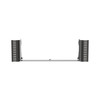
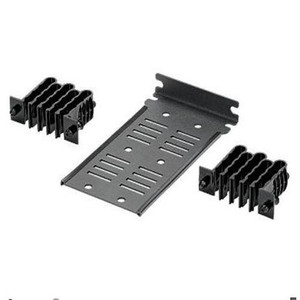
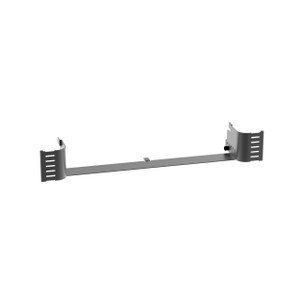
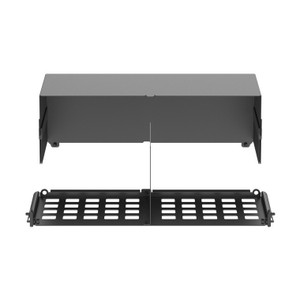
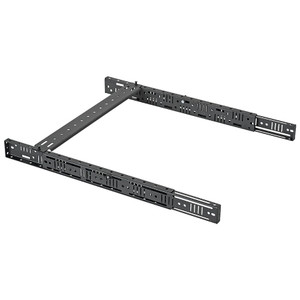
Panduit FLEX-RCM4UWH HD Flex Rear Cable Manager
High-density rack deployments generate service loops — the slack you need for equipment removal, patching flexibility, and future moves. Poor slack management blocks airflow, interferes with adjacent RU, and turns every maintenance call into a cable excavation project. The Panduit FLEX-RCM4UWH is a 4RU rear cable manager engineered for the HD Flex enclosure ecosystem, providing dedicated slack storage behind fiber cassettes and copper panels without sacrificing rack space or creating maintenance obstacles.
Key Features
- 4RU footprint (6.34" H × 22.05" W) fits standard EIA-310 19" racks
- Sub-assembly design integrates with HD Flex FLEX*U** enclosures and FLEX*UPN** panels
- White finish coordinates with Panduit HD Flex system components
- RoHS 2011/65/EC compliant for EU installations and datacenter environmental policies
- EIA-310/IEC 60297 certified mounting pattern ensures universal rack compatibility
The FLEX-RCM4UWH mounts to the rear of HD Flex enclosures and panels, creating a dedicated zone for fiber pigtails, copper patch slack, and breakout cable storage. Its 22.05" width spans the full rack width, and the 4RU height provides enough depth to handle typical 1-3 meter service loops from 24-144 fiber strands or high-density copper patching. The white powder coat matches Panduit's HD Flex enclosure family, maintaining clean visual consistency in customer-facing server rooms and IDF closets. Installation uses standard 10-32 or M6 rack screws; no proprietary hardware required.
This rear manager is the standard choice for installations pairing HD Flex MPO cassettes with breakout cables — where you need to stow 10-15 feet of fanout per cassette — or for switch deployments where front-to-rear cable patching creates long horizontal runs. It's also common in telecom COs and datacenter meet-me rooms where lease-line demarcation equipment requires service loop retention for carrier compliance. The rear-mount position keeps slack out of the equipment removal path, so pulling a switch or cassette doesn't require untangling 50 cables first.
The FLEX-RCM4UWH is part of Panduit's HD Flex architecture, which means mounting points, bend-radius guides, and depth clearances are pre-engineered for Panduit cassette shelves and panels. If you're deploying FLEX2UPN24 or FLEX4U144 cassette enclosures, this manager installs without field modifications — no drilling, no bracket fabrication, no clearance guesswork. EIA-310/IEC 60297 certification guarantees fit in compliant racks from APC, Chatsworth, Eaton, and Middle Atlantic.