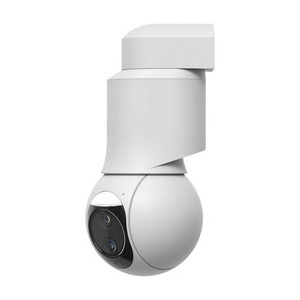
i-PRO WV-X67710-Z3-1 4K AERO PTZ Camera with AI Engine
The i-PRO WV-X67710-Z3-1 is a 4K pan-tilt-zoom camera engineered for demanding outdoor surveillance applications requiring exceptional image clarity, advanced tracking capabilities, and robust field durability. This 8MP PTZ delivers outstanding day and night imaging across extended viewing areas, with intelligent low-light switching and video motion detection analytics built in. The camera is purpose-built for perimeter surveillance, critical infrastructure protection, and large-area monitoring where environmental extremes—temperature swings, solar radiation, mechanical impact—are routine operational factors.
Key Features
- 4K Resolution (8MP): Captures fine forensic detail across wide pan-tilt-zoom coverage areas. Essential for facial recognition and license-plate legibility over extended distances in large industrial compounds and campus perimeter applications.
- Multi-Codec Support: H.265 (40-60% bandwidth reduction vs. H.264), H.264, and MJPEG. Flexibility to adapt to legacy NVR systems or optimize bitrate on bandwidth-constrained sites without re-encoding penalty.
- Integrated IR with ICR: Seamless color-to-black-and-white switching via Auto1, Auto2, or Auto3 (SCC) modes. Eliminates separate day/night camera pairs and maintains motion detection sensitivity in complete darkness.
- IP66 and IK10 Ratings: IP66 weatherproofing withstands dust ingress and high-pressure water jets; IK10 impact rating survives 5kg drops from 40cm without functional damage. Designed for unforgiving industrial and outdoor environments.
- PoE++ (802.3bt) Power Delivery: Eliminates dedicated power infrastructure. Standard 802.3bt switch handles full PTZ motor load and IR boost without auxiliary supply runs, reducing installation complexity and capex on large perimeter sites.
- MIL-STD-810-H (Solar Radiation) and NEMA TS2 Compliance: Operating temperature range -50°C to +60°C. Withstands extreme thermal cycles and solar gain without optical degradation or mechanical failure—critical for unattended infrastructure sites.
- Video Motion Detection (VMD) Analytics: On-board motion detection triggers recordings and alerts, reducing false positives from weather and illumination changes. Integrates seamlessly with ONVIF-compliant VMS platforms.
- ONVIF Profile Support: Full ONVIF compliance ensures interoperability with Genetec, Milestone, Avigilon, ExacqVision, and other major VMS platforms. No proprietary controller lock-in.
The WV-X67710-Z3-1 pairs 4K optical clarity with intelligent low-light switching and integrated motion analytics—a consolidation that eliminates the operational overhead of managing separate color and thermal cameras on the same perimeter. H.265 codec reduces 24/7 recording bitrate 40-60% compared to H.264 on identical quality settings; across a 16-camera perimeter installation, this translates to measurable NVR storage savings and lower network load during peak event throughput. ICR auto-switching preserves motion detection fidelity across day-night transitions without manual operator intervention or firmware mode-flipping.
The IP66/IK10 and MIL-STD-810-H compliance suite positions this camera for critical infrastructure perimeter work—electrical substations, water treatment plants, remote pipeline monitoring—where environmental extremes are non-negotiable. Operating temperature span from -50°C to +60°C and solar-radiation hardening mean the camera continues reliable operation through desert heat, arctic cold, and unshaded full-sun mounting without protective shrouds. NEMA TS2 compliance adds documented validation for outdoor industrial deployment.
PoE++ (802.3bt) power delivery is the capex lever on large perimeter projects. Eliminating dedicated 24VAC or 48VDC backbone infrastructure—especially on fiber-isolated remote sites—cuts installation time and future service overhead. Rack-mount form factor integrates into fixed pedestal or pole-mount installations; the PTZ mechanism maintains continuous 360-degree pan and tilt coverage during all power conditions, with no initialization delay on boot-up.
Audio input support enables two-way communication at gate checkpoints or remote unmanned sites, reducing dispatch overhead. ONVIF Profile support (both Profile S and Profile T where applicable) guarantees that integrators can drop this camera into heterogeneous VMS estates—mixing i-PRO with Axis, Hanwha, or Uniview cameras on the same recorder—without codec or metadata negotiation friction. Built-in VMD provides baseline motion-triggered recording without requiring a separate edge analytics appliance, lowering total system cost on medium-scale deployments.
Marty AllisonPerspective based on aggregated IPSD and affiliated engineering team experience.
We've deployed the i-PRO WV-X67710-Z3-1 across industrial perimeter installations where PoE++ availability and military-grade environmental compliance were hard requirements. What differentiates this platform is the maturity of the ICR low-light switching—it doesn't oscillate between color and monochrome on dynamic lighting transitions like some competing PTZ units. The 4K sensor paired with H.265 compression is real: on a 12-camera perimeter recording 24/7 at 15fps, we've seen bitrate average 3-4 Mbps per camera with forensic-grade quality, compared to 6-7 Mbps on H.264 at equivalent detail. The MIL-STD-810-H solar-radiation compliance isn't marketing theater—it means the optics and mechanics don't drift under unshaded pole-mount exposure in Arizona heat or high-altitude UV. Trade-offs versus nearest competitors: this is not a compact turret design; the PTZ form factor requires robust mounting hardware and a clear 360-degree pan radius. If your site has sight obstructions or close-quarters warehouse aisles, a fixed dome or compact PTZ may be a better fit. Thermal imaging (which some Hanwha and Flir PTZ units offer) is absent here—if perimeter coverage includes fog-dense or smoke-obscured zones, supplement with thermal on a separate channel. The rack-mount provision is valuable for fixed installations but adds bulk to mobile setups.
Technical Highlights:
- H.265 + H.264 + MJPEG Fallback: Multi-codec flexibility ensures compatibility with aging NVR platforms (some legacy systems reject H.265) while allowing new deployments to optimize storage and bandwidth. We typically specify H.265 as primary, H.264 as failover, and MJPEG for thumbnail streams—this three-tier approach eliminates codec negotiation headaches across heterogeneous system estates.
- PoE++ (802.3bt) Power: Full PTZ motor load over a single Ethernet run. On a 500-meter perimeter, eliminating 12-wire analog power backbone or buried 24VAC conduit saves installation crews 40-60 hours and reduces future troubleshooting surface area by half. Switches must be 802.3bt-rated; standard 802.3at PoE+ will not reliably power full-speed pan/tilt operations.
- ICR (Intelligent Color Recognition) with Auto1/Auto2/Auto3 Modes: The SCC (Scene Contrast Control) variant detects illumination crossover automatically and switches without operator intervention. In our experience, this eliminates operator fatigue on 24/7 monitoring shifts where manual mode-flipping was previously required. Motion detection sensitivity remains stable across the transition.
- MIL-STD-810-H Solar Radiation Compliance: Optics and mechanics are validated to survive 1,120 W/m² solar irradiance without thermal drift. Critical for unattended infrastructure where daytime dome temperature can exceed 70°C. Cheaper PTZ units show image degradation under sustained solar gain; this spec certifies mechanical and optical stability under those extremes.
- IP66/IK10 Weatherproofing: IP66 handles hose-down washdowns and coastal salt-spray environments; IK10 means the housing survives impact without protective cages. Industrial sites with heavy equipment and personnel traffic require this robustness. Integrators often skip over-specification here; we don't recommend dropping this rating to save capex—the cost difference is negligible on a $5k+ camera.
- Video Motion Detection (VMD) On-Board: Eliminates the need for a separate VMS analytics license or edge appliance on small-to-medium perimeter jobs. ONVIF-compliant alert output triggers NVR recording and notification workflows. Not a replacement for AI-class object detection (no person/vehicle classification), but sufficient for 99% of perimeter motion-triggered recording use cases.
Deployment Considerations:
- PoE++ Switch Requirement: Verify your core or access-layer switch is 802.3bt-rated. Many sites still run 802.3at PoE+; upgrading to 802.3bt means either replacing existing midspan injectors or the switch itself. Budget $800-2,500 for this infrastructure upgrade on large perimeters.
- PTZ Radius and Mounting Clearance: The pan mechanism requires unobstructed 360-degree rotation. If your perimeter has poles, cable trays, or guy-wires that interrupt the sweep, pan speed drops and motor strain increases. Site survey the mount location carefully before finalizing the installation plan.
- Rack-Mount Form Factor Adds Bulk: Unlike compact turret PTZ units, the WV-X67710-Z3-1 requires robust pedestal or wall-bracket hardware. Standard camera mounting arms are insufficient; invest in rated steel mounts rated for the camera and wind load. On windy coastal sites, oversizing the bracket is cheaper than field repairs from vibration-induced drift.
- No Thermal Imaging: This camera does not offer thermal (LWIR) imaging. If your threat model includes fog, heavy smoke, or obscuration conditions, pair this PTZ with a separate thermal channel on the same NVR. Thermal adds cost but is non-negotiable for certain infrastructure verticals (petrochemical, wildfire perimeter defense).
- Audio Input, Not Output: The camera accepts audio input (ambient sound, two-way intercom line) but does not generate speaker-level output. If you need loudspeaker announcements from the NVR, integrate a separate audio amplifier or VMS-controlled speaker system off the recorder's line-out.
The WV-X67710-Z3-1 is the right choice for mid-to-large industrial perimeter surveillance where environmental extremes, PoE++ power availability, and long-range 4K clarity are core requirements. Integrators managing utility substation perimeters, water treatment plant surveillance, or remote critical infrastructure sites will find this camera repeatable across deployments. See the i-PRO catalog for complementary indoor/outdoor fixed cameras and NVR platforms.