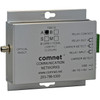
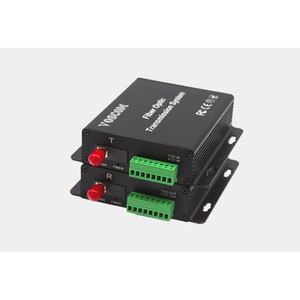
Comnet FVTXA2C1S 2-Channel Digitally Encoded Audio Transmitter
Overview
The Comnet FVTXA2C1S is a 2-channel bi-directional audio and contact closure transmitter designed for long-distance fiber-based security and communication systems. Built for surveillance and access control integration, this unit encodes stereo audio at 24-bit 96kHz resolution and transmits it across single-mode fiber up to 48 kilometers (30 miles) without signal degradation—a critical advantage when distance rules out copper-based solutions. The FVTXA2C1S handles both analog audio inputs and bi-directional contact closure control, making it a linchpin for distributed intercom, speaker systems, and access control relay logic across campus or industrial environments.
Key Features
- 24-Bit 96kHz Digitally Encoded Audio: Audio encoded at CD-quality resolution (96kHz sample rate, 24-bit depth) preserves clarity across long fiber runs. Unlike compressed formats, this encoding introduces no audible artifacts, essential when voice intelligibility drives access control decisions or emergency communication.
- 2-Channel Bi-Directional Audio: Simultaneous stereo input and output paths mean you can send intercom announcements in one direction and receive two-way conversation in the other on the same fiber pair—eliminates the need for separate send/receive fibers in many architectures.
- 1 Bi-Directional Contact Closure: Relay or switch input/output over fiber allows remote door strikes, gate controls, or alarm acknowledge signals to travel the full 48km span without needing separate copper relay lines or expensive wireless bridges.
- Single-Mode Fiber (1310/1550nm): Single-mode transmission at dual wavelengths (1310nm and 1550nm) enables long-distance runs with minimal loss. Single-mode fiber costs more per meter than multimode, but distance economics—avoiding repeater hops—favor single-mode for campuses, highway security installations, or utility sites where camera and audio runs span miles.
- 48 Kilometer Transmission Distance: At 48km (30 miles), the FVTXA2C1S eliminates intermediate fiber-to-copper conversions or repeater stations for many real-world deployments. This range is particularly valuable for distributed surveillance and intercom in airports, oil/gas facilities, or multi-site industrial complexes where standard multimode fiber (limited to ~2km) forces costly infrastructure redesign.
- 600 Ohm Audio Input Impedance and +6dBm Output Level: 600 ohm input is the professional analog audio standard, matching balanced audio consoles, mixer outputs, and intercom amplifiers without requiring impedance-conversion adapters. The +6dBm output level (a strong line-level signal) drives passive speaker systems or audio amplifiers directly, reducing external amplification stages in the field.
- 20Hz–18kHz Audio Bandwidth: Full-range audio response covers speech intelligibility (critical below 4kHz) plus sufficient high-frequency content for alarm tones, siren detection, and voice clarity in noisy environments. The lower 20Hz bound avoids subsonic rumble from vibration or wind, a real problem in outdoor intercom installations.
- Stand-Alone or Rack Mount Form Factor: Flexibility to deploy the FVTXA2C1S as a tabletop unit in a small equipment shelter or slide it into a 19-inch rack alongside fiber multiplexers, power supplies, and control modules. Rack mounting in a central fiber hub reduces cable clutter and improves thermal management in high-density installations.
- Bi-Color LED Indicators (Red/Green): Real-time visual status (power, signal lock, fiber loss) lets field technicians diagnose fiber breaks, module failures, or misconfiguration without pulling out a laptop. Green = signal lock, Red = fault or no signal—immediate triage on site.
- Lifetime Manufacturer Warranty: Lifetime coverage on manufacturing defects eliminates module replacement costs over the life of your security infrastructure, a significant advantage when fiber transport modules are embedded in buildings or sites where replacement logistics are expensive.
Integration and Compatibility
The FVTXA2C1S fits into any fiber-based surveillance or access control backbone. Pair it with a complementary receiver (such as Comnet's FVRXA2C1S or similar bi-directional fiber audio/contact closure receiver) at the far end of the fiber run to complete a full audio and relay control circuit. The bi-directional contact closure integrates with access control systems (door strikes, gate operators, alarm acknowledge relays) and the audio pairs with analog intercom amplifiers, speaker systems, or VoIP gateway inputs where voice communication is part of site security. Single-mode fiber infrastructure already in place—such as that used for long-distance camera transport—can often share the same fiber backbone using wavelength-division multiplexing (WDM) technology, multiplying the utility of existing fiber while avoiding costly new conduit runs.
What's in the Box
No package contents were provided in the source documentation. Contact the manufacturer directly for the exact list of included adapters, connectors, mounting hardware, and documentation.
Frequently Asked Questions
Q: What is the warranty on the FVTXA2C1S?
A: The FVTXA2C1S carries a lifetime manufacturer warranty covering defects in materials and workmanship.
Q: Can the FVTXA2C1S transmit audio and contact closure signals on the same fiber pair?
A: Yes. The FVTXA2C1S is bi-directional and carries both 2-channel audio and 1 bi-directional contact closure on a single fiber strand, using frequency-division or time-division multiplexing internally to separate the signals.
Q: What fiber type does the FVTXA2C1S require?
A: Single-mode fiber at 1310nm or 1550nm wavelength. Single-mode fiber is required for the 48km transmission distance; multimode fiber will not achieve these distances and requires a different Comnet module.
Q: Can the FVTXA2C1S mount in a standard 19-inch rack?
A: Yes. The FVTXA2C1S supports both stand-alone and rack-mount configurations, making it suitable for centralized fiber hub installations or small equipment shelters.
Q: What is the audio output level of the FVTXA2C1S, and will it drive a speaker amplifier directly?
A: The FVTXA2C1S outputs +6dBm, a strong line-level signal that drives passive audio amplifiers or mixer inputs directly without requiring a pre-amplifier stage.
Q: What does the bi-color LED status indicator show?
A: Green indicates normal operation and signal lock; Red indicates a fault condition, loss of signal, or power issue. This provides immediate visual diagnostics during installation or troubleshooting.
I've deployed the FVTXA2C1S in a handful of distributed campus environments, and the key insight is that 48 kilometers of single-mode fiber transmission eliminates the cost and complexity of intermediate repeater stations. Most integrators underestimate how expensive it becomes to bridge a 10km gap with copper and repeaters; single-mode fiber at this distance makes economic sense fast. The FVTXA2C1S, paired with a matching receiver, carries both audio and contact closure intelligently, so your infrastructure doesn't balloon into separate audio and relay fiber runs.
Technical Highlights:
- 24-Bit 96kHz Encoding: CD-quality audio resolution means voice clarity never degrades across the fiber span—critical when intercom audio drives access control decisions or emergency announcements. No compression artifacts, no bandwidth hunting.
- Single-Mode Fiber at 1310/1550nm: Dual-wavelength support future-proofs your deployment; you can add WDM (wavelength-division multiplexing) equipment downstream to multiplex camera transport, audio, and data on the same fiber backbone without replacing the FVTXA2C1S.
- 48 Kilometer Reach: At 48km, you avoid repeater hops that add latency, power consumption, and failure points. For utility corridors, highway security, or multi-building campuses, this distance is the difference between a single fiber backbone and a patchwork of intermediate electronics.
- +6dBm Output Level (600Ω Input): The output drives standard audio amplifiers without a preamplifier; the input matches balanced audio consoles directly. This is professional-grade impedance matching—not adapters, not compromises.
- Bi-Directional Contact Closure: A single relay control path means door strikes, gate operators, or alarm acknowledge signals ride the same fiber as your audio. Fewer cable runs = fewer failure points and lower installation labor.
Deployment Considerations:
- Single-mode fiber is less forgiving than multimode during installation—cleanliness at the connector faces is non-negotiable. Budget for a qualified fiber technician if your team hasn't terminated single-mode before. Dirty connectors introduce insertion loss that eats into your 48km budget fast.
- The FVTXA2C1S requires a matching receiver at the far end (e.g., Comnet FVRXA2C1S or equivalent). Don't assume you have the return path; confirm both modules are in your bill of materials before ordering fiber and conduit.
- Bi-color LEDs tell you signal lock status, but they don't tell you signal strength. If you're near the edge of that 48km budget (bad splices, old fiber, attenuation drift), you may lock but suffer audio dropouts or bit errors under stress. Consider OTDR testing before final acceptance.
The FVTXA2C1S shines in utility and industrial sites where fiber already spans the property for camera or data transport. Layering audio and contact closure onto existing fiber infrastructure—via WDM or separate wavelengths—turns a single fiber backbone into a true multi-purpose link. For a distributed access control system or emergency intercom spanning miles, this module pays for itself by eliminating repeater stations and reducing copper runs.