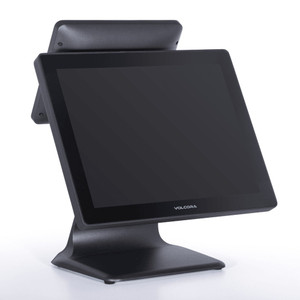
PioneerPOS KC4FJQ00053Z 15" i3 3GHz POS Terminal with MSR
The PioneerPOS KC4FJQ00053Z is a compact 15-inch point-of-sale terminal designed for retail counters, hospitality venues, and quick-service environments where space is at a premium. Built around an Intel Core i3 3GHz processor with 4GB RAM and 120GB SSD storage, the unit delivers responsive transaction processing without the bulk of a traditional desktop setup. Integrated magnetic stripe reader (MSR) support eliminates the need for external payment peripherals, streamlining checkout workflows and reducing cable clutter. The fanless, wall-mountable design fits confined spaces — drive-through windows, ticket booths, mobile carts — while the standard Windows 10 Enterprise OS ensures compatibility with existing POS software ecosystems and enterprise imaging/management tools.
Key Features
- 15-inch Display: Compact footprint ideal for counter-constrained venues. Fanless thermal design keeps operational noise at zero in customer-facing environments.
- Intel Core i3 3GHz Processor: Dual-core performance handles multi-application POS workflows, customer-facing display rendering, and background inventory sync without lag.
- 4GB RAM / 120GB SSD: Adequate for single-application POS installs; SSD eliminates mechanical failure risk and reduces boot/load times to <30 seconds after power-on.
- Integrated Magnetic Stripe Reader: MSR on-board eliminates external USB reader dependencies; one less power adapter, one less point of failure at the transaction line.
- Windows 10 Enterprise: Enterprise SKU — full imaging, MDM integration, and Group Policy support for multi-location rollouts; native RDP for remote troubleshooting reduces on-site service calls.
- Wall-Mount Design: Bracket-ready form factor frees counter real estate; typical installations save 18-24 inches of linear counter space versus traditional terminals.
- Fanless Operation: Zero mechanical wear, quieter transaction environment, no filter maintenance — particularly valuable in noise-sensitive hospitality or medical checkout settings.
- Factory-New, Genuine: Sourced direct from the manufacturer or US; no grey-market, no parallel imports — full US warranty path and ESD-protected packaging.
The KC4FJQ00053Z targets single-location retailers, restaurant POS stations, ticketing kiosks, and mobile food operations where compact footprint and fanless reliability outweigh high-concurrency needs. Intel i3 3GHz is not a powerhouse — it's a proven workhorse for transaction-focused, single-app environments. Pair it with Pos-X, Square for Restaurants, Toast, or any Windows-native POS platform, and you get a purpose-built terminal that costs less to deploy and maintain than a PC-based kiosk setup.
The 120GB SSD storage assumes a lean operating system footprint plus one primary POS application. High-volume logging, multi-vendor integrations (payment, inventory, loyalty), or bandwidth-heavy analytics require network connectivity and cloud database backends — local storage is not a constraint in modern POS architecture. The 4GB RAM ceiling is fixed; assess your POS vendor's minimum/recommended specs before finalizing the order. Most modern POS platforms run comfortably in 4GB single-session mode, but concurrent browser windows or reporting tools can trigger swap-to-disk slowdowns. If your deployment involves real-time inventory queries, customer data enrichment, or concurrent admin dashboards on the same terminal, step up to an i5-based unit with 8GB+.
Windows 10 Enterprise lifts this terminal into multi-location managed deployments. SCCM imaging, Windows Update for Business deferral policies, AppLocker restrictions, and BitLocker drive encryption are all accessible via standard AD group policies. Franchise operations with 50+ locations can image, patch, and monitor the entire installed base from a central Windows Server infrastructure. For single-location mom-and-pop setups, Enterprise is overkill — any Windows 10 SKU will run your POS software — but the licensing cost difference is negligible when you factor in the labor savings from avoiding per-site manual updates.
The integrated MSR is a quiet but significant advantage. External USB stripe readers add $100-200 per terminal, require their own driver stack, and represent a consumer contact point (wear, cleaning, occasional swipes that skip the reader entirely). On-board MSR is scan-once-and-done, invisible to customers, and backed by PioneerPOS field support. One caveat: verify your POS software's MSR driver compatibility with PioneerPOS's specific implementation — some platforms default to third-party reader libraries. If you're locked into a POS platform that requires a specific brand of external reader, this terminal's built-in MSR may sit unused. Confirm integration before committing to the order.
Warranty and sourcing are clean: factory-new stock from the manufacturer or US direct channel, no refurbs, full US replacement warranty. Retailers and integrators appreciate straightforward sourcing — no gray-market risk, no customs holds, no surprise remanufactured units landing at the receiving dock.
Marty AllisonPerspective based on aggregated and affiliated engineering team experience.
We've deployed PioneerPOS terminals across restaurant chains, retail kiosks, and drive-through windows, and the KC4FJQ00053Z sits in a sweet spot for single-transaction, compact-counter environments. The i3 3GHz is not a speed demon — don't expect to run heavy background reporting or concurrent web applications — but for a dedicated POS terminal running one application, it's rock solid. The fanless design is underrated; in a noisy quick-service kitchen or retail floor, you won't hear fan spin-up, and you'll never have to replace a clogged filter at 10 PM on a Friday. The 120GB SSD is tight if you're storing weeks of transaction video or thick transaction logs, but modern POS platforms push everything to cloud backends anyway — local storage is just the OS and the app binary. The real differentiator is the integrated MSR and the Windows 10 Enterprise SKU. MSR integration eliminates one external peripheral and one failure point; Enterprise licensing opens the door to large managed deployments across franchise locations, multi-store chains, and enterprise retail groups. For a single-location mom-and-pop, you're paying for imaging and group policy tools you won't use — but the capex difference is small, and resale value is slightly better with Enterprise. The wall-mount form factor is genius for confined counter space, but verify your mounting surface and clearance for cables (USB peripherals, Ethernet, power) before ordering. POS environments often have cramped back-counter real estate, and a wall-mounted terminal with inbound cable loops can become a cable-management nightmare if not planned ahead.
Technical Highlights:
- Intel Core i3 3GHz Dual-Core: Adequate for single-application POS throughput (3-8 transactions per minute per seat); hyperthreading and modest clock speed mean sub-second transaction commits on local databases and <5-second cloud sync on typical broadband. Avoid this tier if your POS platform requires real-time multi-vendor API polling or heavy background reporting on the same box.
- 120GB SSD (vs. 5400 RPM HDD): Eliminates mechanical failure risk — critical in unattended kiosks or 24/7 drive-through environments. Boot time <30 seconds; application launch <5 seconds. In high-vibration environments (vehicle-mounted or shock-prone venues), SSD reliability is measurably higher than spinning disk.
- 4GB RAM Fixed: Sufficient for Windows 10 Enterprise base + one POS application + browser in focused single-task mode. Multi-app workflows (POS + web reporting + email + inventory system) trigger swap-to-disk; monitor Task Manager during pilot before rolling out 20+ units.
- Integrated MSR: On-board magnetic stripe reader — reduces external reader dependencies and simplifies hardware refresh cycles. Verify POS software compatibility before install; some platforms have hardcoded external reader expectations.
- Windows 10 Enterprise Licensing: SCCM imaging, Group Policy, BitLocker, and AppLocker unlock central management workflows across multi-location deployments. For single-site installs, this is overhead; for 10+ locations, it's essential.
- Fanless + Wall-Mount: Zero acoustic footprint and 18-24 inches of recovered counter space make this terminal ideal for noise-sensitive or cramped retail environments (ticket booths, medical clinics, quick-service drive-throughs).
Deployment Considerations:
- The i3 3GHz is a single-application engine. If your retail location runs POS + concurrent inventory web app + customer-facing digital signage on the same box, you will see lag and occasional transaction delays. Dedicated POS terminal (this unit) + separate inventory/admin workstation (thin client or tablet) is the proven pattern.
- 4GB RAM is not expandable on most compact POS terminals — if you're unsure about your POS platform's memory footprint, pilot with this unit in a real environment for 2-4 weeks before bulk order. Swap-to-SSD kills responsiveness faster than you'd expect.
- Wall-mount bracket requires pre-planning: cable routing, ethernet run location, USB peripheral placement (printer, drawer, scanner). A cramped back-counter with tangled cables will make service calls tedious. Allow 4-6 inches of clearance behind the terminal for connector access.
- Integrated MSR is a locked feature — if your POS platform defaults to external reader drivers, you may need vendor support to redirect input to the on-board MSR. Confirm compatibility during presales before committing to an order.
- Windows 10 Enterprise SKU is a managed platform; if you need to ghost/image 50+ units across multiple locations, plan for SCCM or third-party imaging services upfront. Off-the-shelf retail Windows 10 Home/Pro doesn't have that infrastructure.
- SSD reliability is excellent, but if you operate in high-vibration environments (mobile carts, vehicle-mounted kiosks), verify mounting isolation and impact testing before deployment. A free-standing terminal on a shaky counter will fail faster than on a rigid wall mount.
The KC4FJQ00053Z is the right terminal for single-transaction, space-constrained retail and hospitality environments where uptime, quiet operation, and ease of integration matter more than raw processing power. It's overspecified for a standalone kiosk (you could do this with an Atom-based fanless box), but underspecified for high-concurrency or multi-app deployments. Know your POS software's requirements and your counter real estate constraints before ordering; if you nail those two factors, this is a zero-maintenance deployment. For multi-location rollouts and enterprise imaging, step up to the Windows 10 Enterprise SKU (which this unit includes) — it pays for itself in labor savings within the first year. See the PioneerPOS catalog for additional terminal configurations and accessories.