


Product images are provided for reference and may not represent the exact model, configuration, or included
components.
Overview
SKU:
ZT51043-T210000Z
Condition:
New
Availability:
Usually ships in 24 hours
Warranty
1-Year Limited Warranty

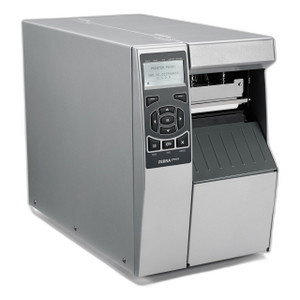
Zebra ZT51043-T210000Z 4" 300 DPI Mobile Thermal Printer
Zebra ZT51043-T210000Z 4" Mobile Thermal PrinterThe Zebra ZT51043-T210000Z is a 4-inch, 300 DPI mobile thermal printer engineered for on-demand label …

Zebra ZT51043-T210000Z 4" 300 DPI Mobile Thermal Printer
$3,407.99
Your recommended setup
Review items below — quantities update pricing automatically.
Item
Qty
Status
Price
Optional Add-Ons recommended
Services optional
Bundle Summary
Bundle Subtotal:
$0.00
Optional Add-Ons:
$0.00
Services:
$0.00
Total:
$0.00
Overview
SKU:
ZT51043-T210000Z
Condition:
New
Availability:
Usually ships in 24 hours
Warranty
1-Year Limited Warranty
Description

Zebra ZT51043-T210000Z 4" Mobile Thermal Printer
The Zebra ZT51043-T210000Z is a 4-inch, 300 DPI mobile thermal printer engineered for on-demand label and receipt printing in warehouse, logistics, and field operations. This compact, Wi-Fi-enabled device delivers fast, high-resolution monochrome output with support for multiple barcode symbologies, enabling real-time labeling and inventory documentation across supply chain workflows.
Overview
Built for mobile and stationary deployment scenarios, the ZT51043-T210000Z combines thermal printing technology with wireless connectivity to eliminate cable dependencies in dynamic warehouse environments. The 300 DPI resolution ensures crisp barcode capture and label legibility, while native support for industry-standard 1D and 2D symbologies streamlines integration with existing scanning and tracking systems.
Key Features
- 4-Inch Print Width: Supports standard warehouse label formats including 4x6 shipping labels and custom dynamic content
- 300 DPI Resolution: Sharp, scannable output for QR codes, Code 128, Code 39, UPC, and EAN barcodes
- Barcode Symbology Support: QR Code, Code 128, Code 39, UPC, EAN, and additional 1D/2D formats for flexible labeling requirements
- Wi-Fi Connectivity: Wireless printing across warehouse network infrastructure without tethering to fixed stations
- Bluetooth Support: Paired device mobility for portable label printing near picking, packing, and shipping zones
- Monochrome Thermal Output: Reliable black-and-white label production without consumable ribbon requirements
- Mobile-Ready Design: Compact form factor for handheld or belt-mounted deployment alongside mobile computers and scanners
- Rugged Construction: Built to withstand repeated handling and warehouse floor conditions
Connectivity & Network Integration
The ZT51043-T210000Z integrates into networked warehouse environments through Wi-Fi, enabling real-time print job delivery from warehouse management systems, mobile data terminals, and inventory applications. Bluetooth capability supports direct pairing with handheld mobile computers and rugged tablets, allowing operators to print labels on-demand without network dependency. This dual-connectivity approach accommodates both centralized print server architectures and peer-to-peer mobile workflows common in receiving, putaway, picking, and shipping operations.
Barcode and Label Capabilities
The printer supports QR Code, Code 128, Code 39, UPC, and EAN symbologies natively, making it compatible with standard ecommerce, retail, and logistics labeling standards. The 300 DPI resolution ensures reliable first-read barcode scanning, reducing label reprints and downstream scanning delays. This makes the ZT51043-T210000Z suitable for compliance labeling, shipment tracking, and asset identification across warehouse and distribution environments.
Operational Deployment Considerations
The ZT51043-T210000Z is typically deployed in warehouse receiving, sortation, picking, packing, and shipping departments where mobile print-on-demand reduces label pre-printing overhead and speeds order fulfillment cycles. Its thermal technology eliminates ink cartridges and ribbon changes, lowering consumable costs and maintenance downtime. The combination of Wi-Fi and Bluetooth connectivity supports both centralized print server architectures and decentralized mobile workflows, allowing flexibility in network topology and operational scaling.
Karl Wilson
I've evaluated the Zebra ZT51043-T210000Z during several warehouse automation deployments, and it consistently delivers reliable on-demand printing for high-volume logistics environments. The dual Wi-Fi and Bluetooth connectivity gives operations teams real flexibility in how they deploy the printer—whether tethered to a print server or paired directly with handheld mobile computers.
Technical Highlights:
- 300 DPI Thermal Output: The resolution is crisp enough for tight barcode spacing and small label formats without quality loss, which is essential when printing compliance labels or multi-SKU pallet codes.
- Comprehensive Symbology Support: QR Code, Code 128, Code 39, UPC, and EAN coverage handles nearly all retail, ecommerce, and parcel labeling requirements—very few exceptions in practice.
- Wi-Fi + Bluetooth Dual Stack: This is a practical advantage for phased deployments. You can run a print server for centralized label design while still supporting operator-level mobile printing without network connectivity.
Deployment Considerations:
- The 4-inch width is ideal for standard shipping labels and warehouse pallet tags, but verify label format requirements before ordering—custom sizes beyond 4 inches will require external label handling.
- Thermal printing eliminates ink/ribbon logistics, reducing supply chain friction in high-volume operations. Budget for thermal label stock rather than preprinted inventory.
- Network configuration should prioritize secure Wi-Fi access in warehouse environments; pair with your IT team to ensure print spooler and device management policies are in place before rollout.
The ZT51043-T210000Z is a solid fit for mid to large-scale logistics and warehouse operations seeking to eliminate fixed print stations and accelerate label-on-demand workflows. The thermal technology and dual wireless options provide the operational flexibility most modern warehouses require.
Specifications
Product Type:
Thermal Printer
Connectivity:
Wi-Fi; Bluetooth
Form Factor:
Mobile Thermal Printer
Dimensions:
4 inch print width
Bluetooth:
Yes
Scanner_Type:
Mobile Thermal Printer
Symbologies:
QR Code; Code 128; Code 39; UPC; EAN
Symbologies_1D:
Code 128; Code 39; UPC; EAN
Symbologies_2D:
QR Code
Have Questions?
Ask an Expert.
RELATED PRODUCTS


System Design, Deployment & Technical Support
Support services and planning resources for commercial surveillance, access control, and infrastructure deployments.
Fixed scope • Fixed price
System Design Assistance
- Get help validating product compatibility
- Coverage requirements
- Storage planning and deployment architecture before you buy.
Deployment & Configuration Support
- Access fixed-scope support for rollout planning
- User setup guidance
- Migration and system standardization across single-site or multi-site deployments
Guides, Tools & Calculators
- PoE requirements
- Storage retention
- Camera selection and deployment methodology