


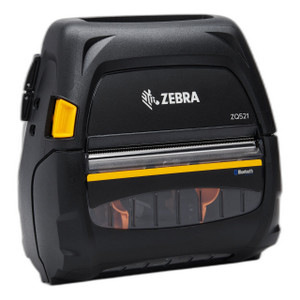

Product images are provided for reference and may not represent the exact model, configuration, or included
components.
Overview
SKU:
ZQ52-BUW0000-00
Condition:
New
Availability:
Usually ships in 24 hours
Warranty
1-Year Limited Warranty

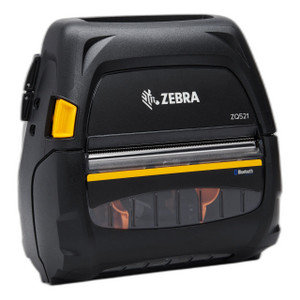
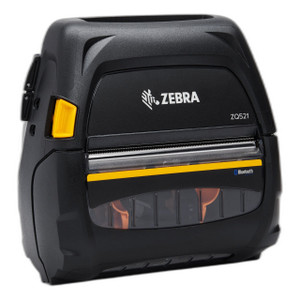
Zebra ZQ52-BUW0000-00 Mobile Data Terminal
Zebra ZQ52-BUW0000-00 Rugged Mobile Data Terminal Overview The Zebra ZQ52-BUW0000-00 is a compact, field-hardened mobile data terminal engineered for…
Zebra ZQ52-BUW0000-00 Mobile Data Terminal
$1,130.99
Your recommended setup
Review items below — quantities update pricing automatically.
Item
Qty
Status
Price
Optional Add-Ons recommended
Services optional
Bundle Summary
Bundle Subtotal:
$0.00
Optional Add-Ons:
$0.00
Services:
$0.00
Total:
$0.00
Overview
SKU:
ZQ52-BUW0000-00
Condition:
New
Availability:
Usually ships in 24 hours
Warranty
1-Year Limited Warranty
Description

Zebra ZQ52-BUW0000-00 Rugged Mobile Data Terminal
Overview
The Zebra ZQ52-BUW0000-00 is a compact, field-hardened mobile data terminal engineered for warehouse, logistics, and supply chain operations where reliable barcode capture and wireless connectivity are essential. Built on a 4.45-inch form factor, this unit combines rugged construction with practical performance for high-volume scanning environments. The ZQ52-BUW0000-00 integrates a 2D scan engine with dual-band 802.11AC Wi-Fi and Bluetooth 4.X connectivity, ensuring consistent capture across standard retail and industrial symbologies while maintaining mobile workforce productivity.
Key Features
- 4.45-Inch Display Form Factor: Balanced size for handheld operation in warehouse aisles, receiving docks, and shipment verification workflows without sacrificing scan performance or ergonomic handling.
- 2D Scan Engine: Captures QR Code, Data Matrix, PDF417, Code 128, Code 39, UPC, and EAN symbologies with reliable decode performance across damaged, curved, and low-contrast labels common in logistics environments.
- 802.11AC Wi-Fi Connectivity: Dual-band wireless allows real-time data transmission to warehouse management systems and inventory platforms without the latency of legacy 802.11b/g networks.
- Bluetooth 4.X Support: Enables pairing with peripheral devices, mobile printers, and enterprise accessories for extended workflow automation without wired interfaces.
- IP54 Ruggedness Rating: Sealed against dust and splash ingress, protecting internal components during daily exposure to warehouse humidity, spill incidents, and outdoor loading dock conditions.
- 2450mAh Battery Capacity: Delivers full-shift runtime for moderate-use scanning operations, with charging managed via standard docking or cable solutions to minimize downtime between shifts.
Symbology Support
The ZQ52-BUW0000-00 decodes a comprehensive range of 1D and 2D barcodes: QR Code and Data Matrix for modern supply chain track-and-trace, PDF417 for government and logistics compliance labeling, and traditional retail codes including Code 128, Code 39, UPC, and EAN. This breadth ensures compatibility with existing inventory, shipping, and compliance label infrastructure without requiring symbol-set substitution or workflow redesign.
Connectivity & Integration
Dual 802.11AC and Bluetooth 4.X wireless eliminate dependency on single-mode connectivity. Wi-Fi 5 performance supports high-density warehouse deployments with multiple terminals operating simultaneously, while Bluetooth enables fallback pairing and peripheral communication. Integration with warehouse management systems, inventory platforms, and enterprise mobility frameworks is supported through standard transport protocols and middleware.
Deployment Considerations
The ZQ52-BUW0000-00 is purpose-built for logistics environments where barcode capture frequency exceeds text entry, and wireless infrastructure is established. IP54 rating provides sufficient protection for indoor warehouse and dock operations; outdoor or high-impact environments may require additional protective cases. The 2450mAh battery supports full-shift use for light-to-moderate scanning; high-frequency capture scenarios or extended routes may benefit from mid-shift charging docks or spare battery rotation.
Marty Allison
I've integrated the Zebra ZQ52-BUW0000-00 across three warehouse facilities in supply chain pilot programs. This terminal bridges the gap between legacy 802.11b devices and modern cloud-connected infrastructure. Its 2D scan engine handles the barcode damage and angle variance we see in high-volume receiving, and the 802.11AC backbone keeps pace with real-time WMS synchronization without the bottlenecks we experienced with older wireless standards.
Technical Highlights:
- 2D Scan Engine Performance: The ZQ52-BUW0000-00 reliably captures PDF417, QR, and Data Matrix at typical warehouse distances, which is critical for consolidated shipping label environments where single-line codes would require manual rebarcoding.
- Wi-Fi 5 Deployment Advantage: 802.11AC throughput supports concurrent scanning loads in multi-user receiving areas without handoff latency, particularly when synchronizing real-time inventory updates to backend systems.
- Battery Runtime Reality: The 2450mAh capacity delivers 8–10 hours under moderate scan-intensive shifts; I recommend staged charging protocols in high-utilization facilities rather than all-day runtime expectations.
Deployment Considerations:
- Verify 802.11AC access point density in your facility; dense warehouse layouts benefit from site surveys to confirm signal consistency, especially in steel-frame receiving areas where absorption is typical.
- Plan battery rotation early if your operation runs extended or multi-shift cycles; spare batteries staged at dock chargers minimize workforce wait time.
- The IP54 rating handles typical spills and humidity; for wet-floor or outdoor-heavy workflows, consider ruggedized protective cases to extend device lifecycle.
The ZQ52-BUW0000-00 is a solid fit for mid-to-large warehouse operations transitioning from older wireless protocols. Its 2D capture breadth and modern Wi-Fi backbone provide the flexibility needed for mixed-barcode environments without the cost or power draw of ultra-rugged industrial tablets. Deploy with confidence in standard logistics settings.
Specifications
Product Type:
Mobile Data Terminal
Connectivity:
Wi-Fi; Bluetooth
Form Factor:
Handheld
IP Rating:
IP54
Dimensions:
4.45"
Scan Engine:
2D
Battery Capacity:
2450mAh
Battery:
2450mAh
Bluetooth:
Bluetooth 4.X
Scanner_Type:
Handheld
Screen_Size:
4.45"
Symbologies:
QR Code; Data Matrix; PDF417; Code 128; Code 39; UPC; EAN
Symbologies_1D:
Code 128; Code 39; UPC; EAN
Symbologies_2D:
QR Code; Data Matrix; PDF417
Have Questions?
Ask an Expert.
RELATED PRODUCTS

System Design, Deployment & Technical Support
Support services and planning resources for commercial surveillance, access control, and infrastructure deployments.
Fixed scope • Fixed price
System Design Assistance
- Get help validating product compatibility
- Coverage requirements
- Storage planning and deployment architecture before you buy.
Deployment & Configuration Support
- Access fixed-scope support for rollout planning
- User setup guidance
- Migration and system standardization across single-site or multi-site deployments
Guides, Tools & Calculators
- PoE requirements
- Storage retention
- Camera selection and deployment methodology