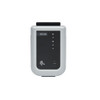
Zebra ZB200-000 Bluetooth Sensor Bridge
The Zebra ZB200-000 is a dedicated Bluetooth sensor bridge designed to extend connectivity and data collection capabilities across enterprise environments. This device functions as a wireless gateway, enabling seamless communication between Bluetooth-enabled sensors and networked infrastructure through Wi-Fi connectivity. Built for logistics, warehouse, retail, and facility management applications, the ZB200-000 bridges the gap between low-power Bluetooth devices and enterprise IT systems without requiring direct line-of-sight or proximity to individual sensors.
Overview
The ZB200-000 serves as a critical infrastructure component in distributed sensor networks, particularly in environments where Bluetooth range or signal penetration presents challenges. By aggregating Bluetooth sensor data and transmitting it via Wi-Fi, the device eliminates the need for individual sensor-to-network connections and reduces deployment complexity. This architecture is especially valuable in multi-building facilities, warehouses with metal structures, or locations where sensors must operate independently of mobile devices.
Key Features
- Bluetooth Connectivity: Native Bluetooth support for pairing and receiving data from compatible Bluetooth sensors and IoT devices
- Wi-Fi Gateway: Integrated Wi-Fi connectivity enables reliable transmission of aggregated sensor data to enterprise networks and cloud platforms
- Multi-Sensor Aggregation: Capable of managing multiple simultaneous Bluetooth connections, consolidating data from distributed sensors into a single network point
- Enterprise Integration: Compatible with standard IT infrastructure, supporting integration into existing network management and monitoring systems
- Flexible Deployment: Compact form factor allows mounting in strategic locations to maximize Bluetooth coverage and Wi-Fi signal reach
- Reliable Data Transmission: Designed for continuous operation in logistics and warehouse environments requiring consistent sensor monitoring
Integration & Compatibility
The Zebra ZB200-000 integrates with Zebra's broader IoT and asset tracking ecosystem, enabling organizations to deploy location services, temperature monitoring, and equipment tracking solutions. The device connects to standard Wi-Fi networks (802.11 a/b/g/n), allowing integration with existing enterprise access points and network infrastructure. Data aggregation from multiple Bluetooth sensors reduces bandwidth requirements compared to individual sensor connectivity, making it efficient for environments with numerous sensors deployed across large areas.
Deployment Considerations
The ZB200-000 is suited for warehouse automation, cold chain monitoring, inventory tracking, and facility management applications where Bluetooth sensors must communicate across distances or through physical obstacles that would limit direct connectivity. Proper placement of the bridge device ensures optimal Bluetooth signal reception while maintaining reliable Wi-Fi connectivity to the enterprise network. Organizations should evaluate coverage requirements and the number of concurrent sensors to determine optimal deployment density across their facilities.