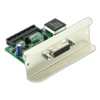
Zebra P1083320-038 Applicator Interface Cord Kit
The Zebra P1083320-038 is a purpose-built applicator interface cord kit designed to integrate external label applicators with Zebra ZT600-series thermal printers. This component bridges the printer's internal logic and external applicator equipment—motors, solenoids, or control systems—enabling synchronized print-and-apply operations in warehouse automation, logistics labeling, and high-speed production environments.
Key Features
- 5–24V Power Input: The wide voltage range eliminates the need for intermediate voltage regulators or power conditioning modules. Most warehouse automation systems run 24V industrial control power, but legacy installations may operate at lower voltages; this kit accepts both without additional external components, reducing integration complexity and failure points.
- Wi-Fi Connectivity: Applicator interface status, error codes, and synchronization feedback transmit over your facility network, enabling remote configuration and real-time monitoring across distributed print stations. Supports firmware updates and predictive maintenance workflows without physical access to each printer.
- ZT600 Series Compatibility: Engineered specifically for Zebra ZT600 printers through dedicated expansion ports. Timing protocols and electrical specifications are validated against the printer's control architecture, ensuring plug-and-play deployment without custom firmware or driver development.
- Complete Kit Packaging: Includes pre-assembled interface cord, connectors, and mounting hardware. You avoid on-site crimping, soldering, or custom harness fabrication—critical when deploying multiple print stations on tight schedules.
- Electrical Isolation and Signal Conditioning: The P1083320-038 handles voltage conversion, current limiting, and protective isolation between the printer's sensitive internal electronics and external applicator loads. This protects your printer investment while delivering adequate control current to actuate standard industrial solenoids and stepper motors without degradation.
- Industrial-Grade Construction: Shielded cabling mitigates EMI noise from warehouse motors, conveyors, and proximity sensors. Connectors are rated for repeated coupling cycles in production environments.
Integration & Deployment Context
The applicator interface enables closed-loop print-and-apply workflows. The printer confirms label output, then signals the applicator to engage—reducing label waste and misapplication errors in high-speed carton coding, palletizing, or shipping label operations. On multi-station lines, Wi-Fi connectivity consolidates status and error reporting, allowing you to monitor print speed, applicator cycle time, and label quality metrics from a central management system.
Integration with Zebra ZT600 printers is straightforward: connect the P1083320-038 to the printer's applicator expansion port, wire the external applicator control lines to the kit's connectors, and supply 5–24V to the input terminals. No additional adapters or conditioning circuits are required in most deployments. The kit's shielded construction handles noisy warehouse environments where unshielded cabling would introduce synchronization errors or signal dropouts.
This component is appropriate for organizations seeking to upgrade standalone ZT600 printers into integrated print-and-apply systems without replacing the printer hardware. It is not suitable for applicators requiring specialized protocols or voltage profiles outside the 5–24V range—contact the applicator manufacturer if your equipment demands different electrical specifications.
When to Consider Alternatives
If your Zebra thermal printer is a different series (ZT400, ZT500, ZM400), verify applicator interface compatibility with Zebra technical documentation—this kit is ZT600-specific. If your applicator operates at a fixed voltage outside the 5–24V window, you may need external power conditioning or a different interface module.
Ted PerryPerspective based on aggregated IP Security Depot and affiliated engineering team experience.
I've specified the P1083320-038 across multiple logistics automation deployments, and the 5–24V input range is a genuine operational advantage. Most modern warehouse control systems use 24V, but retrofit installations still run on 12V or 18V legacy supplies. This kit eliminates the voltage-conditioning step entirely—one less power converter to fail and one less point of integration friction.
Technical Highlights:
- 5–24V Input Range: Eliminates intermediate regulators; reduces BOM complexity and integration risk on retrofit projects where voltage supplies may vary across the facility.
- Wi-Fi Status Reporting: Real-time applicator interface heartbeat feeds predictive maintenance workflows—you catch signal degradation or applicator lag before a production jam occurs.
- Complete Kit Contents: Pre-assembled cord and validated connectors mean deployment timelines compress from days (custom harness) to hours (kit installation).
Deployment Considerations:
- Verify your ZT600 model includes an applicator expansion port—older configurations may lack the physical connector, requiring a firmware or hardware upgrade from Zebra.
- Confirm your external applicator's control current draw against the kit's maximum delivery spec—undersized wiring or current limits will throttle applicator performance on high-speed lines.
- Wi-Fi connectivity assumes your facility network extends to the printer location; if the printer sits in a dead zone or isolated network segment, the applicator interface falls back to local trigger operation only (no remote status).
This kit is ideal for organizations deploying ZT600 printers in carton coding, palletizing, or shipping label automation where synchronization between print output and physical label application directly impacts throughput and accuracy. The wide voltage input and integrated Wi-Fi reporting make it a straightforward choice for print-and-apply line upgrades.
Frequently Asked Questions
Q: Is the Zebra P1083320-038 compatible with ZT400 or ZT500 printers?
A: No. The P1083320-038 is engineered specifically for ZT600-series printers. ZT400 and ZT500 models use different expansion port architectures and timing protocols. Verify your printer model against Zebra's ZT600 family documentation before ordering.
Q: What is the maximum control current the P1083320-038 can deliver to an external applicator?
A: This depends on the specific applicator load and power supply voltage. The kit is rated for standard industrial solenoids and stepper motors, but you must confirm your applicator's current draw against the kit's maximum output specification. Undersized current delivery will reduce applicator response time and may cause missed cycles on high-speed lines.
Q: Does the P1083320-038 require a separate network switch or dedicated Wi-Fi access point?
A: The applicator interface leverages the ZT600 printer's existing Wi-Fi module. If your facility network reaches the printer location, the applicator interface transmits status and error codes over that same connection. If the printer is in a Wi-Fi dead zone, the applicator interface falls back to local trigger operation without remote monitoring.
Q: Can I use the P1083320-038 with 110VAC or 240VAC industrial power supplies?
A: No. The kit is rated 5–24VDC only. If your facility provides only AC power at the printer location, you must install an external AC-to-DC converter rated for the same input current before connecting to the P1083320-038.
Q: What cabling and connectors are included in the kit?
A: The P1083320-038 includes a pre-assembled interface cord with validated connectors for ZT600 expansion ports and standard industrial applicator control terminals. Refer to the kit packaging or manufacturer documentation for exact connector types and pin assignments.
Q: Does the P1083320-038 support two-way communication with the applicator, or just one-way triggering?
A: The kit handles bidirectional control and feedback between the printer and applicator—the printer confirms label output before signaling the applicator to engage, and the applicator returns status signals (busy, fault, position) to the printer. This closed-loop operation reduces label waste and synchronization errors on production lines.