


Product images are provided for reference and may not represent the exact model, configuration, or included
components.
Overview
SKU:
DS8288-HCBU210PSAW
Condition:
New
Availability:
Usually ships in 24 hours
Warranty
1-Year Limited Warranty

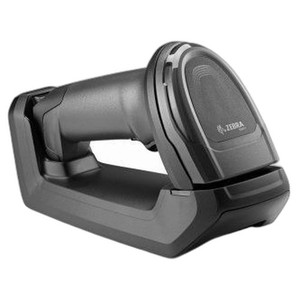
Zebra DS8288-HCBU210PSAW Handheld 2D Barcode Scanner
Zebra DS8288-HCBU210PSAW Wired 2D Handheld Barcode ScannerThe DS8288-HCBU210PSAW is a wired 2D handheld barcode scanner engineered for high-volume war…
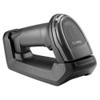
Zebra DS8288-HCBU210PSAW Handheld 2D Barcode Scanner
$1,066.99
Your recommended setup
Review items below — quantities update pricing automatically.
Item
Qty
Status
Price
Optional Add-Ons recommended
Services optional
Bundle Summary
Bundle Subtotal:
$0.00
Optional Add-Ons:
$0.00
Services:
$0.00
Total:
$0.00
Overview
SKU:
DS8288-HCBU210PSAW
Condition:
New
Availability:
Usually ships in 24 hours
Warranty
1-Year Limited Warranty
Description

Zebra DS8288-HCBU210PSAW Wired 2D Handheld Barcode Scanner
The DS8288-HCBU210PSAW is a wired 2D handheld barcode scanner engineered for high-volume warehouse, logistics, and distribution operations. This model combines reliable image capture technology with hardwired connectivity to deliver consistent scanning performance across demanding material handling environments.
Overview
Designed as a fixed connectivity solution, the DS8288-HCBU210PSAW provides integrators and IT teams with a straightforward, dependable scanning instrument for point-of-capture data collection. The 2D scan engine captures both linear and matrix barcodes, supporting complex supply chain workflows where mixed barcode formats are common. Wired connectivity ensures continuous power and data transmission without battery management overhead, making this scanner ideal for stationary workstations and high-throughput scanning zones.
Key Features
- 2D Scan Engine: Captures 1D and 2D barcodes including QR codes, Data Matrix, PDF417, Code 128, Code 39, UPC, and EAN symbologies
- Wired Connectivity: USB interface eliminates battery dependency and provides real-time data transmission to host systems
- Handheld Form Factor: Portable design allows flexible positioning and hand-held operation at pack lines, receiving docks, and inventory stations
- FIPS Compliance: Meets FIPS security standards for regulated environments including healthcare, government, and secure logistics facilities
- Vibration Alert: Built-in vibration feedback confirms successful scans without audible tones, reducing workplace noise in high-volume areas
- MFI Certified: Made for iPhone/iPad integration enables seamless connectivity with Apple mobile devices in hybrid environments
Integration & Compatibility
The DS8288-HCBU210PSAW integrates directly via USB to warehouse management systems, enterprise resource planning platforms, and point-of-sale terminals. The MFI certification extends deployment options to mobile iOS environments, allowing facility managers to leverage existing Apple infrastructure for scanning workflows. Wired USB architecture eliminates wireless configuration complexity and provides stable real-time data feeds critical for inventory accuracy and order fulfillment cycles.
The white finish aids visibility in various lighting conditions and blends seamlessly into modern warehouse aesthetics. FIPS compliance ensures the scanner meets cryptographic and security protocols required for healthcare distribution, pharmaceutical supply chains, and government logistics contracts.
Operational Advantages
Wired connectivity eliminates battery recharging cycles and wireless pairing overhead, reducing total cost of ownership in fixed-station deployments. The 2D imaging technology decodes damaged, low-contrast, and angled barcodes reliably, improving first-pass scan rates and reducing manual intervention. Vibration feedback operates independently of audio systems, making the DS8288-HCBU210PSAW suitable for loud warehouse environments or facilities requiring silent operations.
Integrators deploying this scanner benefit from Zebra's extensive ecosystem support, including driver availability across Windows, Linux, and macOS platforms. The handheld form factor combined with wired architecture makes this model particularly effective for mobile cart operations, portable scanning stations, and temporary distribution workflows.
James Everett
I've evaluated the Zebra DS8288-HCBU210PSAW in several warehouse automation assessments, and the wired connectivity model fills a specific operational niche well. For facilities running tethered scanning stations or carts with continuous power availability, this handheld 2D scanner eliminates battery management entirely while maintaining reliable barcode capture across the full range of modern supply chain coding standards.
Technical Highlights:
- 2D Imaging: Captures linear (Code 128, Code 39, UPC, EAN) and matrix codes (QR, Data Matrix, PDF417) without mode switching, critical for cross-docking and mixed-SKU operations
- USB Wired Interface: Provides continuous power and zero-latency data transmission; eliminates wireless handoff delays and battery depletion risks during peak receiving or shipping cycles
- FIPS Security: Meets Federal Information Processing Standards, essential for regulated verticals like pharmaceutical distribution and healthcare logistics
- MFI Certification: Native iOS device compatibility expands mobile scanning options within Apple-standardized facilities
Deployment Considerations:
- USB cable management should be planned around stationary or mobile cart workstations; this is not a wireless roaming device
- Vibration feedback allows quiet operation in noise-sensitive zones without sacrificing scan confirmation feedback
- FIPS compliance simplifies procurement for government contracts and regulated supply chains
- White housing improves barcode contrast recognition in variable lighting; confirm mounting position to avoid backlit angle scan failures
For distribution centers, pharmaceutical wholesalers, and government logistics operations prioritizing uptime over mobility, the DS8288-HCBU210PSAW delivers predictable scanning performance with minimal operational overhead. The combination of 2D imaging, wired stability, and FIPS compliance makes it a solid choice for high-security, high-throughput environments.
Specifications
Product Type:
Handheld Scanner
Connectivity:
USB
Form Factor:
Handheld
Scan Engine:
2D
Scanner_Type:
Handheld
Symbologies:
QR Code; Data Matrix; PDF417; Code 128; Code 39; UPC; EAN
Symbologies_1D:
Code 128; Code 39; UPC; EAN
Symbologies_2D:
QR Code; Data Matrix; PDF417
Have Questions?
Ask an Expert.
RELATED PRODUCTS
System Design, Deployment & Technical Support
Support services and planning resources for commercial surveillance, access control, and infrastructure deployments.
Fixed scope • Fixed price
System Design Assistance
- Get help validating product compatibility
- Coverage requirements
- Storage planning and deployment architecture before you buy.
Deployment & Configuration Support
- Access fixed-scope support for rollout planning
- User setup guidance
- Migration and system standardization across single-site or multi-site deployments
Guides, Tools & Calculators
- PoE requirements
- Storage retention
- Camera selection and deployment methodology