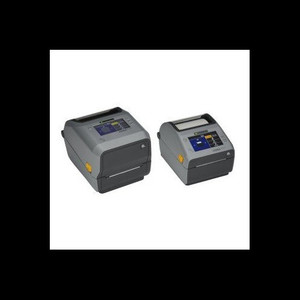
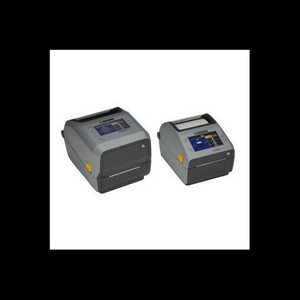
Zebra ZD6A143-321L01EZ 300dpi Wireless Thermal Transfer Label Printer
Overview
The Zebra ZD621 — part number ZD6A143-321L01EZ — is a 300 dpi thermal transfer label printer built for enterprise environments where label quality, wireless flexibility, and workflow adaptability matter. With dual-radio connectivity (802.11ac Wi-Fi and Bluetooth 4.0) plus an integrated cutter, it fits deployment scenarios ranging from hospital nursing stations to warehouse shipping lines where labels need to print and cut on demand without manual tear-off. The ZD621 sits in the Zebra printer lineup as a full-featured desktop thermal transfer model designed to handle evolving workflow needs without requiring a printer swap as requirements change.
Key Features
- 300 dpi Print Resolution: At 300 dpi, text, barcodes, and graphics render with enough clarity to pass GS1 barcode verification in regulated industries like healthcare and logistics — a step up from 203 dpi models where fine print and small QR codes can fall short of scan reliability thresholds.
- Thermal Transfer (TT) Color Print Method: Thermal transfer uses ribbon to bond ink permanently to the label substrate, which means printed labels resist heat, moisture, and UV fading. Correct choice for labels that need to survive outdoor exposure, freezer environments, or long-term asset tagging — unlike direct thermal, which fades under heat and light over time.
- 802.11ac Wireless: The 5 GHz-capable 802.11ac radio delivers faster throughput and less channel congestion than 802.11n — useful in dense RF environments like distribution centers where dozens of wireless devices compete for bandwidth. No wired Ethernet run needed to the print station, which simplifies installation in areas that move around or reconfigure frequently.
- Bluetooth 4.0 (BT4): BT4 enables direct pairing with mobile computers, tablets, or smartphones for on-demand label printing from handheld devices. In mobile computer workflows like receiving, cycle counting, or field service, this removes the dependency on a fixed network path entirely.
- Integrated Auto-Cutter: The built-in cutter produces cleanly separated labels at the end of each print job, eliminating manual tear-off and reducing operator handling errors in high-volume or unattended print scenarios. Important for batch print queues where label presentation and peel consistency matter.
- Adaptable Workflow Design: The ZD621 is designed to accommodate changing operational needs — a relevant factor for environments that evolve their labeling requirements across departments or over time without wanting to recapitalize on hardware. Pairs naturally with industrial and desktop label printers planning discussions where standardization across a fleet is a goal.
Integration and Compatibility
The ZD6A143-321L01EZ (often searched as ZD6A143 321L01EZ) connects via 802.11ac or Bluetooth 4.0, making it compatible with Zebra's suite of mobile and enterprise print management tools. The wireless capability supports integration with WMS, ERP, and print management middleware platforms common in distribution and manufacturing environments. For organizations running Zebra barcode scanning infrastructure, pairing ZD621 printers with existing Zebra mobile computers via BT4 creates a streamlined print-and-scan workflow without additional network provisioning.
Frequently Asked Questions
Q: What print method does the ZD6A143-321L01EZ use — direct thermal or thermal transfer?
A: The ZD6A143-321L01EZ is a thermal transfer (TT) printer. It uses ribbon to permanently bond ink to the label, producing output that resists heat, moisture, and UV fading — unlike direct thermal labels, which degrade over time under those conditions.
Q: Does the ZD621 ZD6A143-321L01EZ include an auto-cutter?
A: Yes. This configuration includes an integrated auto-cutter that separates labels automatically after printing, which is useful for batch or unattended print workflows.
Q: What wireless standards does the ZD6A143-321L01EZ support?
A: The ZD6A143-321L01EZ supports 802.11ac Wi-Fi and Bluetooth 4.0 (BT4), enabling both network-connected and direct mobile-device printing.
Q: Is 300 dpi sufficient for GS1 barcode compliance?
A: 300 dpi is generally sufficient for GS1-compliant barcodes including Code 128, QR, and Data Matrix at the label sizes common in healthcare, retail, and logistics. For very small labels with dense symbologies, verify minimum element width against your specific barcode grade requirement.
Q: Can the ZD6A143-321L01EZ pair with Zebra mobile computers?
A: Yes. The integrated BT4 radio supports direct pairing with Zebra Android mobile computers and other Bluetooth-capable handhelds for on-demand label printing without a fixed network connection.
The ZD6A143-321L01EZ hits a practical sweet spot for enterprise label printing: the 802.11ac radio means you can deploy it in RF-congested distribution centers without fighting 2.4 GHz channel saturation, and the BT4 fallback keeps it functional if the wireless infrastructure goes down or if you need mobile-paired print runs. I'd specifically look at this unit for environments running Zebra Android handhelds where direct pairing via BT4 removes the print server dependency entirely.
Technical Highlights:
- 300 dpi Resolution: Produces print quality that holds up for small-pitch barcodes and fine-detail graphics — a meaningful step above 203 dpi when label stock is small or symbology density is high.
- Thermal Transfer Method: Ribbon-based printing means the output won't fade when labels are exposed to heat, chemicals, or UV — the right call for asset tags, outdoor-rated labels, or anything that needs to survive more than a few months in the field.
- Integrated Auto-Cutter: The built-in cutter on this configuration eliminates manual tear-off and supports batch workflows — reduces operator handling time in high-throughput print stations and eliminates ragged edges that can cause peel or scan issues downstream.
Deployment Considerations:
- The 802.11ac radio requires a 5 GHz-capable access point infrastructure — verify your site's wireless coverage before committing to a wireless-only deployment; areas with poor 5 GHz penetration may need a wired fallback or AP repositioning.
- Thermal transfer requires ribbon stock in addition to label media — factor in ribbon SKU management and reorder cycles when planning consumables inventory, especially in multi-printer deployments.
Best fit for healthcare labeling stations, warehouse receiving desks, and light manufacturing lines where print quality, wireless mobility, and automated cutting need to work together without manual intervention between print jobs.