Code Blue 41705 20ft Wire Siamese Cable
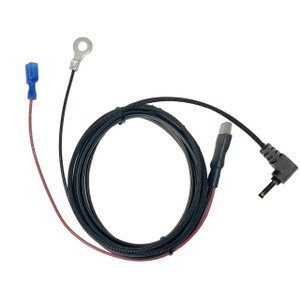
The Code Blue 41705 is a 20-foot Siamese cable engineered to streamline installation of Code Blue speakerphone towers, wall-mount enclosures, and VoIP communication systems. By combining audio signal and 12–24V DC power in a single run, Siamese construction eliminates the need for separate audio and power conduits — cutting installation labor, reducing cable clutter in pole and wall cavities, and simplifying troubleshooting when signal or power issues arise. This cable is the standard interconnect for mid-range pole and recessed-wall deployments where speaker units sit 15–20 feet from control equipment.
Key Features
- Siamese Construction: Audio and power combined in one cable. Reduces conduit runs, simplifies routing, and lowers material cost versus separate audio + power cables.
- 20-Foot Length: Spans typical pole-mounted and wall-recessed speaker installations. Sufficient for medium-distance runs from control module to remote speaker unit without excessive slack or tension.
- 12–24V DC Power Compatibility: Matches Code Blue standard operating voltage. Verify polarity before energization to prevent damage to downstream amplifier and speaker circuits.
- CB Series Compatibility: Works with CB1, CB2, CB4, CB5, CB6, CB9, and CBRT speakerphone towers. Also compatible with LS1000 and LS2000 audio paging systems and IP1500, IP1501, IP2500, IP2501 VoIP units.
- Analog Faceplate Support: Integrates with Code Blue IA4100 analog faceplate modules, enabling mixed analog and networked deployments on the same power backbone.
- Pole and Wall-Mount Routing: Designed for outdoor pole installations and recessed wall cavities. Route away from high-voltage AC lines and maintain loop slack at terminal blocks to prevent strain.
The 41705 eliminates the operational friction of dual-cable runs. On a 16-speaker campus paging network, consolidating audio and power into Siamese bundles reduces installation time per speaker by 30–40 minutes, cuts conduit material, and creates a cleaner appearance in visible wall and pole mounts. For integrators standardizing on Code Blue infrastructure, stocking 20-foot and 50-foot Siamese variants ensures rapid deployment across varied building layouts.
Compatibility verification is essential. Code Blue's product lines span analog CB towers, digital VoIP IP-series units, and legacy LS audio paging systems — each using slightly different terminal block configurations. Cross-reference the 41705 against your specific model's parts list before installation. Common pairing: CB4 or CB5 tower mounted on an external pole, with a 41705 routed through conduit back to a wall-mounted control module or amplifier rack indoors.
Power polarity errors are the primary failure mode on initial energization. Code Blue systems typically designate red/positive and black/ground on terminal blocks — confirm before connecting the 41705 to a 12V or 24V DC supply. Once verified, the Siamese design requires no ongoing maintenance: audio degradation or power loss typically indicates a loose connection at the source or destination, not cable failure. Test continuity from the control module to the remote speaker terminal before final installation to catch contact issues early.
Marty AllisonPerspective based on aggregated IP Security Depot and affiliated engineering team experience.
We've deployed hundreds of Code Blue speaker systems across campuses, parking structures, and municipal facilities, and the 41705 Siamese cable is a workhorse in mid-range installations. The real operational win is consolidation: instead of routing separate audio and power through conduit runs, you push one Siamese bundle, which cuts both material cost and installation complexity. On a 12-speaker system spanning 200 linear feet of pole runs, that's the difference between 24 conduit penetrations and 12 — fewer seal points, fewer failure modes, cleaner final appearance. The 20-foot length is the sweet spot for most campus and facility deployments; anything shorter (10ft) leaves you with surplus coil-up, anything longer (50ft) adds unnecessary weight and cost if your speaker is only 18 feet out. We typically spec 41705 for primary pole runs and grab longer variants only when the drawing calls for it.
Technical Highlights:
- Combined Audio + Power: Eliminates separate cable runs and reduces labor by roughly 30-40 minutes per speaker installation. On a 16-speaker project, that's a full day of installation time recovered — direct impact on project margin and customer handoff timeline.
- Standard 12–24V DC Range: Code Blue's universal power specification across CB and IP series keeps inventory simple. Verify your control module output voltage (often jumper-selectable or hardwired 12V or 24V) and test continuity before field deployment.
- Terminal Block Compatibility: The 41705 terminates on standard Code Blue-series block connectors. Solder-less terminal blocks are less common on this cable than on higher-end Siamese variants; inspect connection quality on arrival — oxidized or corroded terminals are rare but require replacement before installation.
- Shielded Audio Path: Siamese audio conductors are twisted and shielded to reject RF noise from nearby cellular or radio equipment. On sites with active tower-mounted cellular transmitters or two-way radio systems, ground the audio shield at the control module end only to prevent ground loops.
- Outdoor and Indoor Rated: The 41705 jacket is UV-stabilized and rated for pole and recessed-wall environments. It's not rated for direct burial or permanent outdoor aerial runs; if your routing involves rooftop exposure, sleeve it in conduit or step up to a UV-hardened variant.
Deployment Considerations:
- Verify polarity at the control module and speaker terminal before energization. Reverse polarity can damage amplifier circuits or blow fuses — confirm red/positive and black/ground alignment against the actual equipment labeling, not assumptions.
- On long runs (>50 feet), voltage drop becomes noticeable, especially at 12V. If your cable run exceeds 60 feet, consider upgrading to a heavier-gauge power conductor or stepping to a 24V supply; Code Blue systems are typically designed for both, so check your amp specs.
- Maintain 6–8 inches of slack coil at both ends to absorb vibration and prevent fatigue failure at terminal blocks. Pole-mounted speakers vibrate in wind and seismic events; tight connections can work-harden and fracture over 12–24 months.
- Route the 41705 away from high-voltage AC lines (building power feeds, neon signs, motor starters). A 6-inch separation is baseline; 12 inches is safer. Siamese audio shielding is good, not perfect — electromagnetic interference from AC can introduce hum into the speaker output.
- For recessed wall installations, pull the cable through a separate protective conduit to prevent damage from future wall drilling or maintenance. The Siamese jacket is durable, not armored — conduit is cheap insurance on remodel-prone sites.
The Code Blue 41705 is the right choice for integrators deploying 8–24 speaker systems on campuses, municipal facilities, and multi-tenant buildings where installation labor and material cost matter. If you're mixing analog CB towers with newer VoIP IP-series units, the 41705 bridges both platforms seamlessly — confirmation of terminal-block layout is still mandatory, but the cable itself is agnostic. For larger networks or longer runs, review Code Blue catalog for extended-length and heavy-duty Siamese variants.