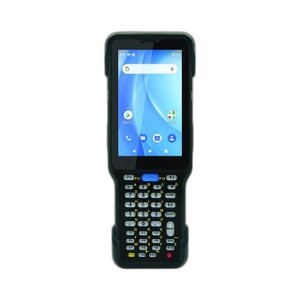
Wasp DR6 633809011603 Mobile Computer
The Wasp DR6 633809011603 is a handheld mobile computer configured without integrated radio or camera, designed for warehouse operations, retail inventory, and point-of-service workflows where reliable data entry and barcode capture via external scanner take priority over device-embedded connectivity. This SKU targets deployments that demand ruggedness and task-focused processing without the cost overhead of built-in RF modules or imaging. Teams using legacy scanners, external barcode readers, or separate camera solutions benefit from the DR6's stripped-down profile—lower device cost, simpler integration, and straightforward field replacement.
Key Features
- No Integrated Radio: Reduces device cost and eliminates RF troubleshooting overhead. Connect via USB docking station or external cradle for data transfer to Wasp WMS backend.
- No Integrated Camera: Lighten the processing load and thermal profile. Pair with external barcode scanner (USB or serial) for flexible capture workflows.
- DR6 Platform Compatibility: Docks with standard DR6 cradles, chargers, and communication modules. Swap modules in the field without replacing the entire device.
- Warehouse-Grade Durability: Designed to survive drop impacts, moisture exposure, and multi-shift handling in distribution centers and retail backrooms.
- Task-Driven Interface: Lightweight OS footprint optimized for inventory counts, bin moves, order picking, and receiving workflows—not bloated with features your operation won't use.
- Modular Expansion: RF and camera modules available as optional add-ons if requirements change; avoids overbuying connectivity you don't need today.
- Docking Station Integration: Charge, sync, and deploy multiple units from a single dock without per-device configuration complexity.
Warehouse teams often inherit mixed-fleet scenarios—some locations need full-featured mobile computers with integrated RF and imaging, others operate in confined spaces (narrow aisles, high-density racks) where a lighter handheld plus an external barcode wand actually speeds up cycle time. The DR6 without radio/camera addresses that second scenario directly. You avoid paying for wireless modules and camera sensors that sit idle, and your battery life stretches longer because the CPU isn't powering RF chipsets 24/7.
Integration into Wasp WMS is straightforward: the DR6 communicates via USB docking cradle to a stationary WMS terminal or PC running Wasp warehouse software. Data sync happens at receiving, shipping, or inventory count stations—no need for real-time wireless mesh. This model also plays well in retail environments where handheld price-check devices or POS terminals handle the heavy lifting; the DR6 becomes a dedicated inventory tool, reducing context-switching and improving operator efficiency.
The modular design is the real operational advantage. If your supply chain evolves—say you add a new warehouse automation zone that requires RFID scanning—you can attach an RF module to the same DR6 cradle and deploy without wholesale fleet replacement. That flexibility protects your initial capital spend and lets you scale capability without forced obsolescence.
Wasp DR6 devices are sold with manufacturer warranty coverage and are supported through Wasp's channel partner network. Verify that your WMS version and docking station firmware align with this radio-less SKU before bulk deployment; Wasp support can confirm compatibility with your specific warehouse backend.
Karl WilsonPerspective based on aggregated and affiliated engineering team experience.
We've deployed plenty of DR6 series units across mid-size 3PLs and regional distribution networks, and the no-radio configuration makes sense in specific operational contexts. The key insight: not every warehouse needs every sensor on every device. We've worked with clients who operate tight grid racks—narrow horizontal picks where an operator is mostly stationary, walking from bin A to bin B with a handheld and a wand scanner in a holster. In that environment, the DR6 without RF is faster to deploy, cheaper per unit, and honestly more rugged because you're not dealing with RF antenna protrusion risks or interference tuning. The radio-free model also means you're not burning battery power on RF chipset idle current, which matters on a two-shift rotation where cradle docking isn't guaranteed between rounds. We've seen teams cut device cost per unit by 20-30% versus the full RF+camera stack, reinvesting that savings into a second set of backup handheldss or external scanning equipment that's already proven in their warehouse. That said, this configuration only works if your backend connectivity is reliable—you need a solid docking station infrastructure and a WMS that can handle batch sync. If your operation is geographically spread (multiple buildings, outdoor receiving) and you need real-time comms, the radio becomes mandatory. We've also seen cases where customers underestimate future needs and buy the base model, then retrofit RF modules later, which works but costs more than buying RF-ready upfront. Know your topology before you commit.
Technical Highlights:
- Modular Design: Cradle and dock are separate from the handset; RF and camera modules attach to the cradle ecosystem, not the device itself. This means you can swap functionality without replacing the computer unit if requirements change.
- USB Docking Sync: Data transfer and charging via USB cradle simplifies IT deployment in environments without corporate Wi-Fi or cellular coverage. No wireless pairing headaches, no RF channel conflicts.
- Lightweight Processing Footprint: No RF or imaging stacks mean the CPU operates closer to baseline clock, lower temperature profile, and reduced thermal load in packed carts or closed vehicles during outdoor receiving.
- External Barcode Flexibility: Works with USB or serial barcode scanners, RFID readers, or magnetic stripe readers attached via cradle—you're not locked into a single form factor.
- Battery Longevity: RF chipsets and camera processors are power-hungry; removing them extends run time on a single charge by an estimated 15-25%, depending on workload and screen-on duty cycle.
Deployment Considerations:
- Verify WMS backend version compatibility before rollout—older Wasp WMS instances may have assumptions about RF presence. Confirm with your reseller or Wasp support that batch-sync workflows are supported.
- Docking station placement is critical. Unlike RF-equipped units, this model has zero roaming capability; you must ensure cradles are within 50 feet of every high-traffic inventory zone, or operator walks turn into detours.
- External barcode scanners introduce an extra failure point. Budget for redundant scanner hardware and keep calibration/maintenance SLAs in place—a broken wand means downtime for that operator.
- If you ever need to add RF (for RFID or mobile receiving), you'll need to purchase RF-capable cradles separately. Confirm RF module pricing and lead time before committing to the base model at scale.
- No integrated camera means photo capture (for damage claims, overages, or label verification) requires a separate device—smartphone or dedicated industrial camera. Coordinate that workflow before deployment.
The Wasp DR6 633809011603 is the right fit for operations with stable warehouse topology, reliable docking infrastructure, and no immediate RF requirements. If you're a small warehouse with 4-8 operators running grid picks or a retail chain managing inventory counts, this model pays for itself through simplicity. Check the Wasp catalog for RF-enabled alternatives if your roadmap includes mobile receiving or yard management.