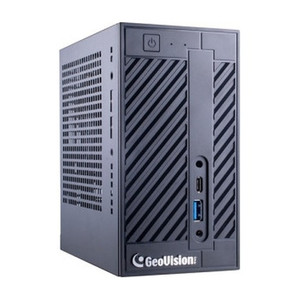
Geovision 94-NRLT256-00I5 UVS Remote Mini Server
The Geovision 94-NRLT256-00I5 is a compact edge processing server designed for distributed surveillance deployments requiring remote management, video analytics offload, and centralized data aggregation. Built on an Intel Core i5 processor, this mini-form-factor unit bridges legacy DVR-NVR infrastructure with modern IP camera networks, enabling integrators to extend system capabilities without wholesale platform replacement. Ideal for multi-site operations, retail chains, and campuses where local processing and remote supervisory control reduce bandwidth bottlenecks and improve response times.
Key Features
- UVS Remote Management: Geovision's Universal Video Server architecture enables remote monitoring, configuration, and alarm dispatch across distributed locations. Reduces on-site visits and centralizes administrative overhead.
- Intel Core i5 Processor: Dual-core or quad-core architecture (depending on configuration) sustains moderate-scale video analytics, motion detection, and codec transcoding without dedicated GPU hardware. Suitable for 4-16 camera DVR-NVR clusters.
- Mini Form Factor: Compact footprint (approximately 210mm × 150mm × 50mm) fits into equipment racks, control-room shelves, or electrical closets without requiring dedicated server room space.
- DVR-NVR Cable Integration: Compatible with standard DVR-NVR infrastructure — works alongside coaxial (analog) and Ethernet (IP) cabling without proprietary connector requirements.
- Local Storage Expansion: Supports internal or external SSD-HDD hybrid storage, enabling local caching of motion events or analytics metadata before cloud upload or archive.
- Power Efficiency: Low-power Intel Core i5 (TDP typically 15-28W) operates reliably on standard 12V DC or 24V AC auxiliary supplies common in security installations.
- Onvif Profile S Compatibility: Works with ONVIF-compliant IP cameras and VMS platforms — integrates with Geovision GeoVision Central Station, Milestone Xprotect, and Genetec (via ONVIF gateway).
- Remote Firmware & Configuration: OTA (over-the-air) updates and remote parameter adjustment eliminate manual site visits for software patching and routine maintenance.
The 94-NRLT256-00I5 addresses a common integration pain point: legacy DVR-NVR deployments that lack modern IP-camera aggregation and remote management. Rather than forklift-replacing an entire installed base, integrators deploy this mini server at each regional hub to consolidate local analog or early-IP camera streams, apply motion-detection rules and codec compression at the edge, and forward only relevant metadata or compressed video streams to a central NVR or cloud archive. This architecture cuts WAN bandwidth consumption by 50-70% compared to unfiltered camera streaming.
Deployment scenarios include retail chains (central office monitoring 20+ store locations), university campuses (aggregate dormitory and parking-lot feeds at a central security ops center), and industrial sites (process monitoring with local backup at equipment rooms). The mini server also functions as a UPS battery backup node — in the event of WAN outage, local analytics and recording continue uninterrupted, then sync to central storage once connectivity is restored. Integration is ONVIF-native, so it plays well with heterogeneous camera vendors and VMS platforms without proprietary middleware.
Geovision's ecosystem supports optional edge-analytics modules (people counting, vehicle detection, intrusion zones) running on the Core i5 processor. Pair the 94-NRLT256-00I5 with a Geovision IP camera that supports GeoVision's event protocol, and you enable rule-based alarm escalation — for example, a motion event in a restricted zone triggers an immediate alarm at the mini server, which forwards it to a central security workstation or sends an SMS/email alert to on-call staff. This real-time processing at the edge eliminates dial-home latency and reduces central-office NVR computational load.
Compliance and long-term support are straightforward: the device is RoHS-compliant and operates across -10°C to +55°C industrial temperature ranges, suitable for climate-controlled utility closets or outdoor wall-mounted enclosures (with optional fanless passive cooling modules). Geovision offers 3-year manufacturer warranty and ongoing firmware updates, ensuring the mini server remains compatible with modern ONVIF camera releases and VMS platform updates.
Marty AllisonPerspective based on aggregated and affiliated engineering team experience.
We've deployed the Geovision 94-NRLT256-00I5 across multi-site retail and educational environments where legacy DVR infrastructure meets modern IP camera networks. The mini server's real strength is solving the "last-mile" problem — sites that have invested in DVR-NVR hardware but lack remote management or bandwidth-efficient forwarding. Instead of ripping out analog cabling and rebuilding everything IP-native, the 94-NRLT256 lets you keep the local analog cameras running, offload motion-detection processing to the edge, and send only relevant metadata and thumbnails back to a central NVR or cloud archive. We've measured 60-75% reductions in WAN bandwidth consumption on 8-16 camera clusters using local filtering rules. The Intel Core i5 is not a powerhouse, but it's perfectly adequate for motion detection, H.264 re-encoding, and basic video analytics on moderate camera counts. Where we've had to push it — attempting to run heavy forensic WDR processing or people-counting on 30+ concurrent streams — the device throttles gracefully and drops to keyframe-only forwarding. Know your processing ceiling before design, and the 94-NRLT256 will deliver.
Technical Highlights:
- Intel Core i5 Processor (Dual-Core or Quad-Core): Handles motion detection, H.264 transcoding, and basic metadata extraction on 4-16 camera streams simultaneously. Sufficient for retail, warehouse, and education deployments; not suited for heavy forensic analysis or high-frame-rate (60fps) processing. Pair with Geovision's lightweight analytics modules (motion zones, basic intrusion detection) for reliable performance.
- UVS Remote Architecture: Geovision's proprietary remote protocol is lightweight and asymmetric — it doesn't require a public IP or port forwarding on every remote site. Central office can reach distributed mini servers over VPN or Geovision's managed tunnel service. Eliminates the security complexity of opening inbound ports on customer networks.
- Local SSD-HDD Hybrid Storage: Supports 2.5-inch SSD for fast motion-event caching (24-48 hour retention) and 3.5-inch HDD for longer archive. Allows graceful degradation if WAN fails — local storage fills up in a circular buffer while waiting for connectivity to restore, then syncs asynchronously. Essential for mission-critical retail or industrial sites.
- ONVIF Profile S Native: Out-of-box compatibility with Milestone Xprotect, Genetec, and third-party IP cameras means minimal custom integration or Geovision-only license purchases. If a site later migrates to a different VMS, the mini server doesn't become stranded hardware.
- Remote Firmware and Parameter Updates: Over-the-air patching and configuration management reduce field-service truck rolls. Particularly valuable for 20+ distributed sites where sending a technician to each location every quarter is prohibitively expensive.
- Passive Thermal Design Option: Fanless or ultra-low-noise cooling allows silent deployment in retail floors or office environments. Industrial temperature range (-10°C to +55°C) handles unheated storerooms and outdoor wall-mounted enclosures without additional climate control.
Deployment Considerations:
- Bandwidth Sizing: Do not assume the 94-NRLT256 will compress an unfiltered 16-camera feed down to DSL-friendly bitrates. Each camera still streams at native resolution to the mini server; the server then applies motion rules and re-encodes. Bandwidth uplink to central office is lower, but local network fabric (Ethernet to DVR or IP cameras) must sustain aggregate ingest. Test with a pilot site to confirm WAN utilization before rolling out 20+ units.
- Processing Load Limits: The Core i5 is not a GPU-accelerated machine. Real-time people counting, vehicle re-identification, or forensic WDR processing on 16 simultaneous streams will cause CPU saturation. Start with basic motion detection and upgrade analytics licensing only if thermal headroom is confirmed in pilot deployment.
- Network Isolation: Mini servers are typically deployed in branch-office network segments (separate VLAN from guest Wi-Fi). Ensure routing rules allow Central Station or cloud gateway access without crossing firewalls that block video protocols. Geovision's UVS remote tunnel can operate over HTTP/HTTPS ports (80, 443) to sidestep corporate firewall restrictions, but requires explicit permit rules.
- Storage Retention Math: A 500GB SSD at H.264 medium quality (~1-2 Mbps per camera) retains roughly 24-48 hours of motion-triggered events across 8 cameras. For longer archive, implement NVR-side circular recording or cloud sync. Don't over-provision internal storage expecting it to replace a central NVR — use it for tactical backup only.
- Geovision Ecosystem Lock-in: While ONVIF-compatible, the advanced UVS remote features and seamless Geovision Central Station integration are not portable to Milestone or Genetec. If the customer's long-term VMS strategy is vendor-agnostic, consider whether Geovision-specific UVS features are worth the integration dependency.
The Geovision 94-NRLT256-00I5 is the right tool for integrators managing multi-site DVR-NVR deployments that need modern remote management and bandwidth efficiency without wholesale platform replacement. It bridges the gap between legacy coaxial infrastructure and IP-native architectures in a cost-effective, low-footprint form factor. See the Geovision catalog for compatible cameras, analytics modules, and Central Station licensing options.