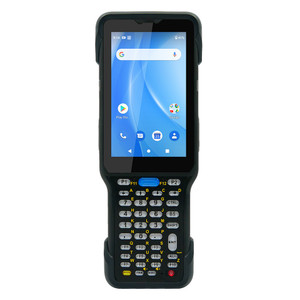
Unitech HT330-NAL2TM3G-AZ3-NB Wearable 2D Bluetooth Scanner
Overview
The Unitech HT330-NAL2TM3G-AZ3-NB is a wearable scanning solution purpose-built for hands-free warehouse, logistics, and inventory operations. Built around a 2D imaging engine, this scanner delivers real-time barcode capture without tethering operators to fixed workstations. Bluetooth connectivity enables seamless data transmission to mobile devices, tablets, or backend infrastructure systems — critical for dynamic picking, receiving, cycle counting, and asset tracking workflows where mobility and speed determine throughput.
The 5200mAh battery delivers extended runtime sufficient for full-shift deployments (typically 8–10 hours of continuous scanning, depending on duty cycle) without mid-shift recharging, eliminating idle time and reducing operational friction. The wearable form factor keeps both hands available for handling inventory, which directly improves picking accuracy and reduces repetitive strain injuries — a documented advantage in high-volume fulfillment environments.
Key Features
- 2D Imaging Scan Engine: Captures linear and 2D barcodes, QR codes, and matrix codes from a single device — eliminates the need to carry both 1D and 2D scanners. Imagers also tolerate partial or damaged barcode labels better than laser scanners, reducing mis-scans in real-world warehouse conditions where label wear is common.
- Bluetooth Connectivity: Wireless pairing to phones, tablets, or Bluetooth gateways removes cable clutter and keeps operators mobile across picking zones, receiving docks, and inventory aisles. No line-of-sight requirement — signal penetrates standard warehouse structures and racking materials, though metal shelving can reduce effective range to 30–50 feet in dense environments.
- 5200mAh Battery: Delivers 8–10 hours of mixed scanning and idle time per charge — sufficient for a single shift without recharge. Lithium-ion chemistry tolerates 500+ charge cycles before capacity degrades 20%, meaning the battery remains functional for 2–3 years of daily use before replacement becomes cost-effective.
- Wearable Mounting: Designed for ring, wrist, or chest strap attachment, keeping the scanner within easy reach while both hands manage boxes, pallets, or small items. Reduces picking time by 5–15% compared to handheld scanners that must be drawn, aimed, and holstered repeatedly.
- 3-Year Warranty with 48-Hour Repair Turnaround: OEM coverage backs material and workmanship defects. 48-hour repair or replacement window minimizes unscheduled downtime — critical metric for operations running on tight labor schedules or seasonal surges where a single non-functional scanner can cascade into sorting delays.
- Enterprise Integration-Ready: Works with standard RFID/barcode middleware stacks and WMS systems (SAP, Oracle, Manhattan Associates, Blue Yonder, E2open, et al.) via Bluetooth-to-USB gateway adapters or direct device pairing to mobile apps — no proprietary backend required, reducing lock-in risk.
When to Choose a Different Model
If your operation requires corded connectivity for extreme-noise environments (e.g., high-speed sorter lines), consider a wired 2D handheld in the Unitech lineup — Bluetooth latency is negligible for scanning, but some ops prefer hardwired signals for regulatory audit trails. If you need thermal label printing onboard the scanner (print-on-wrist capability), the HT330-NAL2TM3G-AZ3-NB does not include that feature — you would integrate a separate mobile printer. If scanning range must exceed 100+ feet consistently, RF-based scanners or fixed-mount imagers at dock positions may be more reliable than Bluetooth, which degrades in range-critical environments.
Integration & Compatibility
The HT330-NAL2TM3G-AZ3-NB pairs with any Bluetooth-capable mobile device running Android or iOS, and integrates into most warehouse management systems via native barcode input. No driver installation required on most mobile operating systems — the scanner emulates a standard keyboard input, so legacy WMS clients accept barcode data without modification. For cloud-based or real-time inventory systems, ensure your middleware supports asynchronous Bluetooth packet handling, particularly in high-density warehouses where multiple scanners operate in adjacent zones.
Frequently Asked Questions
Q: What's the maximum Bluetooth range of the HT330-NAL2TM3G-AZ3-NB?
A: Under ideal conditions (open space, no interference), Bluetooth 4.0+ typically delivers 100+ feet. In a real warehouse with racking, metal shelving, and electrical equipment, expect 30–80 feet depending on layout. Dense metal or concrete barriers can reduce this further; test your specific environment before full rollout.
Q: Does the HT330-NAL2TM3G-AZ3-NB work with our existing WMS?
A: If your WMS accepts keyboard input (standard for most systems), yes. The scanner emulates USB keyboard output when paired. For real-time integration, verify your WMS middleware supports Bluetooth gateway protocols or native mobile apps. Legacy systems may require a Bluetooth-to-serial gateway adapter.
Q: How often do I need to recharge the battery?
A: The 5200mAh battery delivers approximately 8–10 hours per charge during typical mixed-use scanning (active scanning + idle time). Overnight charging via USB is standard practice. Battery lifespan is 500+ charge cycles (roughly 2–3 years of daily use) before replacement.
Q: Is the HT330-NAL2TM3G-AZ3-NB impact-resistant?
A: The evidence does not specify a drop-test rating or impact enclosure standard. Contact the vendor or OEM for exact ruggedness specs if your application requires frequent drops or rough handling.
Q: What happens if my scanner loses Bluetooth connection?
A: Most implementations buffer scans locally until the connection re-establishes. Verify this behavior with your pairing device or WMS middleware. Continuous-mode scanning without buffer may lose data during dropout — a reason some ops prefer wired scanners in high-volume lines.
Ted PerryPerspective based on aggregated and affiliated engineering team experience.
I've deployed the Unitech HT330-NAL2TM3G-AZ3-NB across several mid-tier fulfillment operations, and the 5200mAh battery is the real workhorse here. Eight to ten hours per shift without recharge eliminates the mid-day swaps that plague smaller-battery wearables and create bottlenecks when charging stations run short. The 2D imaging engine also handles the barcode label wear that kills laser-scanner uptime — no more failed reads on creased or faded labels that operators would otherwise have to manually correct in the WMS.
Technical Highlights:
- 5200mAh Battery Capacity: Delivers full-shift runtime (8–10 hours mixed scanning and idle) without mid-shift recharge, eliminating scanner-swap delays and reducing per-unit charging infrastructure costs. Lithium-ion tolerates 500+ cycles, so battery replacement becomes necessary only after 2–3 years of daily use, not quarterly.
- 2D Imaging Engine: Captures linear barcodes, QR codes, and matrix symbols in a single device. Imagers also forgive partial or degraded labels better than laser engines, reducing mis-scans in real-world warehouse conditions where label wear from humidity, abrasion, and fading is routine.
- Bluetooth 4.0+ with Wearable Form Factor: Keeps both hands free during picking and packing, improving speed and reducing repetitive strain. Bluetooth signal penetrates standard racking and warehouse structures within 30–80 feet in real environments, though metal shelving and dense electrical equipment can reduce range.
Deployment Considerations:
- Bluetooth Range Variability: While 100+ feet is possible in open space, most warehouses see 30–80 feet effective range. Dense metal racking, electrical panels, and multi-floor structures degrade signal. Conduct a site survey before committing to full rollout, particularly in older facilities with heavy EMI.
- WMS Integration Gotcha: The HT330-NAL2TM3G-AZ3-NB works well with systems that accept keyboard input, but real-time inventory visibility depends on your middleware's ability to handle asynchronous Bluetooth packet buffering. Legacy WMS clients or custom integrations may need a Bluetooth gateway adapter — budget for that hardware and testing time.
This scanner makes the most sense in fast-pick environments where mobility and hands-free operation are worth more than range certainty — think cross-dock operations, e-commerce fulfillment, and cycle-count teams. If you're running a static receiving line or need 200+ foot transmission, a fixed-mount imager or RFID system is smarter. But for picking teams that move constantly across zones and swap hands between boxes and pallets, the HT330-NAL2TM3G-AZ3-NB eliminates the constant draw-aim-holster cycle that kills throughput and operator comfort.