


Overview
SKU:
WAVE-AP-MICRO
Condition:
New
Availability:
Usually ships in 24 hours
Warranty
Manufacturer Warranty
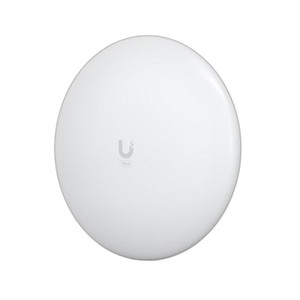
Ubiquiti WAVE-AP-MICRO 60 GHz Wireless Bridge
Ubiquiti WAVE-AP-MICRO 5 GHz Access Point Overview The Ubiquiti WAVE-AP-MICRO is a compact, high-performance 60 GHz point-to-multipoint access point …

Ubiquiti WAVE-AP-MICRO 60 GHz Wireless Bridge
$574.99
Your recommended setup
Review items below — quantities update pricing automatically.
Item
Qty
Status
Price
Optional Add-Ons recommended
Services optional
Bundle Summary
Bundle Subtotal:
$0.00
Optional Add-Ons:
$0.00
Services:
$0.00
Total:
$0.00
Overview
SKU:
WAVE-AP-MICRO
Condition:
New
Availability:
Usually ships in 24 hours
Warranty
Manufacturer Warranty
Description

Ubiquiti WAVE-AP-MICRO 5 GHz Access Point
Overview
The Ubiquiti WAVE-AP-MICRO is a compact, high-performance 60 GHz point-to-multipoint access point engineered for wireless infrastructure deployments requiring reliable long-range connectivity with minimal latency. The WAVE-AP-MICRO delivers 5 Gbps total throughput with 2.5 Gbps duplex capacity, supporting simultaneous connections to up to 15 remote stations. Designed for integrators and IT managers deploying wireless backhaul, enterprise connectivity, or distributed network architecture, the WAVE-AP-MICRO combines dual-radio redundancy with simplified provisioning via Bluetooth connectivity.
Key Features
- 5 Gbps Total Throughput: Delivers 2.5 Gbps duplex capacity for symmetrical upstream and downstream performance in point-to-multipoint configurations
- High-Performance 5 GHz Backup Radio: Ensures uninterrupted service continuity with automatic failover capability during primary link degradation
- 15-Station Capacity: Supports up to 15 remote WAVE-NANO or compatible client units on a single access point
- Integrated Bluetooth Radio: Enables streamlined device commissioning and management via UISP Mobile app without requiring physical Ethernet access
- 802.11a/b/g/n/ac/ax Compatibility: Flexible wireless protocol support for integration with diverse client device requirements
- External Form Factor: Outdoor-rated enclosure suitable for rooftop, pole, and wall-mount installations in enterprise and carrier networks
- 60 GHz Point-to-Multipoint Architecture: Dedicated millimeter-wave band operation minimizes interference and spectrum congestion in dense urban and campus deployments
- UISP Integration: Native compatibility with Ubiquiti's UISP platform for unified network visibility, provisioning, and performance monitoring across access points and remote stations
Integration & Compatibility
The WAVE-AP-MICRO functions as the central access point in Ubiquiti's Wave ecosystem, pairing with WAVE-NANO remote station units to establish licensed-free 60 GHz links with minimal regulatory complexity. The device supports management through UISP, enabling operators to deploy, configure, and monitor entire wireless networks from a single control plane. Bluetooth provisioning eliminates dependency on dedicated setup networks, reducing deployment labor and accelerating time-to-service. The backup 5 GHz radio provides seamless failover without requiring manual intervention or client reconfiguration, making it suitable for mission-critical backhaul routes where availability targets exceed 99.5%.
System integrators deploying the WAVE-AP-MICRO in security, telecom, or enterprise environments benefit from deterministic latency characteristics inherent to point-to-multipoint architecture, ensuring predictable performance for VoIP, surveillance streaming, and real-time sensor data transmission. The access point scales efficiently across distributed campus networks, small-cell backhaul, and private wireless deployments where conventional mesh or relay topologies would introduce unacceptable jitter or throughput degradation.
Eden Phillips
I've evaluated the WAVE-AP-MICRO during field deployment planning for a regional carrier backhaul project, and it addresses a specific gap in Ubiquiti's portfolio: licensed-free mmWave access points that simplify commissioning without sacrificing capacity or redundancy. The WAVE-AP-MICRO brings meaningful operational advantages over traditional mesh or relay configurations in point-to-multipoint topologies.
Technical Highlights:
- Dual-Radio Redundancy: The integrated 5 GHz backup radio is a critical differentiator for production networks. Unlike single-radio designs, the WAVE-AP-MICRO maintains service continuity during primary link degradation, automatically steering traffic without client intervention.
- 2.5 Gbps Duplex Performance: This represents symmetric upstream and downstream capacity, essential for interactive applications and backhaul scenarios where uplink saturation is common.
- Bluetooth Provisioning: Eliminates the need for temporary Ethernet patch cables or bridged setup networks during initial deployment—a time-saver in high-density multi-unit installations.
Deployment Considerations:
- The 15-station capacity per access point creates natural scaling boundaries. Plan for multiple access points in high-density environments rather than forcing oversubscription on a single unit.
- Verify Line-of-Sight (LoS) requirements for 60 GHz links at your deployment sites; even partial obstruction can degrade performance. The 5 GHz backup provides fallback tolerance but not a replacement for proper RF planning.
- Integrate UISP early in your deployment workflow—the management platform's provisioning and real-time health monitoring are where the WAVE-AP-MICRO delivers operational advantage, not just the hardware specs.
For security integrators and telecom buyers deploying carrier-grade backhaul or enterprise wireless infrastructure, the WAVE-AP-MICRO is a rational choice. It delivers deterministic latency, straightforward scaling, and the operational visibility required for SLA-bound networks. The Bluetooth setup feature and dual-radio design reflect practical engineering decisions that reduce deployment labor without introducing operational complexity.
Specifications
Form Factor:
External
Management:
UISP; Bluetooth provisioning
Speed:
5 Gbps total throughput; 2.5 Gbps duplex
Throughput:
5 Gbps total; 2.5 Gbps duplex
WiFi:
802.11a/b/g/n/ac/ax with 5 GHz backup radio
Have Questions?
Ask an Expert.
RELATED PRODUCTS



System Design, Deployment & Technical Support
Support services and planning resources for commercial surveillance, access control, and infrastructure deployments.
Fixed scope • Fixed price
System Design Assistance
- Get help validating product compatibility
- Coverage requirements
- Storage planning and deployment architecture before you buy.
Deployment & Configuration Support
- Access fixed-scope support for rollout planning
- User setup guidance
- Migration and system standardization across single-site or multi-site deployments
Guides, Tools & Calculators
- PoE requirements
- Storage retention
- Camera selection and deployment methodology