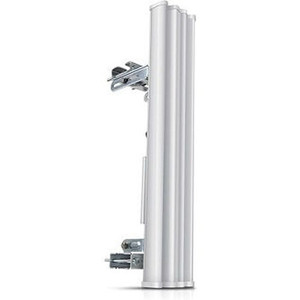
Ubiquiti RD-5G34 5GHz 34dBi Parabolic Dish Antenna
Overview
The Ubiquiti RD-5G34 is a high-gain parabolic dish antenna engineered for long-range point-to-point and point-to-multipoint 5 GHz wireless deployments. At 34 dBi of gain, the RD-5G34 concentrates RF energy directionally, significantly reducing the fade margin required to maintain stable links across extended distances. This translates directly to reduced transmit power requirements or extended coverage range compared to omnidirectional or lower-gain alternatives — a practical advantage when deploying backbone links, tower-to-tower backhaul, or remote site connectivity where terrain or distance challenges conventional wireless solutions. The antenna integrates into the Ubiquiti UISP Wireless ecosystem, enabling centralized provisioning, monitoring, and management of antenna-based links through unified network platforms. Manufactured in China and weighing 50 pounds, the dish balances substantial RF performance with field-installable weight when proper rigging is applied.
Key Features
- 34 dBi Directional Gain: High-gain parabolic geometry focuses transmitted and received 5 GHz energy into a tight RF pattern. This directional concentration means less wasted power in unwanted directions, reduced susceptibility to interference from adjacent channels or co-frequency sources, and extended viable link distances — especially valuable in dense RF environments or where interference mitigation is a cost driver.
- 5 GHz Operating Band: 5 GHz deployments support higher per-link data throughput and denser spectrum reuse compared to 2.4 GHz solutions. In congested urban or multi-tenant deployments, this band separation alone can eliminate inter-network interference and improve aggregate network capacity.
- Parabolic Dish Form Factor: The dish geometry delivers consistent, repeatable gain and beamwidth characteristics across the operational frequency range. Precise alignment — typically within 2 to 5 degrees — is required to realize published gain and maintain link stability, but proper alignment delivers predictable link budgets suitable for long-haul deployments.
- UISP Wireless Integration: The RD-5G34 integrates as a passive RF component with Ubiquiti 5 GHz radio modules and basestation equipment. This ecosystem approach simplifies link provisioning, monitoring, and remote troubleshooting through a single management interface, reducing operational overhead compared to standalone antenna deployments.
- RocketKit Configuration: The bundled antenna and mounting hardware reduces on-site integration complexity and part coordination, allowing faster field deployment when scheduling tower access or managing multiple simultaneous installations.
- Robust Field Construction: Parabolic geometry, weathered radome design, and grounding provisions protect RF performance and electrical safety in outdoor environments. Regular inspection of RF connectors, fasteners, and radome condition prevents environmental water ingress and material degradation over time.
Deployment Scenarios & Integration
The RD-5G34 addresses backbone and distribution link challenges where fiber is unavailable, cost-prohibitive, or geographically impractical. ISPs deploying fixed wireless access use the dish to concentrate last-mile coverage into targeted service areas, reducing power draw and cell overlap. Enterprise and municipal networks rely on high-gain dishes for inter-building backhaul or campus extensions across geographic separations. The antenna functions as a passive RF component — system designers specify antenna gain and coverage pattern in conjunction with transmit power and receiver sensitivity to model link budgets and verify range requirements before field deployment. Proper mounting on robust tower infrastructure and appropriate wind-load verification are essential to ensure RF performance stability and installation safety.
Installation and Maintenance
At 50 pounds, the RD-5G34 requires robust mounting structures and appropriate rigging during installation. Tower-mounted deployment demands verification of mounting compatibility with existing infrastructure and confirmation of wind-load ratings before commissioning. Weathering and grounding provisions prevent RF performance degradation and ensure electrical safety. Regular inspection of RF connectors, fasteners, and radome condition prevents environmental water ingress and extends antenna service life in field deployments.
Frequently Asked Questions
Q: What is the alignment tolerance for the RD-5G34?
A: Proper alignment is typically required within 2 to 5 degrees to achieve published gain specifications and maintain link stability. Misalignment beyond this tolerance degrades link performance and fade margin.
Q: Can the RD-5G34 be used for point-to-multipoint deployments?
A: Yes. The RD-5G34 supports both point-to-point and point-to-multipoint configurations when integrated with appropriate Ubiquiti 5 GHz radio modules and basestation equipment within the UISP Wireless platform.
Q: What is the weight and does it require special mounting?
A: The antenna weighs 50 pounds and requires robust tower mounting structures with proper rigging. Verify mounting compatibility with existing tower infrastructure and confirm wind-load ratings before deployment.
Q: Does the RD-5G34 integrate with UISP Wireless management?
A: Yes. The RD-5G34 integrates as a passive RF component with Ubiquiti 5 GHz radio modules and basestation equipment, allowing unified provisioning and monitoring through UISP Wireless management platforms.
Q: What is the frequency band, and does it support higher data density than 2.4 GHz?
A: The RD-5G34 operates in the 5 GHz band, which supports higher per-link throughput and denser spectrum reuse compared to 2.4 GHz solutions, reducing interference in congested RF environments.
Ted PerryPerspective based on aggregated IP Security Depot and affiliated engineering team experience.
The Ubiquiti RD-5G34 delivers predictable, high-gain RF performance for long-range point-to-point and backbone scenarios where directional focus translates into extended link distance and reduced fade margin. At 34 dBi, the antenna concentrates 5 GHz energy effectively, enabling stable links across geographic separations where fiber installation is infeasible or cost-prohibitive. The RD-5G34 integrates cleanly into the UISP Wireless ecosystem, allowing unified link provisioning, monitoring, and management from a single platform — a real operational advantage in multi-site deployments.
Technical Highlights:
- 34 dBi Directional Gain: Concentrates RF energy with tight beamwidth, reducing transmit power requirements and interference susceptibility. A 34 dBi gain translates to extended viable link distances compared to lower-gain dishes or omni alternatives, directly impacting link budget margins and transmit power economy.
- 5 GHz Band Operation: Supports higher per-link throughput and spectrum density compared to 2.4 GHz. In congested or multi-tenant RF environments, 5 GHz band separation eliminates interference overlap and improves aggregate network capacity across adjacent links.
- 50-Pound Field Weight: Substantial but manageable with proper rigging and tower infrastructure. Weight distribution demands robust mounting structures and requires verification of tower wind-load ratings before deployment — a non-negotiable pre-installation step.
Deployment Considerations:
- Alignment tolerance is tight: 2 to 5 degrees required to achieve published gain. Misalignment degrades performance rapidly, so field alignment verification and periodic re-check are essential for long-term link stability.
- Integration with UISP Wireless is straightforward, but the RD-5G34 is a passive antenna — radio module and basestation equipment selection drive actual link throughput and capacity. Pair the dish with appropriate 5 GHz radio specifications for your distance and throughput targets.
The RD-5G34 excels in multi-site ISP backhaul, enterprise inter-building distribution links, and remote site connectivity where high-gain directional focus justifies the installation effort and alignment precision. Skip this if your deployment requires omnidirectional coverage or sub-kilometer distances — lower-gain omni solutions are simpler and cheaper in those scenarios.