

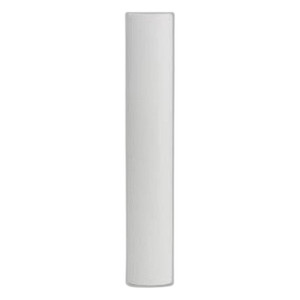

Product images are provided for reference and may not represent the exact model, configuration, or included
components.
Overview
SKU:
AM-5G19-120
Condition:
New
Availability:
Usually ships in 24 hours
Warranty
Manufacturer Warranty
Write a Review
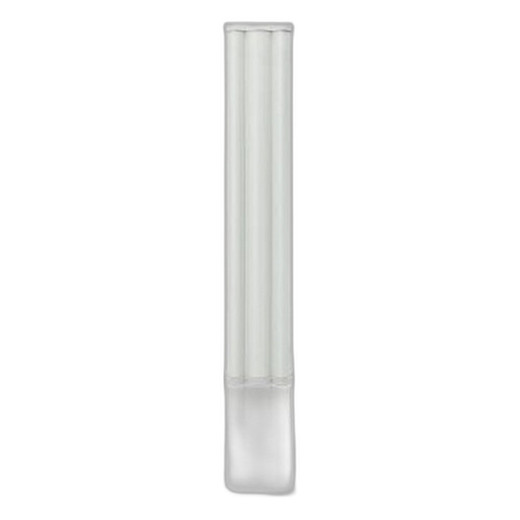
Write a Review
Ubiquiti
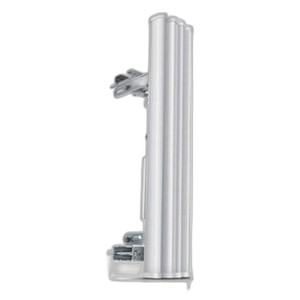
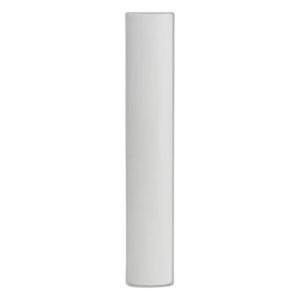
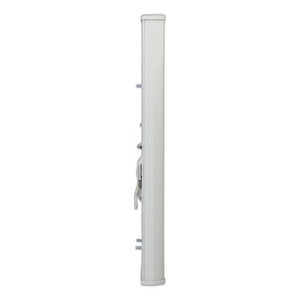
Ubiquiti AM-5G19-120 5GHz AirMax BaseStation,19dBi,120 deg,ro
Ubiquiti AM-5G19-120 5GHz AirMax BaseStation,19dBi,120 deg,ro
Ubiquiti AM-5G19-120 5GHz Sector Antenna Overview The Ubiquiti AM-5G19-120 is a 5GHz airMAX sector antenna engineered for point-to-multipoint wireles…
Ubiquiti AM-5G19-120 5GHz AirMax BaseStation,19dBi,120 deg,ro
$148.99
Your recommended setup
Review items below — quantities update pricing automatically.
Item
Qty
Status
Price
Optional Add-Ons recommended
Services optional
Bundle Summary
Bundle Subtotal:
$0.00
Optional Add-Ons:
$0.00
Services:
$0.00
Total:
$0.00
Overview
SKU:
AM-5G19-120
Condition:
New
Availability:
Usually ships in 24 hours
Warranty
Manufacturer Warranty
Description
Ubiquiti AM-5G19-120 5GHz Sector Antenna
Overview
The Ubiquiti AM-5G19-120 is a 5GHz airMAX sector antenna engineered for point-to-multipoint wireless deployments in carrier-grade networks. This sector antenna delivers 19 dBi gain across a 120-degree horizontal coverage pattern, making it well-suited for mid-to-long-range base station applications where coverage density and directional focus are critical. Weighing 9.6 pounds and manufactured in China, the unit integrates seamlessly into Ubiquiti's UISP Wireless product family, providing a cost-effective foundation for expanding outdoor mesh and fixed wireless networks.
Key Features
The AM-5G19-120 operates in the 5 GHz frequency band with a 19 dBi gain rating, concentrating RF energy across a 120-degree sector pattern. This configuration balances coverage breadth with directional efficiency, reducing interference in moderately populated deployment zones. The antenna's sector form factor is optimized for basestation mounting on towers and poles, where elevation and azimuth placement can be fine-tuned independently. The robust construction supports outdoor installation in variable climates, and the moderate weight (9.6 lb) simplifies mounting hardware requirements and reduces structural load on support infrastructure.
Deployment Scenarios
The AM-5G19-120 is deployed as a base station antenna in point-to-multipoint networks covering suburban and semi-rural service areas. Common use cases include wireless ISP (WISP) networks, enterprise campus backhaul, and municipal broadband infrastructure. The 120-degree pattern allows a single tower to support three coordinated sectors covering 360 degrees, or partial coverage in asymmetric deployment topologies. In UISP-integrated networks, multiple AM-5G19-120 units operating on the same or adjacent towers enable frequency reuse schemes that maximize spectrum efficiency.
Network Integration
The Ubiquiti AM-5G19-120 pairs with compatible 5 GHz airMAX radios and basestation equipment within the UISP Wireless ecosystem. Integration requires standard RF cable runs and mounting brackets; impedance matching and connector compatibility with your radio platform must be verified during design. The antenna's sector pattern is passive—no electrical tuning is required. Network management occurs at the radio and controller level using UISP or UniFi software, allowing centralized monitoring and optimization of antenna-level performance metrics.
Installation Notes
Mount the AM-5G19-120 at tower or pole height appropriate to your coverage objectives, ensuring ground clearance and line-of-sight to subscriber locations. Secure the antenna with standard U-bolt and mast-mounting kits rated for the 9.6 lb weight plus wind loading. Cable runs should be low-loss LMR-400 or equivalent, with proper grounding and surge suppression at the radio interface. Azimuth orientation and vertical tilt are adjusted mechanically during installation; careful alignment is essential for optimal sector coverage and interference mitigation. Allow adequate clearance from other antennas to minimize inter-system coupling.
Specifications
Form Factor:
Sector Antenna
Product Family:
UISP Wireless
Country of Origin:
CN
Weight:
9.600 lb
Have Questions?
Ask an Expert.
RELATED PRODUCTS

System Design, Deployment & Technical Support
Support services and planning resources for commercial surveillance, access control, and infrastructure deployments.
Fixed scope • Fixed price
System Design Assistance
- Get help validating product compatibility
- Coverage requirements
- Storage planning and deployment architecture before you buy.
Deployment & Configuration Support
- Access fixed-scope support for rollout planning
- User setup guidance
- Migration and system standardization across single-site or multi-site deployments
Guides, Tools & Calculators
- PoE requirements
- Storage retention
- Camera selection and deployment methodology