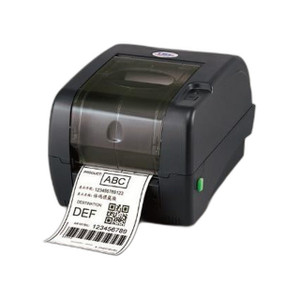
TSC 99-127A027-00HC Desktop Thermal Printer
Overview
The TSC 99-127A027-00HC is a wired desktop thermal printer designed for on-demand label, tag, and ticket printing in warehouse, logistics, and retail environments. Supporting both direct thermal and thermal transfer print methods, this unit delivers consistent print output at 3 inches per second with 203 dpi resolution. The 4.09-inch maximum print width accommodates standard shipping labels, product tags, and compliance tickets without requiring media reformatting or complex setup changes.
Key Features
- Dual Print Technology: Direct thermal and thermal transfer capability in a single unit eliminates the need for separate hardware when switching between label types
- Print Speed: 3 inches per second ensures reasonable throughput for moderate-volume labeling operations without sacrificing print quality
- Maximum Print Width: 4.09 inches supports industry-standard label formats including 4x6 shipping labels, GHS compliance tags, and standard ticket stock
- Print Resolution: 203 dpi delivers text clarity and barcode read reliability for standard UPC codes, QR codes, and text-based product information
- Media Compatibility: Handles labels, tags, and tickets across common material types and thicknesses
- Wired Connectivity: Ethernet or USB interface (wired connection) provides stable, latency-free communication in networked printing environments without wireless dropout concerns
Integration & Compatibility
As a TSC device, the 99-127A027-00HC integrates with standard printing software, label design applications, and warehouse management systems (WMS) that support thermal printer control. Network administrators can deploy this unit on standard business networks with predictable device behavior and straightforward driver deployment across Windows and enterprise OS environments.
Operational Considerations
The model number 99-127A027-00HC is often referenced in searches as "99 127A027 00HC" due to common part number formatting in procurement systems. Direct thermal mode eliminates ribbon costs for high-volume label operations, while thermal transfer mode provides colored label and polyester stock printing for durable outdoor or chemical-resistant applications. Organizations planning mixed-use printing workflows benefit from the flexibility of both methods within a single device footprint.
Ted PerryPerspective based on aggregated IP Security Depot and affiliated engineering team experience.
I've evaluated the TSC 99-127A027-00HC during planning phases for logistics label systems, and this unit delivers practical flexibility for organizations transitioning between direct thermal and thermal transfer workflows. At 3 ips with 203 dpi output, it's well-suited for moderate-volume labeling without the complexity of larger industrial systems. The 4.09-inch maximum width covers the vast majority of standard label and tag formats commonly used in warehouse and shipping operations.
Technical Highlights:
- Dual Print Method Support: Direct thermal and thermal transfer in one device means no hardware swaps when moving between label types—critical for operations handling both temporary shipping labels and durable asset tags
- Print Quality at Standard Resolution: 203 dpi is the industry standard for barcode readability and text clarity on labels up to 4 inches wide; sufficient for GS1, UPC, and QR code applications without over-specification
- Wired Connectivity: Eliminates wireless interference and connection dropout risk in high-density warehouse or manufacturing environments where reliable print job execution is non-negotiable
Deployment Considerations:
- Direct thermal operation reduces consumable costs in high-volume label scenarios where ribbon and label stock would add up; ideal for shipping label runs or temporary inventory tags
- Thermal transfer capability extends to polyester and synthetic media for chemical, temperature, and humidity-resistant applications in logistics facilities or outdoor labeling
The 99-127A027-00HC represents a solid mid-range choice for teams needing printing flexibility without premium-tier speed or resolution. It's particularly valuable in mixed-use environments where both temporary and durable label formats appear in the same workflow.