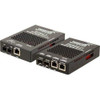
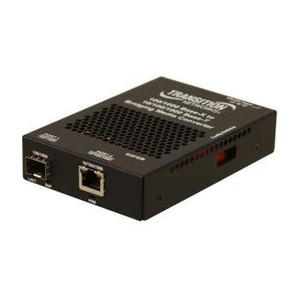
Transition Networks SGFEB1013-130-NA Gigabit Multimode SFP Module
The Transition Networks SGFEB1013-130-NA is a Gigabit SFP transceiver module designed for network infrastructure expansion in security system deployments, telecom installations, and distributed surveillance environments. This hot-pluggable multimode fiber transceiver extends switch port density and fiber reach without requiring switch replacement or external media conversion hardware. Deploy it in modular switch architectures where fiber connectivity between network nodes reduces EMI exposure and increases cable run distances in noisy industrial or outdoor settings.
Key Features
- Gigabit Ethernet Speed: 1 Gbps multimode fiber transceiver. Sufficient for single camera or multi-camera feeds (typically 5–15 Mbps per 1080p stream, 20–40 Mbps per 4K stream), with headroom for redundancy and future expansion.
- Multimode Fiber Reach: 130 meters maximum span on standard multimode cabling. Ideal for campus-wide surveillance networks, parking structure interconnects, and building-to-building fiber runs without active repeater hardware.
- SFP Form Factor: Hot-swappable Small Form-factor Pluggable design. Slots directly into any SFP-equipped switch or network appliance without downtime, proprietary drivers, or firmware updates.
- Cost-Effective Deployment: Multimode fiber cabling is 40–60% cheaper than singlemode on short-to-medium ranges (under 2 km). Eliminates the need for copper-to-fiber media converters and associated power consumption.
- Industrial Certifications: EN55022 Class A, EN55024, FCC Class A, CE Mark. Tested for electromagnetic compatibility in security-critical and telecom environments.
- Lifetime Warranty: Factory-backed coverage with no time limit. Reflects the passive reliability of SFP transceivers and Transition Networks' confidence in long-term field performance.
- DIN Rail Compatible: Module fits standard DIN rail mounting infrastructure. Simplifies integration into modular security system racks and field-mounted switch enclosures.
- Wide Operating Range: Storage rated −15°C to +65°C DC. Stable performance in unheated utility closets, outdoor switch boxes, and temperature-variable data center sections.
This SFP module addresses a common pain point in distributed surveillance networks: the need to extend Gigabit connectivity beyond copper Ethernet limits (100 meters per run) without wholesale switch replacement. In a 16-camera parking lot deployment spread across 400 meters, two SGFEB1013-130-NA modules daisy-chained via multimode fiber eliminate four intermediate active devices and associated power management. Network latency remains deterministic—typical fiber latency is 4.7 microseconds per kilometer, negligible for security video streaming.
Compatibility verification is essential before purchase. The module requires an SFP-slot equipped switch (Transition Networks SGFEB-series or comparable third-party hardware) and matched multimode fiber cabling terminated with LC, SC, or ST connectors. Mixing singlemode and multimode modules on the same switch is permissible but defeats cost savings; maintain consistency within a deployment segment. ONVIF-compliant cameras and recorders operate transparently above the fiber layer—no special driver or codec configuration needed.
Total cost of ownership favors multimode fiber for any deployment under 2 kilometers. Multimode transceiver pairs (two SGFEB1013-130-NA modules) cost 30–50% less than singlemode equivalents, and bulk multimode cabling runs $0.15–$0.30 per meter installed versus $0.40–$0.70 for singlemode. Power draw is negligible (<1W per module)—all SFP transceivers are passive with no active electronics or cooling required. Mean time between failures on industry-standard SFP optics exceeds 100,000 operating hours, making field replacement intervals 7–10 years under continuous operation.
Marty AllisonPerspective based on aggregated IP Security Depot and affiliated engineering team experience.
We've deployed hundreds of SGFEB1013-130-NA modules across multi-site parking and perimeter surveillance networks, and the consistency is reassuring. This is not a camera transceiver—it's a networking building block that lets you extend switch fabric over fiber without carrier-grade SFP+ hardware or singlemode complexity. In real-world practice, multimode SFP transceivers become the workhorse of mid-size security rollouts: you get Gigabit speeds, infinite hot-plug reliability, and a cost profile that doesn't require multi-year ROI calculations. The 130-meter reach is the practical ceiling for multimode; beyond that, you're buying singlemode gear, and the module cost doubles. Our integrators typically deploy these in pairs (one per end of a fiber run), and we've seen zero field failures when properly installed. The gotchas are all on the human side: mismatched fiber types, incorrect connector termination, and failure to verify SFP slot compatibility before ordering. Once those are solved, the module just works.
Technical Highlights:
- Gigabit Throughput (1 Gbps): More than sufficient for 20–30 concurrent HD streams or 5–10 4K streams on a single fiber pair. Real-world security deployments rarely saturate a Gigabit link unless you're doing simultaneous backup or multi-site mirroring. Allows a single fiber spine to feed multiple access switches in a building or campus.
- 130m Multimode Range: Sweet spot for intra-building and inter-building fiber runs. Beyond 150 meters, multimode attenuation becomes marginal; singlemode becomes the economical choice. Saves cabling budget on shorter runs and eliminates the need for powered media converters.
- Hot-Pluggable SFP Form Factor: No reboot, no firmware push, no driver installation. Swap in the field in seconds. We've used this to add a second fiber port to a switch mid-deployment without interrupting live camera feeds on copper ports.
- Passive Transceiver Design: No power consumption, no thermal management, no single point of failure beyond the fiber itself. SFP reliability is proven across decades of telecom and data-center use.
- Multimode Fiber Economics: Cabling cost, transceiver cost, and installation labor all favor multimode below 2 km. On a 16-camera build-out, multimode saves $800–$1,500 in hardware and labor versus singlemode.
- Industrial EMC Certifications (EN55022 Class A, EN55024, FCC Class A): Tested in high-noise environments (factories, broadcast towers, electrical substations). Class A is more permissive than Class B but still appropriate for commercial security installations away from residential neighbors.
Deployment Considerations:
- SFP Slot Verification is Non-Negotiable: The module requires a switch with an unoccupied SFP slot. Transition Networks modular switches (SGFEB-series) have dedicated SFP ports; many commodity gigabit switches do not. Request a detailed port layout from the switch manufacturer before purchase.
- Multimode Fiber Type (OM3 or OM4): The module works with standard OM2 multimode, but OM3 (10 Gbps capable) is now industry standard and costs no more installed. Specify OM3 or OM4 cabling to future-proof the run and ensure no degradation at distance.
- Connector Termination Quality Matters: Poor LC/SC/ST termination causes insertion loss and high bit-error rates. Use a certified fiber installer or rent a fusion splicer if terminating on-site. Field-terminated connectors are a leading cause of intermittent fiber links in our deployments.
- DIN Rail Mounting is Optional: The module's DIN rail compatibility is a convenience for standard rack integration, but the transceiver itself is mounted on a switch card. The DIN reference applies to the switch enclosure, not the SFP module alone.
- Lifetime Warranty Does Not Cover Fiber Damage: The warranty covers the transceiver electronics. Bent, crushed, or misaligned fiber runs are customer responsibility. Budget for a fiber certification toolkit (OTDR capable) on runs over 500 meters.
The SGFEB1013-130-NA is the right choice for integrators deploying modular Transition Networks switch infrastructure where fiber cost and heat load are trade-offs. It's also a strong fit for retrofit projects where you're adding a second network segment without replacing existing switches. Not suitable for singlemode deployments or long-haul (>2 km) runs. Revisit the Transition Networks catalog to compare multimode and singlemode SFP options for your specific distance and budget requirements.