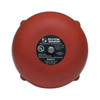
System Sensor SSV120-6 6-Inch 120VAC Signal Bell
Overview
The System Sensor SSV120-6 is a 6-inch signal bell engineered for fire alarm and emergency notification systems in commercial and institutional facilities. Operating at 120VAC, this device delivers audible alert capability where hard-wired AC power is available. TCP/IP communication support allows integration into networked fire alarm control platforms, enabling coordinated alerting across multi-building campuses or complex facility layouts. The SSV120-6 fits standard interior wall-mount installations in office buildings, schools, healthcare facilities, and light industrial environments where 120VAC service is already in place.
Key Features
- 120VAC operation: Direct connection to standard building AC power eliminates the need for step-down transformers or DC power supplies in most commercial installations. Reduces wiring complexity when AC circuits are already distributed to alarm zones.
- 6-inch form factor: Large diaphragm size generates sufficient SPL (sound pressure level) for effective occupant notification in mid-sized rooms and corridors without requiring multiple units in small spaces.
- TCP/IP networking: Integration with fire alarm control systems that support TCP/IP signaling allows remote triggering, status monitoring, and silencing from a central command console. Avoids dedicated hardwired trigger circuits where Ethernet connectivity exists.
- System Sensor architecture compatibility: Designed to integrate within System Sensor fire alarm platforms and third-party networked alarm systems that recognize TCP/IP-based notification devices.
- Interior wall-mount design: Compact mounting footprint suits office walls, stairwells, and hallways without protruding apparatus boxes or conduit runs. Suitable for retrofits where surface-mounted hardware is preferred over recessed installation.
- Standard emergency notification power: 120VAC power requirement aligns with typical building electrical codes for emergency circuits, reducing the need for dedicated backup power supplies or UPS infrastructure specifically for this device.
Integration and Compatibility
The SSV120-6 integrates into System Sensor networked fire alarm architectures where TCP/IP-capable control panels are deployed. Installation requires 120VAC service at the wall-mount location and network connectivity (hardwired Ethernet or wireless via gateway) between the bell and the control system. This design suits facilities already running networked fire alarm systems or planning to migrate from hardwired to IP-based notification. Because the device relies on AC power, it does not draw from PoE (Power over Ethernet) budgets and does not require switch provisioning for power delivery — a significant advantage in facilities where PoE infrastructure is limited or already saturated by cameras and access readers. Verify control panel TCP/IP support and network topology before deployment; legacy fire alarm panels with only relay outputs may require a TCP/IP gateway adapter to trigger the SSV120-6.
When to Choose a Different Model
If 120VAC power is not available at the intended location, consider a low-voltage or PoE-powered signal device from the same family — contact the manufacturer for 24VDC or 12VDC variants. If the installation is outdoor or exposed to moisture, verify enclosure IP rating with System Sensor; this model is specified for interior use. If silent or visual-only notification is required (e.g., hearing-impaired occupant accommodation), supplementary visual strobes or audible tone patterns may be needed — confirm feature set in the control panel configuration.
Frequently Asked Questions
Q: Does the SSV120-6 require a dedicated circuit breaker?
A: No. The SSV120-6 operates on standard 120VAC building circuits. Confirm the circuit can handle the device's inrush current during activation; local fire code may specify minimum circuit capacity. Consult the manufacturer datasheet for exact current draw and your electrical inspector for code compliance.
Q: Can I trigger the SSV120-6 from a legacy hardwired fire alarm panel?
A: Legacy panels with relay outputs only cannot directly trigger TCP/IP devices. You will need a TCP/IP gateway or adapter to bridge between the relay output and the networked bell. Verify gateway compatibility with both your fire alarm panel and the SSV120-6 before purchase.
Q: Is the SSV120-6 suitable for outdoor installations?
A: The SSV120-6 is designed for interior wall-mount use. Outdoor or high-moisture environments require an enclosure with appropriate IP rating (IP65 or higher). Confirm environmental protection with the manufacturer if outdoor installation is necessary.
Q: What network bandwidth does the SSV120-6 consume?
A: TCP/IP signal devices consume minimal bandwidth — typically millisecond-duration control packets. Network saturation is not a practical concern even on busy Ethernet networks. Confirm your fire alarm control panel's network interface supports the number of TCP/IP bells you plan to deploy.
Ted PerryPerspective based on aggregated IP Security Depot and affiliated engineering team experience.
The System Sensor SSV120-6 is a straightforward fit for networked fire alarm modernization in facilities where 120VAC service already reaches the alert zones. The key advantage here is power independence — because the SSV120-6 draws directly from building AC, you don't burn PoE budget or require UPS provisioning for the bell itself, only for the network control panel upstream. That's a real cost and complexity win in mixed-use campuses where IP cameras and access readers are already saturating your PoE infrastructure.
Technical Highlights:
- 120VAC direct operation: Eliminates step-down transformers and dedicated low-voltage power supplies. Integrates natively with standard building electrical codes for emergency circuits, reducing provisioning lead time.
- TCP/IP signaling: Networked activation allows centralized dispatch from a single control console. No need for individual hardwired trigger circuits to each bell — a major simplification in multi-floor or campus layouts.
- 6-inch diaphragm: Generates sufficient sound output for mid-sized spaces (corridors, conference areas, open offices) without requiring ganged units. Reduces overall device count and installation footprint.
Deployment Considerations:
- The SSV120-6 demands 120VAC at the wall-mount point. If your target zones lack AC service (rare, but possible in data centers or communications closets), this device won't work without expensive new circuit runs.
- TCP/IP control requires your fire alarm panel to support networked signaling. Legacy hardwired systems will need a gateway adapter — verify compatibility and budget for the extra hardware before specifying.
- Network reliability becomes part of the alerting chain. Unlike hardwired bells, a severed Ethernet cable or switch failure upstream will silence this device. Confirm your fire alarm system includes redundant network paths or backup signaling if the SSV120-6 is a primary alert vector.
Deploy the SSV120-6 in office and institutional campuses modernizing to IP-based fire alarm systems where 120VAC circuits are already distributed and network redundancy is planned. It's an efficient middle ground between cost and capability for mid-sized facilities that can't justify hardwiring alert zones but don't need the extra features (selective paging, tone selection) of more complex devices.