APC by Schneider Electric PMP3DS-A Panel Mount Surge Protector 240/120V 120kA with Disconnect
Overview
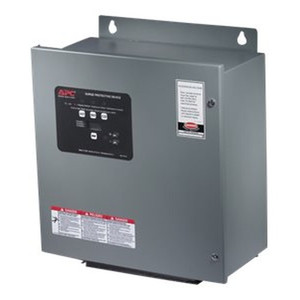
The APC by Schneider Electric PMP3DS-A is a hardwired panel-mount surge suppressor rated for 120kA maximum surge current, designed for 240/120V electrical systems requiring permanent, in-panel transient voltage protection. Where plug-in strip suppressors are impractical — main distribution panels, sub-panels, or industrial enclosures — the PMP3DS-A installs directly into the panel via a hard-wire 3-wire connection, protecting downstream equipment from lightning-induced surges and utility switching transients at the point of entry. The built-in disconnect allows the suppressor to be safely isolated for service or replacement without powering down the entire panel.
For facility managers and electrical contractors deploying APC by Schneider Electric power protection across commercial and industrial sites, the PMP3DS-A addresses the highest-risk surge entry point: the service entrance and distribution panel itself. Protecting downstream UPS units, network infrastructure, and security systems starts here — upstream suppression at the panel reduces let-through voltage before it can reach sensitive electronics further down the circuit.
Key Features
- 120kA Maximum Surge Current: The 120 kiloamp per-phase surge rating handles the worst-case direct and near-strike lightning transients likely to appear at a service entrance. Lower-rated suppressors — typically 20–40kA at the device level — are appropriate downstream; at the panel, you want headroom well above typical utility switching transients (1–5kA) and indirect lightning events (10–20kA). 120kA provides that margin without requiring a secondary panel-level device.
- 240/120V Hard-Wire 3-Wire Connection: The hard-wire 3-wire termination means no plug, no socket, no mechanical connection that can loosen under vibration or repeated thermal cycling. This is the correct installation method for permanent panel protection — the suppressor becomes part of the electrical system rather than a field-serviceable plug-in accessory. Appropriate for single-phase split 240/120V services common in North American commercial buildings.
- Panel-Mount Form Factor: Mounting directly inside the distribution panel keeps the surge protection co-located with the branch circuits it protects and eliminates the external-enclosure footprint. In a crowded electrical room, that matters. The panel-mount configuration also positions the suppressor as close as possible to the service entrance, minimizing lead length — longer leads between suppressor and panel increase let-through voltage.
- Integrated Disconnect: The built-in disconnect switch allows the suppressor module to be isolated from the live panel without a full panel shutdown. After a major surge event, suppressors often require inspection or replacement — the disconnect makes that a safe, practical field operation rather than a full-outage procedure. For sites with maintenance windows measured in hours, not days, this is a meaningful operational feature.
- Permanent Suppression at the Service Entrance: Panel-mount surge protection at the service entrance is the first line of defense in a layered protection strategy. Equipment-level suppressors downstream handle residual transients; this device handles the high-energy initial surge. Without panel-level suppression, a direct lightning event can propagate destructive transients through every circuit in the building simultaneously.
Integration and Compatibility
The PMP3DS-A installs in standard North American distribution panels supporting 240/120V single-phase split service. The hard-wire 3-wire connection (line, neutral, ground) is compatible with standard panel wiring practice. Consult your local electrical code and a licensed electrician for specific installation requirements — panel-mount suppressors are typically subject to NEC Article 285 (Surge-Protective Devices) and may require a dedicated breaker position depending on panel configuration.
In a layered power protection deployment, the PMP3DS-A pairs upstream with equipment-level surge protection at individual workstations, network racks, and security system enclosures. UPS units, network switches, NVRs, and access control panels downstream all benefit from the reduced let-through voltage when panel-level suppression is in place. For sites deploying APC rack-mount UPS units in server rooms or security operations centers, panel-level suppression is a standard pre-requisite recommendation — it reduces the surge burden on the UPS input protection stage and extends UPS service life.
The disconnect feature integrates cleanly with a maintenance workflow: after any significant weather event, the suppressor can be inspected and replaced (if indicator shows end-of-life) without interrupting panel power to other circuits. This is particularly relevant in uninterruptible power supply environments where uptime requirements make full panel outages unacceptable.
Frequently Asked Questions
Q: What does the 120kA surge current rating on the PMP3DS-A mean in practical terms?
A: 120kA is the maximum surge current the device can handle in a single event without failing. For context, direct lightning strikes near a service entrance can induce transients in the 10–100kA range. The 120kA rating gives the PMP3DS-A headroom to handle worst-case near-strike events at the panel level without the suppressor failing and exposing downstream equipment.
Q: Can I install the PMP3DS-A myself, or does it require a licensed electrician?
A: Panel-mount surge suppressors connect directly to live distribution panel wiring. This work involves exposure to line voltage and must be performed by a qualified, licensed electrician in accordance with local electrical codes and NEC Article 285. Do not attempt DIY installation of panel-mount devices.
Q: What is the hard-wire 3-wire connection on the PMP3DS-A?
A: Hard-wire 3-wire means the unit terminates directly to panel wiring via line, neutral, and ground conductors — there is no plug or outlet. This is a permanent installation method, appropriate for in-panel surge suppressors that are intended to remain in place for the life of the electrical installation.
Q: Does the PMP3DS-A work on both 120V and 240V circuits?
A: Yes. The PMP3DS-A is rated for 240/120V — it protects on a standard North American split-phase service, providing suppression across both the 240V (line-to-line) and 120V (line-to-neutral) legs simultaneously.
Q: What is the disconnect on the PMP3DS-A used for?
A: The integrated disconnect allows the suppressor to be safely isolated from the live panel for inspection or replacement without requiring a full panel shutdown. After a major surge event, suppressors should be inspected for end-of-life indication — the disconnect makes that a safe service operation without interrupting power to other panel circuits.
Q: Where does the PMP3DS-A fit in a layered surge protection strategy?
A: The PMP3DS-A belongs at the service entrance or main distribution panel — it handles the high-energy initial surge at the point of entry. Equipment-level suppressors at workstations, network racks, and security enclosures handle residual let-through transients downstream. Panel-level suppression reduces the burden on every downstream device in the building.
The PMP3DS-A is one of those products that belongs on the spec sheet before the first piece of equipment is ordered — not added as an afterthought when a lightning event takes out a rack. The 120kA maximum surge current rating is the key figure here: at the panel level, you want a number that covers worst-case indirect lightning (which can realistically hit 50–100kA at the service entrance), and 120kA does that with margin to spare. If you're deploying any meaningful density of networked security, AV, or IT equipment in a commercial building, the PMP3DS-A earns its position at the head of the circuit.
Technical Highlights:
- 120kA Surge Rating: Rated to absorb 120 kiloamps per event — handles indirect lightning and utility switching transients that would bypass or destroy lower-rated suppressors installed further downstream. This is the right spec for a panel-level first-line device.
- Hard-Wire 3-Wire Termination: Permanent, vibration-stable connection to line, neutral, and ground — no plug to loosen, no socket to arc. Correct installation method for a suppressor that is meant to live inside a panel for years, not months.
- Integrated Disconnect: Lets you isolate and swap the suppressor after a major event without cutting power to the panel. In practice, this turns a potential multi-hour maintenance window into a 15-minute in-place replacement — relevant wherever you cannot afford an unplanned outage.
Deployment Considerations:
- Panel-mount installation requires a licensed electrician and a dedicated breaker or wiring position in the target panel — verify panel capacity and local NEC Article 285 compliance before ordering. The PMP3DS-A is a permanent installation, not a field-swappable accessory.
- This device handles the initial high-energy transient at the service entrance; it does not eliminate the need for equipment-level suppression downstream. Budget for both layers — the PMP3DS-A reduces let-through voltage, but residual transients still reach sensitive electronics without secondary protection at the rack or device level.
The PMP3DS-A is the right spec for new commercial construction or a panel-level retrofit at any site running dense networked security infrastructure — access control, IP video, intrusion — where a single lightning event could take out six figures of equipment if the service entrance is unprotected.