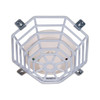
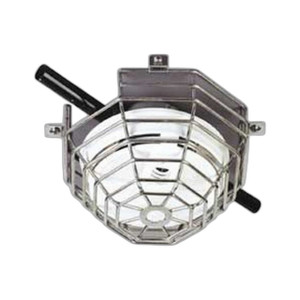
STI STI-9604 Steel Web Stopper for Mini Smoke Detectors
Overview
The STI STI-9604 is a patented protective lock assembly engineered to shield mini flush-mount smoke detectors in high-traffic and institutional environments where intentional damage or unauthorized removal presents a life-safety risk. This steel web stopper design maintains full accessibility for authorized personnel conducting routine maintenance and inspections while deterring casual tampering and abuse that can compromise detection system integrity.
Deployed across schools, correctional facilities, hospitals, and commercial buildings, the STI-9604 addresses a specific vulnerability: smoke detectors in unsupervised spaces frequently fall victim to deliberate disablement. A compromised detector creates a gap in your fire detection coverage—one that inspections may not catch until a real fire occurs. This lock/strike assembly closes that gap by making removal or obstruction physically difficult without proper tools and knowledge.
Key Features
- Patented steel web design: The locking mechanism uses a hardened steel web that wraps around the detector body, preventing simple pull-removal or obstruction. This approach is stronger than cable ties or adhesive solutions, which can degrade or be cut away over months of exposure.
- Flush-mount compatibility: Engineered specifically for mini smoke detector form factors, the STI-9604 fits within the mounting envelope without requiring the detector to be repositioned or installed at an angle. Your fire code compliance and spacing requirements remain unchanged.
- Authorized access pathway: The lock mechanism is designed so that maintenance personnel or facility staff with the correct key can remove the detector without damage or delay. This prevents situations where a stuck or destroyed detector lock becomes a maintenance burden and creates pressure to bypass the system entirely.
- Institutional-grade durability: Steel construction and assembly methods reflect use in correctional, psychiatric, and secure facility contexts where vandalism pressure is constant. The lock will not loosen, corrode excessively, or fail after repeated tampering attempts in normal indoor environments.
- Minimal visual footprint: Unlike external cages or heavy protective enclosures, the STI-9604 sits close to the detector body. This maintains sightlines for facility aesthetics and does not create unexpected obstructions for cleaning staff or inspectors walking through occupied spaces.
- Quick installation: The lock/strike assembly mounts directly to your existing detector mounting hardware. No special wiring, power, or integration with a larger security system is required—installation is mechanical only.
Integration and Deployment Context
The STI-9604 is a standalone protective device and does not connect to fire alarm panels, access control systems, or building management networks. Its purpose is purely physical deterrence and protection. Before deploying this lock across a facility, confirm with your local fire marshal or AHJ (Authority Having Jurisdiction) that the lock does not obstruct detector airflow, obscure labeling, or violate spacing requirements under NFPA 72 or your regional fire code. In most cases, an inspector will approve it as a tamper-protection accessory, not a functional modification.
Consider the STI-9604 part of a larger life-safety hardening strategy alongside staff training, surveillance, and facility audits. Locking a detector is a friction point—it deters lazy tampering but will not stop a determined actor with cutting tools or an hour of unmonitored access. Use it in combination with periodic inspections and response protocols for tampered or missing detectors.
When to Choose a Different Approach
If your facility experiences frequent false alarms or nuisance trips (cooking fumes, steam, dust), a detector lock will add friction to normal maintenance and troubleshooting. In those cases, address the underlying cause—duct placement, detector model selection, or environmental control—before adding physical locks. If your space requires redundant or networked smoke detection with automatic alerts when a detector is removed, consider upgrading to intelligent smoke detectors with tamper sensors and hardwired status signals; these provide both protection and verification without requiring a key for every maintenance cycle.
Frequently Asked Questions
Q: Will the STI-9604 interfere with smoke detector airflow or sensitivity?
A: No. The steel web is designed to sit flush against the detector body without obstructing the air inlets or ionization chamber. Your detector will function normally. However, always verify clearances with your fire marshal before installation to ensure compliance with local fire codes.
Q: How many keys come with the STI-9604?
A: Refer to the product datasheet or contact the manufacturer for key count and key management details. Typically, locks of this type ship with two keys and allow rekeying if necessary.
Q: Can the STI-9604 be installed on existing detectors, or does it require installation during new construction?
A: The STI-9604 is retrofit-compatible. It mounts to your current detector and mounting bracket without removal or reinstallation of the detector itself. Installation takes minutes per unit.
Q: What facilities benefit most from the STI-9604?
A: Schools, correctional facilities, psychiatric hospitals, detention centers, and homeless shelters report the highest rates of smoke detector tampering. Any facility with unsupervised high-risk populations or a history of intentional detector disabling is a candidate.
Q: Is the STI-9604 suitable for outdoor or damp environments?
A: No. The STI-9604 is rated for indoor institutional environments with standard temperature and humidity. For outdoor smoke detectors or damp areas, consult the manufacturer about weatherproof variants or alternative protective strategies.
Ted PerryPerspective based on aggregated IP Security Depot and affiliated engineering team experience.
The STI-9604 addresses one of the most underestimated life-safety vulnerabilities in institutional design: smoke detector tampering. In facilities where I've done security audits, detectors in bathrooms, stairwells, and unit corridors routinely show signs of obstruction or attempted removal. The patented steel web design on the STI-9604 raises the friction significantly—not to the point of making maintenance impossible, but enough to deter the casual disablement that happens in seconds when no one is watching.
Technical Highlights:
- Patented steel web locking mechanism: Unlike cable ties or shrouds, the web wraps the detector body in a way that prevents simple pull-removal or obstruction without proper tools. Steel construction means it won't degrade from handling or UV exposure over a year of use, and the design has survived testing in high-tampering environments like correctional and psychiatric facilities.
- Flush-mount form factor: The lock sits tight to the detector without repositioning it or creating spacing violations under NFPA 72. Airflow and detection sensitivity are not compromised, which means your fire marshal review and annual inspections should clear the installation without pushback.
- Retrofit-ready installation: No wiring, no power, no integration required. The lock mounts directly to existing detector hardware in under five minutes. Facility staff can swap keys across multiple units if needed, and removal by authorized personnel takes seconds with the correct key.
Deployment Considerations:
- Before ordering across a building, confirm with your local AHJ that the lock does not violate fire code spacing or airflow requirements. Most jurisdictions approve it as a tamper-protection accessory, but some have specific language around detector modifications that you'll want to clarify upfront.
- The STI-9604 is a friction device, not a barrier. It stops lazy tampering and deters the casual mischief that happens in unmonitored spaces, but it will not stop someone with 30 minutes and a hacksaw. Pair it with regular facility audits and clear accountability procedures for damaged or missing detectors.
The STI-9604 is a solid fit for schools, correctional facilities, and healthcare environments where smoke detector integrity is a known problem and staff turnover is high. If your facility has a documented history of detector tampering or you operate in a high-risk population environment, this lock eliminates a recurring maintenance headache and closes a real life-safety gap. For lower-risk commercial spaces with stable occupancy, the investment may be premature—focus first on environmental fixes (duct placement, detector selection) that address the root cause of false alarms and temptation to disable.