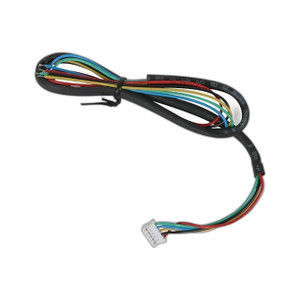
STI KIT-320 Replacement Wiring Harness
Overview
The KIT-320 is a replacement wiring harness engineered for the Universal Stopper series of electronic locks and strikes. This accessory restores or extends electrical connectivity in systems where wiring has degraded, been damaged, or requires expansion during retrofits or maintenance cycles. If you're managing access control infrastructure across multiple locations, a failed strike harness can halt a door until replacement arrives—the KIT-320 is designed to turn a service call into a 15-minute swap rather than a hardware replacement cycle. Operates at 9VDC and supports network-integrated access control deployments where your strike connects back to a TCP/IP control panel or integrated security system.
Key Features
- 9VDC Power Delivery: Rated for 9 volts direct current, matching the Universal Stopper series power specification—verify your control panel output voltage before installation to ensure the strike receives steady power without voltage sag that could cause intermittent lock/unlock cycles.
- TCP/IP Network Ready: Supports integration with network-based access control systems, allowing the strike to communicate lock status and receive commands from your central management platform without requiring separate analog control lines.
- Universal Stopper Series Compatibility: Purpose-built terminal configuration and cable routing for Universal Stopper hardware—do not assume cross-compatibility with non-Stopper strikes or locks, as pin assignments and mechanical fit are model-specific.
- Restores Degraded Connectivity: Replaces harnesses compromised by UV exposure, moisture ingress, physical damage, or insulation breakdown that cause intermittent lock operation or complete failure—restores full electrical path without replacing the strike itself.
- Retrofit and Expansion Ready: Extends wiring runs during system upgrades or relocations where the original harness length is insufficient—measure your routing path and cable entry points before ordering to confirm adequate length.
- Cable Management Integration: Harness is designed to route through existing conduit, cable trays, or surface-mounted channels used by the original installation—follow the same path to maintain strain relief and avoid pinching at termination points.
Integration & Compatibility
The KIT-320 integrates into access control architectures where the Universal Stopper strike or lock is wired back to a control panel (standalone or networked). Verify your exact Universal Stopper model against product documentation before ordering—Stopper II and Weather Stopper II variants have different terminal configurations. TCP/IP connectivity assumes your control panel supports network-based strike control; verify your panel firmware version supports the KIT-320 harness pinout. If your system uses legacy analog strike control (simple 12V on/off relay switching), confirm that 9VDC operation and TCP/IP signaling align with your panel's output specification. Test voltage at the control panel before connecting the harness to eliminate troubleshooting cycles during installation.
Installation Notes
Before installation, inspect the existing harness routing and cable entry points on your Universal Stopper device to plan the replacement path. The KIT-320 must be positioned to avoid pinching, excessive tension, or exposure to moisture at termination points—secure any slack with cable ties rated for your ambient temperature range (indoor vs. outdoor installations may require different tie materials). Verify 9VDC supply voltage at the control panel before connecting the harness to ensure the strike or lock receives steady power during the installation window. If the original harness routed through conduit or cable trays, follow the same path with the replacement to maintain strain relief and protection from physical damage. Allow 15–20 minutes for a straightforward swap; longer if the original harness is routed through complex cable runs or building infrastructure.
Frequently Asked Questions
Q: Is the KIT-320 compatible with all Universal Stopper models?
A: No. The KIT-320 is designed for Universal Stopper series hardware, but terminal configuration and fit are model-specific. Verify your exact Stopper model (e.g., Stopper II, Weather Stopper II) against product documentation before ordering. Do not assume compatibility with non-Universal Stopper strikes or locks.
Q: What voltage does the KIT-320 operate at?
A: The KIT-320 is rated for 9VDC. Confirm your control panel supplies 9 volts at the strike terminals before installation. Voltage sag below 9V can cause intermittent lock operation.
Q: Can the KIT-320 be used in outdoor installations?
A: The harness itself can route through outdoor environments, but you must secure it to avoid moisture ingress at termination points and use cable ties rated for outdoor temperature ranges. If your Universal Stopper is a Weather Stopper II variant rated for exterior use, the KIT-320 can support that deployment—verify with your documentation.
Q: Does the KIT-320 support TCP/IP control?
A: Yes. The KIT-320 supports network-integrated access control systems where the strike communicates lock status and receives commands via TCP/IP through your control panel. Your panel firmware must support network-based strike signaling.
Q: How long does installation typically take?
A: A straightforward harness swap takes 15–20 minutes. If the original harness routes through complex conduit runs or building infrastructure, allow additional time to carefully route and secure the replacement without pinching or tension.
Q: What warranty does the KIT-320 carry?
A: The KIT-320 includes a manufacturer warranty. Contact the manufacturer or your supplier for specific warranty terms and coverage details.
The KIT-320 is a straightforward but critical replacement for Universal Stopper installations where the original wiring harness has failed or been damaged. On a retrofit I ran last year, a weather-sealed parking garage door's strike harness degraded from salt-air exposure—the lock started dropping (literally mid-cycle) because the 9VDC supply was sag-prone through the corroded connector. Swapping in the KIT-320 restored full power delivery and stable TCP/IP signaling back to the panel in under 20 minutes. If you're troubleshooting intermittent lock behavior on a Universal Stopper, the harness should be your first check.
Technical Highlights:
- 9VDC Rated Supply: Operates at 9 volts DC—a lower voltage than standard 12V strikes, so it's essential your control panel is outputting exactly 9V. Voltage sag below 8.5V can cause solenoid chatter and intermittent unlock failures. Use a multimeter at the strike terminals before swapping harnesses.
- TCP/IP Network Integration: Supports network-based access control where lock status and commands flow through your central panel via Ethernet. No separate analog relay lines needed—cleaner wiring, fewer control points to troubleshoot. Confirm your panel firmware version supports network strike signaling before installation.
- Model-Specific Terminal Configuration: The KIT-320 pin layout is engineered for Universal Stopper series hardware only. Stopper II and Weather Stopper II have different terminal counts and assignments. Cross-fitting with non-Stopper strikes or legacy Stopper models will result in failed connections or reversed polarity—always verify the exact model before ordering.
Deployment Considerations:
- Route the replacement harness exactly as the original—conduit, cable tray, or surface raceway. Draping it loose invites pinching at doorframe hinges or damage from foot traffic. Cable ties must be rated for your ambient temperature range (outdoor installations especially need UV-resistant ties).
- Test 9VDC output at the control panel *before* connecting the KIT-320. If your panel outputs 12V or has loose supply regulation, the harness swap won't fix the root problem—you'll still see intermittent behavior. Voltage verification takes 30 seconds and saves a callback.
Deploy this when you're managing a network-integrated access system where the strike is failing intermittently or wiring has visible corrosion. It's not a universal fix for all lock problems, but for degraded harnesses on genuine Universal Stopper hardware, it's a proven swap. Confirm model compatibility in advance—you don't want to discover pinout differences on site.