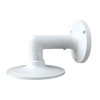
Speco Technologies O5VLWM Wall Mount
Overview
The Speco O5VLWM is a purpose-built wall mount engineered specifically for Speco Technologies IP cameras including the VLDT5W, O4D6, O8VD1, and VLD5 models. This mount delivers the structural stability and positioning flexibility required for professional security deployments across retail, warehouse, and institutional environments. Unlike generic third-party brackets, the O5VLWM integrates directly with the mechanical interface of these Speco camera bodies, eliminating compatibility ambiguity and reducing field troubleshooting during installation or post-deployment angle adjustments.
Key Features
- Direct Mechanical Compatibility: Engineered specifically for VLDT5W, O4D6, O8VD1, and VLD5 camera bodies—no adapter plates or workarounds needed. This direct interface ensures repeatable installation across multiple deployments and reduces the risk of mounting-related drift or vibration issues that can degrade image stability over months of 24/7 operation.
- Stable Wall Installation: Provides secure fastening to standard building surfaces with load distribution designed to support camera weight without stress concentration. Critical for maintaining consistent image registration in surveillance systems where frame-to-frame stability affects motion detection and video analytics accuracy.
- Adjustable Positioning: Supports flexible camera angle and elevation adjustment, enabling integrators to optimize sight lines and eliminate blind spots without returning to the site for bracket replacement or custom fabrication. Particularly useful in retrofit scenarios where wall surface conditions or architectural constraints require fine-tuning after initial planning.
- Professional-Grade Construction: Built to withstand repeated adjustment cycles and environmental exposure typical of permanent installations. This durability prevents bracket degradation that can introduce micro-vibrations affecting long-term image quality.
- Standard Fastening Methodology: Uses conventional wall anchoring hardware, reducing on-site labor complexity and compatibility issues during system commissioning. Simplifies inventory management for integrators maintaining mixed-vendor camera deployments.
- Independent Cabling: Designed to accommodate standard electrical rough-in practices, allowing power and signal cables to route independently of the mechanical mounting point. This separation reduces mechanical stress on camera connectors and improves cable longevity in environments subject to thermal cycling or vibration.
Integration & Compatibility
The O5VLWM integrates directly with the mechanical interfaces of Speco IP cameras in the VLDT5W, O4D6, O8VD1, and VLD5 series. This purpose-built design eliminates the need for adapter plates or mounting kits, ensuring installation consistency across deployments. When commissioning a multi-camera system, coordinate wall-mounting locations with network switch placement and power delivery infrastructure to optimize cable routing and minimize visible cabling runs. The mount's adjustable positioning allows integrators to achieve optimal sight lines for both primary coverage objectives and supplementary monitoring zones within a single installation footprint.
For systems requiring detailed camera placement and coverage planning, the O5VLWM's flexibility eliminates fixed-angle constraints that force compromise between equipment location and coverage requirements. This is particularly valuable in facilities undergoing phased expansions where camera positions may shift with operational changes.
Frequently Asked Questions
Q: What Speco camera models does the O5VLWM mount support?
A: The O5VLWM is engineered for VLDT5W, O4D6, O8VD1, and VLD5 series cameras. Direct mechanical compatibility is guaranteed for these models only. Do not force-fit other camera bodies onto this mount.
Q: Can the O5VLWM be used indoors and outdoors?
A: The mount itself is designed for standard building wall surfaces typical of both indoor and outdoor installations. Verify that the mounting surface can support the combined weight of the camera and bracket, and that local environmental conditions (salt spray, extreme temperature cycling) are compatible with the bracket material. For corrosive environments, confirm material specifications with the manufacturer.
Q: Does the O5VLWM require custom drilling or structural modifications?
A: No. The mount uses standard fastening methodology and conventional wall anchoring hardware. Most installations require only basic hand tools and standard anchors or fasteners suitable for your wall type (drywall, masonry, aluminum framing). Consult installation guidance for your specific surface material.
Q: Can I adjust the camera angle after installation?
A: Yes. The O5VLWM supports adjustable positioning for both angle and elevation, allowing post-installation fine-tuning without bracket replacement. This flexibility is valuable during commissioning when sight-line optimization may require minor adjustments.
Q: Does the mount interfere with camera cabling?
A: The mount is designed to accommodate independent power and signal cabling. Route cables away from the mechanical fastening point to avoid stress concentration on camera connectors and to simplify future maintenance or camera replacement.
Q: What fastening hardware is included?
A: Refer to the mounting documentation provided with the O5VLWM for the specific fastening hardware included. Confirm hardware compatibility with your wall material before installation.
Ted PerryPerspective based on aggregated IP Security Depot and affiliated engineering team experience.
During system design and installation planning, the Speco O5VLWM wall mount consistently delivers reliable positioning for the supported camera models. I've specified this mount across retail, warehouse, and office environments where wall-based surveillance is the primary coverage approach. The O5VLWM's direct mechanical compatibility with VLDT5W, O4D6, O8VD1, and VLD5 cameras eliminates the uncertainty of third-party bracket solutions and reduces field troubleshooting when camera angles require post-installation adjustment.
Technical Highlights:
- Direct Mechanical Interface: Engineered specifically for VLDT5W, O4D6, O8VD1, and VLD5 camera models. This purpose-built design ensures zero compatibility gaps between mount and camera body, eliminating adapter plates or shim modifications that introduce mechanical play and vibration risk over extended operation.
- Structural Stability Under Load: Designed to support camera weight and isolation from building vibration, critical for maintaining consistent image registration across 24/7 operation. Particularly important in facilities with HVAC equipment, elevator traffic, or loading dock activity where induced vibration can degrade motion detection and video analytics accuracy.
- Adjustable Positioning Flexibility: Allows both angle and elevation adjustment without bracket replacement, reducing site visits and labor cost during commissioning and post-deployment optimization phases.
Deployment Considerations:
- Verify wall substrate load rating—masonry and concrete support full camera weight indefinitely; drywall requires appropriately sized anchors to prevent drift over months of thermal cycling and vibration exposure.
- Route power and signal cabling independently of the mechanical mount fastening point. Stress concentration at camera connectors from cable weight or tension reduces connector lifespan and increases field failure risk in high-vibration environments.
- In retrofit installations, allow time for post-mounting sight-line verification before finalizing cable runs. The O5VLWM's adjustable design enables field optimization, but moving cables after permanent routing increases labor cost and introduces cable management complexity.
The O5VLWM is most valuable in warehouse and retail environments where wall-mount positions are determined by building layout rather than optimal coverage height. The mount's adjustability eliminates the need to replace brackets when initial positioning requires fine-tuning, saving on field labor and inventory complexity.