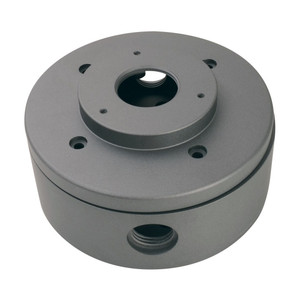
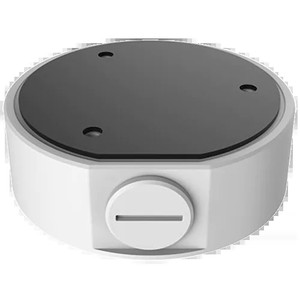
Speco Technologies CVCJBD1 Thermal Camera Junction Box
Overview
The Speco CVCJBD1 is a purpose-built junction box designed to consolidate power distribution and signal routing for thermal surveillance systems using Speco's HTINT60TM and HTINT601TA thermal imaging cameras. In multi-camera thermal deployments, individual camera wiring runs to separate power supplies and network interfaces create installation complexity, cable clutter, and multiple failure points. The CVCJBD1 eliminates this by serving as a single connection hub—reducing field labor, centralizing inspection points, and supporting organized long-distance camera placement from a central monitoring location.
Key Features
- Purpose-built for HTINT60TM and HTINT601TA thermal cameras: The CVCJBD1 accepts the specific connectors and electrical specifications of these Speco thermal models, ensuring proper signal integrity and power delivery without adapter chains or pin mismatches that degrade performance.
- Centralized power distribution: All thermal camera power lines converge at one junction box location, allowing a single circuit-protection point and reducing the number of individual power supply runs you need to pull and manage across a facility.
- Signal routing consolidation: Network and trigger connections from multiple thermal cameras terminate at the CVCJBD1, simplifying cable tracing during commissioning and troubleshooting—critical in thermal systems where field diagnostics require confidence in signal paths.
- Supports extended camera placement: By centralizing connections, the CVCJBD1 lets you position thermal cameras at distances from rack or central equipment without each camera requiring its own long power and data runs—meaningful in perimeter monitoring where camera locations are determined by coverage zones, not proximity to infrastructure.
- Reduces installation labor: A single junction point with pre-arranged termination is faster to commission than daisy-chaining camera connections or running individual cables to disparate equipment locations.
- Professional cable management: Organized multi-camera deployments require clean cabling practices; the CVCJBD1 provides a controlled interface that meets integrator standards and supports future system expansion or camera replacement without rewiring entire runs.
Integration and Compatibility
The CVCJBD1 is fully compatible with the HTINT60TM and HTINT601TA thermal cameras from Speco. Compatibility here means electrical match—connector types, voltage tolerance, and pin assignments align with these camera models, preventing installation errors and signal loss. If you are deploying either of these thermal models across multiple zones or a perimeter, the CVCJBD1 serves as the infrastructure backbone, accepting feeds and power from all cameras and routing them toward your central NVR or monitoring equipment.
In systems where thermal cameras are distributed across a building or outdoor perimeter, cable runs from individual cameras to a central location often exceed 100 meters. The CVCJBD1 acts as a midpoint aggregation point, allowing you to run shorter camera-to-junction cables and then a consolidated multi-conductor trunk from the junction to your recording or analysis equipment. This topology reduces cable cost and simplifies future moves, adds, and changes within the thermal monitoring network.
Installation and Deployment Context
Deploy the CVCJBD1 in any thermal surveillance installation where HTINT60TM or HTINT601TA cameras are being wired into a professional security or industrial automation system. Suitable mounting locations include equipment racks, cable tray runs, or enclosed cabinets where environmental protection from dust and moisture is available. The junction box should be positioned to minimize individual camera cable run lengths while keeping power and signal terminations organized and accessible for inspection.
In warehouse automation, perimeter monitoring, and building envelope thermal monitoring workflows, the CVCJBD1 eliminates point-to-point wiring overhead. Security integrators deploying thermal systems across multiple entry points or exterior zones benefit from centralized connection management—especially in retrofit scenarios where existing cable infrastructure cannot accommodate multiple independent camera runs.
When to Choose a Different Model
If you are deploying thermal cameras outside the HTINT60TM and HTINT601TA family, the CVCJBD1 will not integrate properly. Verify your thermal camera model before ordering. For single-camera thermal deployments with minimal cable complexity, a junction box may be unnecessary—direct power and network connections to the camera may suffice. However, any multi-camera thermal array benefits from centralized routing.
Frequently Asked Questions
Q: Is the CVCJBD1 compatible with thermal cameras other than the HTINT60TM and HTINT601TA?
A: No. The CVCJBD1 is designed specifically for the HTINT60TM and HTINT601TA. Do not attempt to integrate it with other thermal camera models or manufacturers.
Q: Can I use the CVCJBD1 outdoors?
A: The CVCJBD1 is designed for indoor or protected indoor-outdoor installations. If mounted outdoors, ensure it is housed in a weatherproof enclosure to prevent moisture and dust ingress into the junction connections.
Q: How many thermal cameras can the CVCJBD1 support?
A: The number of cameras supported depends on the electrical capacity and connector count of the CVCJBD1. Consult the equipment documentation or a Speco integrator for your specific multi-camera configuration needs.
Q: Does the CVCJBD1 require separate power?
A: The CVCJBD1 is a passive junction box and does not require independent power. It distributes power from a central supply to the connected thermal cameras.
Q: Can I integrate the CVCJBD1 into an existing thermal surveillance system?
A: Yes, provided your thermal cameras are HTINT60TM or HTINT601TA models. The junction box can be retrofitted into multi-camera deployments to consolidate wiring and improve cable management during system expansion or reconfiguration.
Marty AllisonPerspective based on aggregated IP Security Depot and affiliated engineering team experience.
The Speco CVCJBD1 is a straightforward but essential component for anyone deploying the HTINT60TM or HTINT601TA thermal cameras across multiple zones. It's not a sexy accessory, but it solves a real integration headache: without centralized routing, multi-camera thermal installations quickly devolve into cable chaos. The CVCJBD1 consolidates power distribution and signal termination into a single organized interface, reducing commissioning time and creating a single point of visual inspection for all thermal camera connections.
Technical Highlights:
- Purpose-built connector compatibility: Accepts the specific electrical terminations of the HTINT60TM and HTINT601TA thermal models—no adapter daisy-chains, no pin mismatches, no signal degradation from improper connections.
- Centralized power aggregation: All thermal camera power converges at one junction point, allowing a single circuit protection strategy and reducing the total number of independent power supply runs you need to commission and manage.
- Extended camera deployment flexibility: By serving as a midpoint aggregation hub, the CVCJBD1 lets you position thermal cameras at distances from central monitoring equipment without requiring each camera to pull its own long power and network runs back to the rack.
Deployment Considerations:
- Verify thermal camera models before ordering—the CVCJBD1 integrates only with HTINT60TM and HTINT601TA. Mixing thermal camera families requires separate junction boxes or direct wiring.
- Plan junction box placement to minimize individual camera cable lengths while keeping the box itself accessible for maintenance and future reconfiguration. Indoor installation or protected enclosure mounting is required.
This component is most valuable in perimeter monitoring systems, warehouse thermal monitoring arrays, and building envelope inspections where multiple thermal cameras are distributed across a facility and a single centralized recording location. It eliminates the integrator's temptation to wire cameras ad-hoc and provides the infrastructure discipline required in long-term professional thermal surveillance operations.