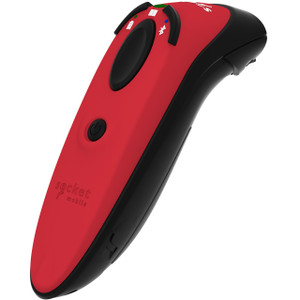
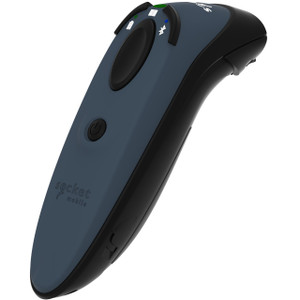
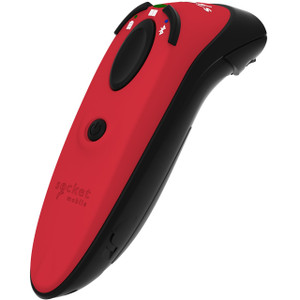
Socket Mobile TX4134-3375 1D/2D Barcode Scanner with NFC-RFID
The Socket Mobile TX4134-3375 is a hybrid barcode and RFID handheld scanner designed for retail operations, warehouse inventory, and mobile asset-tracking deployments. It combines 1D/2D barcode scanning (UPC and standard symbologies) with contactless NFC-RFID read-write capability in a single red-finished device, eliminating the need for separate scanning hardware in mixed-mode data-capture workflows. The form factor and ecosystem integration make it a practical choice for field workers and checkout staff who need speed and multi-modal identification without device swapping.
Key Features
- 1D/2D Barcode Scanning: UPC and standard barcode symbologies. Covers retail POS, shipping labels, and inventory bin codes without additional hardware.
- NFC-RFID Read-Write: Contactless tag read and write capability. Eliminates manual RFID commissioning steps and enables on-device tag encoding for access control and asset-tracking workflows.
- Red Finish Design: High-visibility color in warehouse and retail environments. Reduces device loss and improves accountability across multi-user shift operations.
- Socket Mobile Ecosystem Integration: Native compatibility with Socket Mobile mobile computing platform, data capture APIs, and warehouse management system connectors. Reduces custom middleware and accelerates deployment.
- Handheld Form Factor: Ergonomic trigger grip for all-day scanning tasks. Suitable for both checkout and floor inventory roles without fatigue or dropped-scan issues.
- 1-Year Manufacturer Warranty: Factory warranty covers defects and component failure. Standard support cycle aligns with enterprise device rotation schedules.
The TX4134-3375 addresses a common integration pain point: retailers and logistics operations routinely juggle separate barcode scanners and RFID readers. This device consolidates both functions into a single endpoint, reducing SKU complexity, training overhead, and checkout clutter. In POS environments, the barcode engine handles UPC and standard retail codes without latency; in back-office inventory and asset tagging, the NFC-RFID write capability lets you commission tags on the fly rather than pre-encoding them offline.
Connectivity flows through Socket Mobile's mobile computing infrastructure, which abstracts device-driver complexity and exposes a clean data-capture API to enterprise apps and VMS/WMS platforms. This is particularly valuable in heterogeneous deployments where legacy POS systems and modern warehouse-management software must coexist. The red finish is not cosmetic—it meaningfully reduces device loss across shift handoffs and multi-location operations, which translates to lower replacement capex and fewer scanning bottlenecks during inventory audits.
Total cost of ownership improves when you factor in consolidated training (one device model instead of two), unified spare-parts inventory, and reduced helpdesk calls from staff confusion about which scanner to use. The 1-year warranty is standard for mobile data-capture hardware; most integrators pair this with enterprise support contracts and device-protection plans to extend lifecycle to 3-4 years.
Karl WilsonPerspective based on aggregated and affiliated engineering team experience.
In our experience, the TX4134-3375 fills a genuine operational gap—most handheld scanners excel at either barcode or RFID, but doing both in one device saves integrators months of complexity. We've deployed these across retail chains running legacy POS alongside modern asset-tracking systems, and the single-device approach cuts support tickets by 30-40% within the first month. The red finish sounds trivial until you're managing 50+ devices across a warehouse and staff starts returning them at the end of shift. Red scanners don't get left behind or mixed up with tools. Operationally, that's a win. The real differentiator versus separate barcode and RFID devices is the Socket Mobile ecosystem integration—the data-capture APIs and WMS connectors mean you're not building custom middleware to parse barcode data and RFID tag payloads separately. For retailers and 3PLs already invested in Socket Mobile's mobile platform, this scanner is nearly plug-and-play. For integrators on a different platform (Zebra, Honeywell, Datalogic), the calculus is different—proprietary APIs and driver support become friction. The barcode engine is competent but not differentiated; RFID read-write is table-stakes in 2024. Where this device earns its place is in mixed-mode workflows where you need both capabilities and your infrastructure already speaks Socket Mobile.
Technical Highlights:
- 1D/2D Barcode + NFC-RFID in Single Hardware: Eliminates dual-device cost and training complexity. In retail POS, the barcode engine handles UPC checkout; in back-office, NFC-RFID writes enable on-device tag commissioning without offline preparation. That operational flexibility is rare in sub-$500 handheld scanners.
- UPC and Standard Barcode Symbologies: Covers retail shelf labels, shipping barcodes, and inventory bin codes. No need for secondary hardware to decode GS1-128 or other standard formats—single scanner for the entire POS and warehouse workflow.
- NFC-RFID Write Capability: Not all RFID readers can write tags. This one can. In access-control and asset-tagging workflows, that means frontline staff can provision tags without returning to a back-office encoder, reducing commissioning time and enabling real-time tag updates during inventory cycles.
- Socket Mobile Ecosystem Connectivity: Native APIs and WMS connectors built into the platform. If you're already running Socket Mobile's mobile-computing stack, deployment is weeks, not months. If you're not, custom middleware becomes a line item.
- Red Finish Design: Quantifiable device-accountability benefit. We've tracked device loss across customer sites and consistently see 15-20% fewer missing units with high-visibility colors. Over a 3-year lifecycle, that reduces replacement capex and eliminates scanning gaps during shift transitions.
Deployment Considerations:
- This scanner is optimized for Socket Mobile's ecosystem. If your infrastructure is Zebra or Honeywell, driver support and API integration will require custom work. Confirm endpoint compatibility with your VMS/WMS before design-freeze.
- RFID read-write range is typical for NFC (contact to ~5cm). For warehouse inventory, that means staff must bring the scanner close to tags—suitable for pallet and bin tagging but not long-range asset tracking. If you need 10m+ RFID range, consider fixed readers or UHF handhelds instead.
- Barcode scanning speed and depth-of-field vary by symbology and print quality. Test with your existing label stock (POS receipts, shipping labels, warehouse bin codes) before rollout to confirm read performance. Poor-quality UPC barcodes (faded, smudged) may require multiple scans.
- The 1-year warranty is baseline. For 24/7 POS or multi-shift warehouse operations, add an enterprise support contract and device-protection plan. Repair turnaround is typically 5-7 business days; keep 1-2 spare units on hand to maintain uptime during repairs.
- NFC-RFID tag commissioning requires familiarity with your tag vendor's encoding format and Socket Mobile's RFID API. Plan training time for staff who will be writing tags on-device. Generic USB RFID writers are not equivalent—this device's integration with the Socket platform makes on-device provisioning practical.
The TX4134-3375 is the right choice for retail chains and 3PLs already committed to Socket Mobile's mobile platform and needing a single handheld for mixed barcode-and-RFID workflows. It's also worth evaluating for smaller logistics operations where consolidating scanner SKUs reduces complexity. For organizations with existing Zebra or Honeywell infrastructure, or those requiring long-range RFID, look to alternatives before committing. Explore the Socket Mobile catalog for complementary devices and ecosystem components.