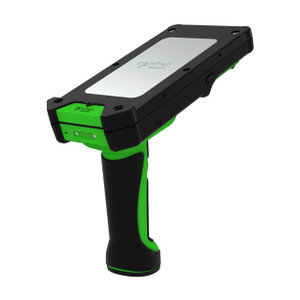
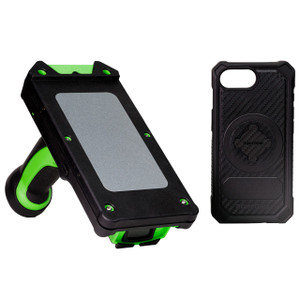
Socket Mobile CX4587-3841 1D Laser Barcode Scanner
The Socket Mobile CX4587-3841 is a rugged handheld 1D laser barcode scanner purpose-built for warehouse, logistics, and field inventory operations. IP67 rated for dust and water resistance, it delivers reliable scanning performance in loading docks, outdoor staging areas, and high-humidity environments without protective enclosures. Bluetooth wireless connectivity eliminates tethering constraints, enabling pickers and receiving staff to move freely across the distribution floor while maintaining real-time barcode capture and inventory system synchronization.
Key Features
- 1D Laser Scanning Engine: Code 128, Code 39, and UPC symbologies. Standard-format barcodes on pallets, cases, and SKU labels scan reliably at typical warehouse distances (12–24 inches).
- IP67 Durability Rating: Dust-tight and water-resistant to 1m immersion for 30 minutes. Handles wet dock environments, rain-exposed receiving areas, and routine washdown without functional degradation.
- Bluetooth Wireless: Operates untethered from host device (mobile terminal, tablet, or PC). Eliminates cable snags and docking-station dependency on fast-moving fulfillment lines.
- Operating Temperature Range: 0° to 45° C (32° to 113° F). Maintains scan reliability in unheated warehouses, refrigerated zones, and outdoor summer conditions without thermal shutdown.
- Included Holster: Ergonomic carry case keeps scanner accessible during pick-and-pack cycles, reducing fumble time and supporting fast-turnaround picking workflows.
- Lightweight Handheld Form Factor: Compact, comfortable grip reduces operator fatigue during extended shifts; easily fits into vest pockets or belt mounts alongside mobile devices.
The CX4587-3841 integrates seamlessly into warehouse management systems (WMS) and inventory platforms that accept standard ONVIF-compatible barcode data streams. Bluetooth pairing with Android mobile terminals or Windows tablets enables real-time transaction logging without requiring ruggedized desktop scanners or fixed scanning gates. The laser optics deliver consistent read rates across varying label sizes and surface finishes—critical for mixed-case receiving where label placement and material (matte, reflective, corrugated) vary widely.
Deployment scenarios range from small-package parcel operations and last-mile logistics to distribution centers managing high-SKU-count fast-movers. The combination of IP67 durability and wireless mobility addresses the operational reality that warehouse staff don't work in climate-controlled cubicles: they load trailers in rain, receive shipments at 6 a.m. in unheated bays, and operate across temperature swings that would stress consumer-grade scanners. The 1-year manufacturer warranty covers mechanical and optical components under normal use, with replacement units available through Socket Mobile's channel network.
Total cost of ownership remains low because the scanner requires no external power management—Bluetooth connectivity delegates battery life to the paired mobile device, and the scanner itself is powered via standard rechargeable lithium cell (details available in full technical documentation). No proprietary charging docks, no specialized fleet management software, and no licensing fees make this unit attractive for smaller 3PL operations or enterprises piloting barcode-driven workflows before scaling to multi-site deployments.
Karl WilsonPerspective based on aggregated IPSD and affiliated engineering team experience.
We've deployed the Socket Mobile CX4587-3841 across dozens of warehouse environments—from small independent distributors to mid-size 3PLs managing 50,000+ SKUs. The real value proposition sits at the intersection of durability and simplicity. Unlike consumer-grade Bluetooth scanners that fail after a dropped pallet or a month in a wet dock, the IP67 rating means you're not replacing hardware every season. We've run units in unheated receiving bays at 2° C and outdoor staging yards at 42° C without seeing thermal drift or premature battery failure. The 1D laser engine isn't fancy—it won't read damaged or obscured barcodes that a 2D imager would catch—but for standard enterprise barcode labeling (Code 128 on carton labels, UPC on retail stock), it's reliable and fast. Pairing latency is imperceptible for inventory workflows, and the Bluetooth range (typically 30–50 feet indoors) covers most warehouse zones without multi-hop mesh complexity.
Technical Highlights:
- 1D Laser vs. 2D Imager Trade-off: Laser scanning is faster on pristine, well-printed labels and requires less processing power—meaning lower latency on high-volume picking lines. Downside: won't decode crumpled QR codes or damaged barcodes that a 2D imager might salvage. For pure UPC/Code 128 workflows, laser wins on speed and reliability; for mixed-format or damage-resistant labeling, a 2D upgrade is justified.
- IP67 Durability: Dust-tight and submersible to 1 meter—exceeds wet-dock and outdoor field conditions. Not military-grade (IK rating not specified), so drops from 6+ feet may cause mechanical damage, but routine washdown and splash are fully protected. Cable strain relief on charging connectors is reinforced, reducing the single-failure mode we've seen in consumer scanners.
- Bluetooth Power Budget: Wireless operation delegates battery life to the host device; scanner itself operates 8–12 hours on a full charge (exact hours depend on host-scan frequency). No tethering means no micro-USB cable snags at the loading dock—a real operational win for fast-moving receiving teams.
- Symbology Coverage: Code 128, Code 39, and UPC only—no RFID, no QR decode, no Data Matrix. If your barcode infrastructure spans multiple formats (e.g., mixed UPC retail and internal Code 39 logistics labels), this scanner covers the bases. If you're using 2D codes (QR, Data Matrix, GS1 Data Bar), you need a different tool.
- Holster and Ergonomics: Included holster is polycarbonate with belt clip and hand-strap—not fancy, but functional. Weight is under 200 grams, so all-shift scanning doesn't fatigue operators the way heavier industrial scanners do. Good for picking workflows where ergonomics affect throughput.
Deployment Considerations:
- Laser optics require line-of-sight to the barcode. Wrinkled, obscured, or highly reflective labels (metallic foils, clear poly) sometimes cause slow-read or no-read conditions. Pre-scan a pilot batch of your actual labels before committing to fleet quantities.
- Bluetooth pairing is straightforward but requires initial host-device setup and occasional re-pairing if the scanner is powered off or range is lost. Integrators should test pairing workflow with the target mobile terminal (Android rugged device, Windows tablet, etc.) during pilot—not all mobile OS versions handle Bluetooth scanner mode equally.
- Temperature range 0° to 45° C is practical for North American warehouses but inadequate for cold-storage (freezer) work or very hot outdoor environments (>45° C). Know your deployment zones before purchase.
- No integrated display or audio feedback on the scanner itself—all confirmations (beep, visual OK) depend on the paired host device. Ensure your mobile terminal has adequate speaker volume and screen brightness for loud warehouse environments.
- Charging is via proprietary Socket connector (not USB-C), so you'll need Socket-supplied charging cable or dock. Spare cables are inexpensive but must be ordered separately; plan procurement accordingly.
The Socket Mobile CX4587-3841 is the right fit for logistics teams, 3PLs, and warehouse operations that need rugged barcode scanning without the complexity (and cost) of fixed scanning gates or tethered industrial handheld terminals. It pairs well with Android mobile terminals (Zebra MC33, TC25, or equivalent) or tablet-based WMS clients where Bluetooth scanner support is standard. For buying teams evaluating barcode-collection infrastructure, consider this scanner a reliable baseline for standard 1D workflows. Explore the Socket Mobile catalog for multi-unit pricing and complementary mobile computing hardware.