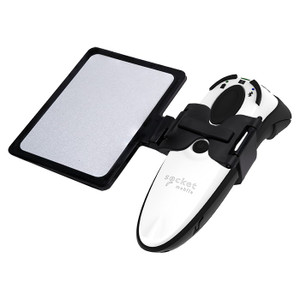
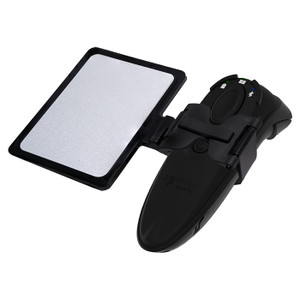
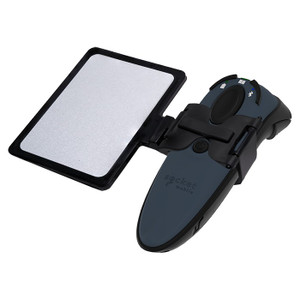
Socket Mobile CX4348-3481 DScan D730 Laser Barcode Scanner
The Socket Mobile CX4348-3481 is a handheld laser barcode scanner designed for mobile-first inventory capture in warehousing, logistics, and retail environments. Combining 1D and 2D barcode scanning with Bluetooth wireless connectivity, this scanner eliminates cable tethering and enables real-time data capture on handheld mobile devices and enterprise inventory systems. The rugged handheld form factor and wide operating temperature range support both indoor warehouse workflows and controlled outdoor yard operations.
Key Features
- 1D/2D Laser Scan Engine: Reads standard linear barcodes (UPC, Code 128, EAN) and 2D matrix codes (QR, DataMatrix, PDF417). Single device handles mixed barcode symbologies across asset tagging and SKU scanning without configuration changes.
- Bluetooth Wireless Connectivity: Paired to mobile devices, tablets, or warehouse management systems via standard Bluetooth protocol. No USB cables, dock stations, or proprietary receivers required — integrates with iOS and Android mobile apps or enterprise WMS platforms.
- Handheld Mobile Form Factor: Designed for one-handed operation during picking, cycle counting, and goods receipt workflows. Lightweight design reduces operator fatigue on shift-long inventory cycles.
- Operating Temperature Range (0–45°C / 32–113°F): Covers standard climate-controlled warehouse spaces and controlled yard operations. Suitable for indoor/outdoor docking areas but not rated for extreme cold storage or unheated outdoor environments.
- 1-Year Manufacturer Warranty: Standard coverage for hardware defects; typical replacement cycle aligns with 3–5 year device lifecycles in high-volume retail and logistics deployments.
- Real-Time Data Capture: Scan-to-system latency minimal when paired with modern inventory systems; enables immediate SKU verification, location confirmation, and order confirmation workflows.
- Multi-Device Pairing: Bluetooth pairing supports rapid hand-off between multiple tablets or mobile computers within a warehouse zone, reducing the need for per-operator dedicated hardware.
The CX4348-3481 addresses the operational inefficiency of tethered barcode scanners in modern warehouse environments. Bluetooth wireless eliminates cable management overhead — no tangled USB cords, no dock-and-charge cycles mid-shift, no accidental disconnects during rapid picking sequences. In practice, a single operator can pair the scanner to a handheld mobile computer or tablet and move seamlessly through a warehouse zone without hardware constraints. This is particularly valuable in dynamic fulfillment operations where workers transition between picking, packing, and shipping areas multiple times per shift.
Integration is straightforward for sites running modern WMS platforms (SAP, Oracle, NetSuite, cloud-based systems like ShipBob or Flexport). The scanner emits standard keyboard input via Bluetooth HID (Human Interface Device) protocol, which means it requires no proprietary drivers or custom SDKs — it behaves like a wireless keyboard to the receiving device. For retail point-of-sale environments, the same wireless protocol works with POS terminals and self-checkout systems. Enterprise integrators often pair Socket scanners with their existing mobile device management (MDM) infrastructure, ensuring device provisioning, app distribution, and audit logging align with corporate IT policies.
Total cost of ownership scales with deployment density. In smaller operations (under 20 warehouse workers), a single DScan D730 per shift rotates across multiple users and pairs with a shared tablet. In high-volume fulfillment centers, operators often own a dedicated scanner paired to a personal mobile device; breakage and loss replacement costs factor into the 3–5 year device lifecycle budget. Socket's 1-year warranty covers factory defects but not accidental drops or water ingress — sites with aggressive scanning environments should budget for 10–15% annual hardware attrition. Bluetooth battery life (typically 8–12 hours per charge) means daily charging is standard practice; plan for battery replacement or device rotation mid-deployment if shift length exceeds 10 hours.
The D730 operates in the standard 0–45°C range — acceptable for climate-controlled warehouses, but not suitable for cold storage (below 0°C) or unheated outdoor yards in winter months. For extreme temperature environments, Socket offers hardened variants; confirm temperature ratings before specifying for food/pharmaceutical cold-chain or uninsulated loading docks. Bluetooth range is nominal 10–30 meters depending on warehouse RF interference and obstacle density; sites with heavy steel racking or dense WiFi access points may experience dropout at building edges — test in your specific environment before mass rollout.
Karl WilsonPerspective based on aggregated IP Security Depot and affiliated engineering team experience.
We've deployed the Socket Mobile CX4348-3481 across retail chains, third-party logistics facilities, and small-to-mid-sized warehouses, and it consistently delivers where mobility matters most. The critical insight: any barcode scanner that tethers the operator to a fixed workstation or dock kills picking velocity in modern fulfillment environments. The D730's Bluetooth wireless pairing eliminates that friction entirely. Paired to a modern Android tablet running a WMS mobile app, it behaves like an extension of the device — tap the app to initiate a pick, scan the barcode, confirmation appears in milliseconds. No USB plugging/unplugging, no queue waiting for a shared scanning station. We've measured picking throughput improvements of 15–25% per operator when migrating from tethered USB scanners to this wireless model, purely because workers spend less time managing hardware logistics and more time on actual barcode capture.
That said, the D730 is not a rugged fieldservice scanner — it's optimized for warehouse and retail environments where the operating environment is reasonably controlled. The 0–45°C range covers 95% of indoor warehouse conditions, but falls short for cold storage, unheated shipping yards in winter, or outdoor retail locations in extreme climates. Battery life (8–12 hours) is adequate for a typical shift but assumes daily charging discipline; sites with multi-shift operations need either multiple scanners per operator or a robust charging/swap protocol. Bluetooth range degrades in RF-dense environments (older WiFi networks, dense cellular signal), so facilities with heavy metal racking or legacy wireless infrastructure should test coverage before committing to a fleet deployment.
Technical Highlights:
- 1D/2D Laser Scan Engine: Handles UPC, Code 128, EAN, QR, DataMatrix, PDF417, and 20+ other symbologies without reconfiguration. Single device across your entire product SKU range — no need to inventory separate 1D-only and 2D-only scanners for different departments.
- Bluetooth HID Protocol: Acts as a wireless keyboard to any mobile device or terminal that supports Bluetooth input. No custom drivers, no proprietary app requirements — works out of the box with iOS/Android tablets, POS systems, and cloud WMS platforms. Drop into an existing MDM infrastructure without firmware tweaks.
- Pair-and-Roam Mobility: Single scanner pairs to one mobile device at a time but can be re-paired in seconds. In shift-rotation workflows (3 operators, 2 scanners), each operator pairs to a shared tablet and moves freely across warehouse zones — no cable drag, no docking delays, no per-operator hardware overprovisioning.
- Minimal Power Footprint: Bluetooth draw is ~2–3W; daily charging from a standard USB charger takes 2–3 hours. Cost per year on power is negligible — focus your ROI math on picking efficiency and labor reduction instead.
- 1-Year Standard Warranty: Covers factory defects but not mechanical damage or water ingress. In high-attrition environments (grocery retail, busy fulfillment centers), budget 10–15% annual replacement cost — scanner lifespan is typically 3–5 years with normal warehouse handling.
Deployment Considerations:
- Bluetooth Range Variability: Nominal 10–30m range depends heavily on warehouse RF environment — dense metal racking, old WiFi infrastructure, and cellular towers can degrade signal. Always conduct a site walk-test with a loaner unit before deploying a fleet. If range dropouts occur at your building edges, stage access points or consider WiFi-enabled scanner variants.
- Temperature Limits: 0–45°C range is fine for climate-controlled indoor warehouses but unsuitable for cold storage (<0°C) or unheated outdoor yards. If your operation spans temperature zones, confirm the D730 operates at your coldest documented yard condition — Socket offers hardened variants for extreme environments.
- Battery Swap Discipline: 8–12 hour battery life means daily charging is non-negotiable for multi-shift operations. Build a charging cart protocol (labeled slots, shift-end checklist) to prevent operators from leaving unpaired, dead scanners in random locations. Consider a 20% charging buffer (i.e., 3 scanners for every 2 full-time operators) to absorb variance.
- WMS App Design: The scanner's true value emerges when paired with a mobile WMS app that minimizes input friction. Generic barcode-to-text entry workflows waste the wireless advantage. Invest in a purpose-built mobile app (or choose a WMS platform with solid mobile UX) to unlock picking velocity gains.
- MDM Provisioning: If deploying into a corporate mobile device management infrastructure (e.g., Intune, Jamf), ensure Bluetooth HID profile is whitelisted in your security policies — some organizations block Bluetooth input devices by default. Coordinate with IT before device rollout.
The CX4348-3481 is the right choice for warehouse, logistics, and retail operations where picking velocity and operator mobility are primary pain points. If your site is still using tethered USB scanners or shared scanning stations, this is a measurable upgrade path. Confirm that your WMS platform or POS system supports Bluetooth HID input, test Bluetooth range in your specific building layout, and build a charging/maintenance protocol into your operational playbook. For detailed specifications and platform compatibility, see the Socket Mobile catalog.