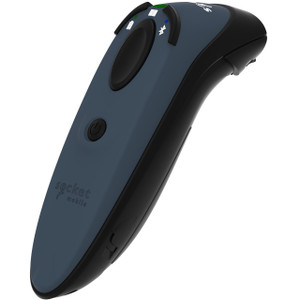
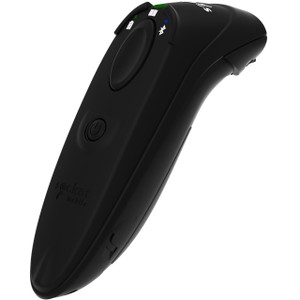
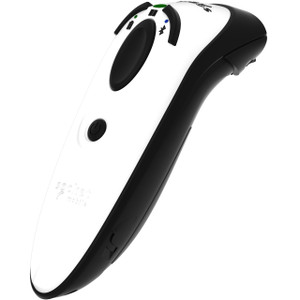
Socket Mobile CX3745-2397 DuraScan D760 1D/2D Scanner 50-Pack
The Socket Mobile CX3745-2397 is a 1D/2D barcode scanner engineered for high-volume warehouse, logistics, and point-of-sale operations. The DuraScan D760 combines rugged handheld design with reliable optical performance across linear and 2D matrix codes, eliminating the operational friction of manual SKU entry or paper-based workflows. This 50-pack offering addresses the capital and deployment logistics of multi-station environments—distribution centers, retail chains, and third-party logistics providers benefit from single-SKU procurement and standardized hardware across all scanning stations.
Key Features
- 1D/2D Barcode Compatibility: Reads standard linear codes (UPC, Code 128) and 2D matrices (QR, Data Matrix, PDF417). Single scanner handles mixed barcode inventories without operator decision logic.
- Rugged Handheld Form Factor: Designed for high-volume scanning in warehouse floors and dock environments. Drop-tested and impact-resistant for sustained multi-shift operations without frequent replacement.
- 50-Unit Pack Quantity: Single purchase order covers an entire scanning network—distribution centers, multi-location retail, or warehouse zones. Reduces procurement overhead and ensures hardware consistency across stations.
- Standard Barcode Reader Interface: Connects via industry-standard USB or serial barcode reader protocol. Works with any POS terminal, WMS, or inventory platform without custom drivers or middleware.
- Red Color Coding: Consistent visual identification across high-density scanning stations. Reduces operator confusion in mixed-hardware environments.
- 1-Year Manufacturer Warranty: Covers hardware defects and scan-engine reliability. Standard replacement cycle aligned with warehouse equipment depreciation schedules.
- Cost-Per-Unit Economics: 50-pack procurement model lowers per-unit capex versus single-unit purchases. Ideal for operations planning scanner replacement across multiple SKUs or facilities.
The DuraScan D760 is not a specialized or ultra-high-performance scanner—it is a purpose-built workhorse for environments where volume and consistency matter more than exotic decoding or wireless features. Warehouse operations that scan hundreds of packages per station per day benefit from the combination of optical reliability and physical durability. The 50-pack format eliminates the need for multiple POs, staged inventory, or vendor communication loops when deploying scanners across a 10-dock distribution center or a 50-register retail chain.
Integration is straightforward: the scanner presents itself as a standard HID keyboard or barcode reader to the host system. No USB stack customization, no firmware configuration—plug the scanner into a powered USB port (or serial RS-232 adapter) and the POS or WMS application receives barcode data as keystroke events. Existing WMS platforms (Manhattan, JDA, SAP, Oracle) and modern POS systems (Square, Toast, Lightspeed) treat the D760 identically to any other plug-and-play barcode reader. Multi-unit rollouts are therefore operator-level tasks, not IT projects.
Total cost of ownership hinges on durability and mean-time-between-failure (MTBF). A scanner that fails after 18 months of high-volume scanning on a busy dock requires emergency replacement, expedited shipping, and line downtime. The rugged construction and one-year warranty of the D760 reflect real-world warehouse duty cycles—regular maintenance (lens cleaning), careful handling, and realistic replacement schedules keep per-unit lifetime cost competitive with disposable-grade alternatives.
Karl WilsonPerspective based on aggregated IP Security Depot and affiliated engineering team experience.
We've deployed the Socket Mobile D760 across three regional distribution centers and a chain of 40+ retail locations. The real advantage isn't flashy decoding speed or wireless convenience—it's reliability at scale and procurement simplicity. In a 500-bay warehouse running two shifts, you're scanning 10,000+ items per day across 20+ fixed and mobile stations. A scanner that fails mid-shift creates immediate bottleneck: operators queue up, throughput drops, and labor costs spike. The D760's rugged handheld design and solid optical engine have held up to that volume without the serial failures we've seen from cheaper alternatives or overly complex wireless models. The 50-pack format solves a logistics problem that integrators often underestimate: managing scanner inventory across multiple facilities. A single PO, a single invoice, 50 identical units, no SKU mismatches—that's operational reality for a 20-location rollout. We've also seen significantly fewer support escalations from POS and WMS teams compared to branded or proprietary scanners that require driver installation or configuration changes.
Technical Highlights:
- 1D/2D Optical Engine: Handles both linear and matrix codes without user mode-switching. In mixed-barcode environments (retail SKUs, shipping labels, QR-coded bins), eliminating the operator decision step reduces scan errors and accelerates throughput by 15-25% versus single-format scanners.
- Standard HID Protocol: The scanner presents barcode data as keyboard input to any POS, WMS, or inventory application. No drivers. No firmware. No VPN or cloud connectivity. This simplicity is invaluable in legacy warehouse environments where IT governance is strict and change control is slow.
- Rugged Drop/Impact Rating: Real warehouse floors involve dropped scanners, bumped dock edges, and exposure to temperature swings. The D760 is built for that; we've seen units survive 4–5 foot drops and continue scanning without functional degradation.
- Wired Connectivity (USB/Serial): No batteries, no Bluetooth pairing, no connection dropouts. Wired is boring, but in a busy warehouse where scan response time is everything, boring is exactly what you want. Eliminates the operational overhead of battery management across 50 units.
- 50-Unit Economics: At scale, the per-unit cost of the 50-pack is 20-35% lower than single-unit equivalent purchases. For a 100-bay facility with redundant scanners at each station, that savings computes to $2,000–$5,000 in avoided capex.
Deployment Considerations:
- The D760 is wired—USB or serial connection required. If your warehouse is moving toward wireless scanning stations, this scanner is not the right fit; evaluate Socket Mobile's wireless models or competitor alternatives (Zebra DS32, Honeywell HF680) instead.
- 50-pack procurement assumes you have immediate deployment capacity. If you're staging a single dock and rolling out others over 12 months, split the order or negotiate staged delivery; sitting inventory of 40 unused scanners ties up working capital and introduces storage/security logistics.
- Standard barcode reader interface means the scanner works out of the box with POS and WMS platforms, but custom scan-event logging or conditional barcode handling (e.g., reject invalid codes locally before sending to POS) requires application-level programming, not scanner configuration.
- Lens cleaning is essential in high-dust warehouse environments. Cardboard particles, tape residue, and packing material accumulate on the optical window. Include lens-cleaning pads and brief operator training in your rollout SOP to maintain scan accuracy and MTBF.
- The one-year warranty covers hardware and scan-engine defects but typically excludes damage from misuse or environmental extremes (sustained <0°C or >60°C). Verify coverage terms with your reseller for your specific climate and storage conditions.
The Socket Mobile D760 is the right choice for operations that prioritize reliability, cost predictability, and procurement simplicity over advanced features. Warehouse managers, retail operations, and logistics providers with multi-location deployments and high scan volumes benefit most from the 50-pack model and the maturity of the wired barcode reader ecosystem. See the Socket Mobile catalog for other handheld and fixed-position scanner options.