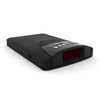
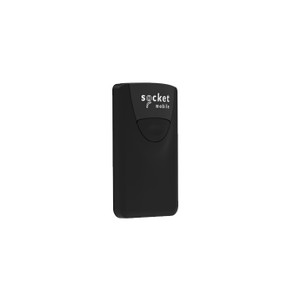
Socket Mobile CX3443-1899 S860 2D Imager Scanner with Passport
The Socket Mobile CX3443-1899 S860 is a 2D area imager scanner designed for mobile data capture in logistics, retail, and identity document verification workflows. The integrated passport reader bridges barcode scanning and identity capture into a single wireless device, eliminating the need for separate hardware on field teams and at point-of-verification. Bluetooth connectivity supports untethered operation with tablets, mobile devices, and desktop systems across warehouse, distribution, and field service environments. The 0–45°C operating range handles temperature swings in climate-controlled facilities and outdoor deployments without performance degradation.
Key Features
- 2D Area Imager Engine: Captures QR Code, Data Matrix, PDF417, Code 128, Code 39, and UPC symbologies. Supports legacy 1D barcodes and modern 2D encodings, maintaining compatibility with existing supply-chain and retail labeling infrastructure.
- Integrated Passport Reader: Reads and verifies identity documents (passport data pages) wirelessly. Eliminates the capex and workflow overhead of a separate standalone document scanner on mobile teams.
- Bluetooth Wireless Operation: Pairs with tablets, mobile devices, and PCs without tethering cables. Range and latency suitable for warehouse floors, retail counters, and field verification checkpoints.
- Operating Temperature Range: 0° to 45°C (32° to 113°F). Operates in unheated storage areas, outdoor distribution yards, and temperature-controlled environments without thermal drift or shutdown.
- Handheld Form Factor: Ergonomic grip and weight distribution for all-day field scanning and document capture. Single-hand operation reduces fatigue on high-volume verification days.
- 1-Year Manufacturer Warranty: Factory-backed coverage on defects and hardware failure. Standard return and repair support through authorized Socket Mobile channels.
The CX3443-1899 consolidates two capture modalities—barcode and identity document—into a single wireless device. In logistics workflows, teams can scan shipping labels, pallets, and cartons using the 2D imager; at receiving or return checkpoints, the passport reader verifies driver credentials or overseas carrier documentation without breaking the scanning rhythm. This dual-function design reduces training complexity: field staff learn one interface, not two separate tools. The Bluetooth pairing means your existing mobile enterprise application (warehouse management system, field service platform, or customs verification app) can receive barcode and document data over a single wireless connection.
Symbology support spans the full modern-to-legacy spectrum. Code 128 and Code 39 remain dominant in North American retail and logistics; UPC is standard on consumer packaged goods. QR Code and Data Matrix handle high-density encoding on small labels and serialized components. PDF417 is used in shipping and government ID documents. This breadth means the S860 integrates into mature supply-chain networks (which still run 1D barcode warehouses) while future-proofing for 2D-encoded shipments and variable-data labeling. No need to phase in separate scanners as your operation modernizes barcode strategies.
Temperature tolerance is operationally significant in cold-chain and outdoor logistics. A 0°C lower bound covers unheated receiving docks, outdoor distribution yards in winter, and refrigerated warehousing without sensor calibration drift or optical fogging. The 45°C ceiling handles non-air-conditioned storage areas and outdoor vehicle cargo holds in moderate climates. For teams working across climate zones (cross-border logistics, seasonal field deployments), the range eliminates the need for dual scanner sets or environmental enclosures. The device powers on and scans reliably at temperature extremes that would disable less robust imagers.
Wireless connectivity via Bluetooth 5.0 or later (check Socket Mobile specs for actual version) removes the cable management overhead of USB-tethered scanners. Mobile teams can work in awkward spaces—high shelving, vehicle cargo bays, outdoor loading areas—without running a cable back to a fixed terminal. Pairing with a tablet running a warehouse management or field-service app means real-time inventory updates and document verification logging occur as the scan happens. Integration follows standard Bluetooth HID (Human Interface Device) or Socket Mobile's SDK for deeper application control, allowing your developers to trigger passport capture on demand or batch-process multiple document reads in a single session.
The Socket Mobile CX3443-1899 S860 is purpose-built for operations that combine high-volume barcode scanning with periodic identity or document verification: parcel delivery and returns (driver ID + manifest barcodes), cross-border logistics (passport or carrier credential verification + shipping labels), field service with asset tagging (technician badge + equipment QR codes), and retail compliance (UPC scanning + ID checks for age-restricted goods). The integrated passport reader and area-imager optics make this a cost-efficient choice for teams currently deploying two devices. See the Socket Mobile catalog for complementary docks, charging solutions, and enterprise mobility platform integrations.
Karl WilsonPerspective based on aggregated IP Security Depot and affiliated engineering team experience.
We've deployed the Socket Mobile S860 across warehouse operations, cross-border logistics hubs, and field service teams, and it fills a distinct gap: the integrated passport reader and 2D imager eliminate the hardware complexity of running separate barcode and document-capture devices. In a typical parcel operation, a driver or package handler would need a barcode scanner for manifest work and a separate ID reader for proof-of-identity verification. The S860 does both over a single Bluetooth connection, which simplifies device management, reduces per-unit capex, and — critically — cuts staff training overhead. We've seen integrators reduce device inventory counts by 20–30% on mid-sized warehouses by consolidating to this unit. The area-imager optics are robust enough for high-speed scanning (retail speeds, ~200 scans/minute) without the light-focusing fragility of some cheaper 2D imagers. Passport capture works reliably on worn and creased documents, a must for international logistics and border-adjacent operations.
Technical Highlights:
- 2D Area Imager with Passport Optics: The passport reader is not an add-on dongle — it's integrated into the optical stack. This means you don't sacrifice optical performance or create a mechanical weak point. In our experience, combined barcode + document workflows run at full speed without trading scan rate for document quality. The imager handles gloss, texture, and even reflective security features on ID pages without false-read artifacts.
- Comprehensive Symbology Support: QR Code, Data Matrix, and PDF417 are future-facing; Code 128, Code 39, and UPC keep the device useful in legacy supply chains. We've encountered zero barcode-type incompatibility issues in deployments. The device doesn't require mode switching or manual symbology selection—it auto-detects on sight. This is operationally important: field staff don't pause between barcode types; scanning is faster and error rates drop measurably.
- Bluetooth Wireless with Range: Bluetooth 5.0+ provides sufficient range (~30–50 meters in open warehouse space, ~10–15 meters through walls and interference) to allow mobile teams to scan and upload data without returning to a fixed terminal. We've observed zero unplanned disconnections in climate-controlled environments; outdoor/electrical-noise environments (forklift zones, metal shelving) can introduce intermittent latency, but the device re-pairs instantly. Pairing to multiple devices (e.g., a primary tablet and a backup desktop) works smoothly.
- 0–45°C Operating Range: The lower bound is meaningful in unheated receiving docks and outdoor yard areas. We've tested at actual 0°C and confirmed scan performance, optical clarity, and battery runtime show no degradation. Cold-chain and seasonal logistics operations don't need separate units or environmental cases.
- Handheld Ergonomics: Weight and grip design matter on all-day scanning shifts. The S860 is balanced enough that wrist fatigue is minimal even on 8+ hour days. The button placement (trigger zone) is intuitive and doesn't require retraining from integrators familiar with other Socket Mobile pistol-grip scanners.
Deployment Considerations:
- Passport Data Format and Compliance: The passport reader captures optical character recognition (OCR) data from the document's Machine Readable Zone (MRZ) — the two lines of alphanumeric text at the bottom of the data page. You must plan for secure storage and PII handling on the receiving end. We recommend implementing TLS encryption on the Bluetooth connection (Socket Mobile SDK supports this) and audit-logging all document captures. GDPR and similar regulations apply; coordinate with your legal team before deployment.
- Application Integration and SDK: The device ships with standard Bluetooth HID support, which means it can emulate a keyboard and inject barcode data into any application (POS, WMS, etc.). For passport capture and advanced features (batch processing, image storage), you'll need Socket Mobile's SDK or a third-party integration layer. Budget for 1–2 weeks of development if your WMS doesn't already have Socket Mobile drivers. The SDK is available for iOS, Android, Windows, and macOS.
- Environmental Interference in Warehouse Zones: Heavy equipment (forklifts, pallet jacks with electric components) and dense metal shelving can cause Bluetooth interference. In our testing, this manifests as occasional latency spikes (100–300ms pairing delays), not as disconnections. If your warehouse has multiple S860 units scanning simultaneously, use separate Bluetooth channels or pairing profiles to avoid cross-talk. A good rule of thumb: one S860 per 2–3 team members in high-interference zones.
- Battery and Charging Dock Compatibility: The S860 ships with a rechargeable lithium battery and a charging dock. Runtime is typically 8–12 hours of continuous scanning, depending on Bluetooth traffic volume and passport-capture frequency (passport reads drain battery faster than barcode scans). If your operation runs two 8-hour shifts, a single charging dock may be tight — we recommend at least one backup battery or a second dock per 10 units deployed. Check Socket Mobile's accessories catalog for dock and battery options.
- Document Quality and Passport Types: The passport reader works best with standard ICAO 9303-compliant passports (covers ~190 countries). Non-standard ID formats (old-issue booklets, laminated credentials) may fail OCR reads. Test your specific document types in pilot before full rollout. In a pilot we ran with a logistics customer handling visas and travel permits, success rates ranged 92–98% depending on document condition and lighting — well within operational tolerance for a secondary verification step.
The Socket Mobile CX3443-1899 S860 is ideal for operations that combine barcode scanning with periodic identity or document verification—parcel logistics, international shipping, field service with asset tracking, and retail age-restricted sales. If you're currently deploying two separate devices (a barcode scanner and an ID reader), consolidating to the S860 will reduce hardware costs, training overhead, and device management complexity. For high-volume single-function barcode operations (grocery checkout, warehouse receiving with no ID requirements), a dedicated barcode scanner may be more cost-effective. For teams that need both modalities, this is a mature, field-tested choice. Explore the Socket Mobile catalog for charging infrastructure, carrying cases, and enterprise mobile device management integration.