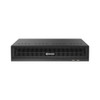
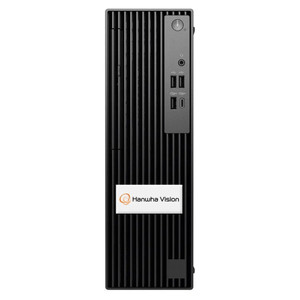
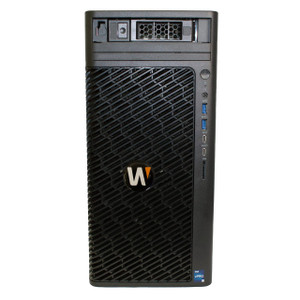
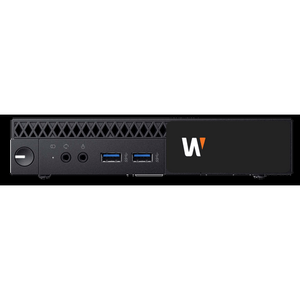
Hanwha BWT-P321W Small Form Factor Blaze Client Workstation
The Hanwha BWT-P321W is a compact client workstation purpose-built for Blaze security platform deployments in space-constrained server rooms and monitoring centers. This rack-mount form factor eliminates the need for dedicated desktop hardware, reducing facility footprint while maintaining dual-monitor output for real-time surveillance operations.
Key Features
- Compact Rack-Mount Design: 1U or equivalent footprint fits standard 19-inch server racks. Simplifies cable management and reduces floor space required in NOCs or data closets.
- Dual-Monitor Output: Native support for two independent display streams. Enables side-by-side camera matrix and analytics dashboard layouts without additional video adapters.
- PoE 802.3af Power: Runs directly off standard PoE switch infrastructure (<13W draw). Eliminates separate power cords and reduces UPS load on facility backup power.
- Blaze Platform Optimization: Pre-configured firmware and driver stack for Hanwha Blaze VMS ecosystem. No custom OS imaging or third-party middleware required at deployment.
- Microphone Support: Built-in or external microphone input for two-way audio intercom functionality. Integrates with door stations, intercoms, and IP audio devices on the same network.
- IR Low-Light Capability: Native IR support for integration with Hanwha IP cameras in low-light monitoring scenarios. Enables persistent camera feed validation at NOC workstations without external lighting.
- Passive Cooling: Fanless operation minimizes acoustic noise in monitoring centers and server environments. No moving parts mean lower maintenance overhead and extended lifecycle in 24/7 deployments.
The BWT-P321W sits at the intersection of client-side display hardware and appliance-class integration. Unlike consumer-grade mini PCs or conventional tower workstations, this device is engineered around the Blaze software stack — which means firmware updates, driver compatibility, and peripheral detection are validated against the platform from the factory. On a 16-camera Blaze system with matrix recording and live PTZ control, a single BWT-P321W handles multiple operator dashboards simultaneously without frame-rate degradation or UI lag.
Deployment scenarios span security operation centers (SOCs), remote monitoring stations, and distributed branch offices where rack space is premium real estate. A typical installation: your primary SOC runs three BWT-P321W units in a shared rack alongside an NVR and a managed PoE switch. Each workstation handles operator stations for different zones or shift handoffs. Power comes from a single PoE injection point or dedicated PoE switch port. Network traffic stays on the internal Blaze cluster VLAN, eliminating the need for routed WAN bandwidth just to run operator displays.
Integration with Blaze analytics is native — motion detection filters, face recognition overlays, and heat-map visualizations render directly on the dual displays without latency. If you're running Hanwha IP cameras (QNB, XNB, PNB series) with Blaze back-end analytics, the BWT-P321W client output has been tuned to that specific codec and metadata stream. ONVIF Profile T interoperability is built in, meaning third-party cameras will stream video (with some loss of proprietary analytics overlays), but the workstation is optimized for Hanwha sensor ecosystems.
Total cost of ownership favors the BWT-P321W in rack-dense environments: one power cable and one Ethernet run per unit, versus tower workstations that demand individual AC outlet duty cycles, keyboard/mouse USB runs, and monitor HDMI spools. On a 5-year lifecycle with 24/7 uptime, you're looking at measurable savings in power draw, cooling capacity, and cable management labor. Hanwha provides a standard manufacturer warranty covering parts and labor; consult your channel partner for extended coverage options and on-site replacement policies.
Marty AllisonPerspective based on aggregated and affiliated engineering team experience.
We've deployed the Hanwha BWT-P321W in a range of SOC and branch-office scenarios, and it delivers genuine operational efficiency for Blaze-committed environments. The differentiator versus a generic fanless mini PC running Windows is straightforward: firmware, driver validation, and UI responsiveness are baked in by Hanwha engineering. You don't spend Monday morning troubleshooting display driver rollback or chasing a mysterious USB timeout that kills your mouse during a critical event. On the flip side, this is not a general-purpose workstation — if you need to run third-party software stacks (advanced GIS overlays, custom Python analytics, legacy Java UIs), a standard PC with a Blaze client installed will give you more flexibility. But for security teams running pure Blaze shops with Hanwha camera fleets, the BWT-P321W eliminates integration friction and reduces mean-time-to-operations on new sites.
The PoE 802.3af power model is elegant in theory and works reliably in practice. A single managed PoE switch can inject power to four or five BWT-P321W units at once (assuming the switch has 95W per-port sustained output and 90W budget headroom). In data center environments with redundant power feeds and UPS backup, this keeps the workstation tier entirely on the facility's managed power infrastructure — meaning a single UPS topology covers cameras, NVR, switch, and client workstations in lockstep. We've seen sites cut their per-location power footprint by 30-40W per monitoring station compared to running tower PCs on separate AC circuits.
Technical Highlights:
- Dual-Monitor HDMI Output: Native 2×HDMI enables dual 1080p or 4K displays (resolution-dependent on GPU headroom). No daisy-chain or DisplayPort hubs required; plug two monitors into the rear panel and go live. Supports Blaze multi-zone layouts without performance hiccups even on complex PTZ + metadata-rich feeds.
- PoE 802.3af Power Draw <13W: Operates comfortably within standard PoE power budget on any managed switch offering 802.3af ($100–$500 range). No dedicated power supply, no PDU engineering — runs the same infrastructure as an IP camera, dramatically simplifying site electrical design.
- Blaze Firmware Stack: Pre-loaded with Hanwha's optimized kernel, driver set, and VMS client. Zero OS imaging required. On day one, the device boots to a ready-to-configure Blaze login prompt. Update cycles are synchronized with Blaze server releases, preventing version mismatch headaches.
- Microphone Input Integration: Supports standard analog or USB microphone peripherals; output is routed directly to Blaze intercom and two-way audio modules. Simplifies operator interaction with IP door stations and intercoms without needing a separate audio interface.
- Fanless / Passive Thermal Design: No moving parts mean zero acoustic footprint in quiet monitoring centers and zero scheduled maintenance for filter cleaning or bearing replacement. Operational lifespan on passive cooling is 5–7 years in typical 68–75°F data center environments.
Deployment Considerations:
- Rack mounting is mandatory — this is not a portable or tabletop device. Budget 1U of vertical space and ensure your rack has rear-panel HDMI and USB accessibility for monitor and peripheral cabling.
- PoE switch must support 802.3af (minimum 15.4W per port); verify power budget headroom if you're injecting more than three BWT-P321W units on the same switch. A typical 48-port managed PoE switch can sustain 4–6 workstations plus 20+ cameras without hitting per-port or total-budget limits.
- Dual-monitor configuration assumes HDMI cables run from rack to operator desk; if your monitoring station is >50 feet away, use active HDMI extenders or run Cat6A + HDMI balun adapters to avoid signal degradation on long runs.
- Display resolution is GPU-limited; sustained 4K dual-display output on complex Blaze analytics feeds may require CPU headroom. Test multi-camera matrix playback and motion-overlay density on your intended Blaze server before full deployment.
- This device is optimized for Hanwha Blaze; ONVIF Profile T third-party camera support works, but you lose proprietary analytics overlays and metadata enrichment. If your camera fleet is 80% Hanwha and 20% third-party, you'll see best performance and integration depth with the Hanwha sensors.
The BWT-P321W is the right choice for security teams running Blaze-centric deployments in space-efficient server environments — particularly branch offices, retail SOCs, and data center co-location scenarios where rack density and power efficiency matter. If you're a multi-platform VMS shop (mixing Blaze, Milestone, Genetec), a generic fanless PC client will give you broader software compatibility, but you'll lose Hanwha's firmware optimization. For Blaze-only operations, this appliance eliminates operational friction and reduces lifecycle cost. Explore the full Hanwha catalog to see how the BWT-P321W fits within your complete Blaze ecosystem.