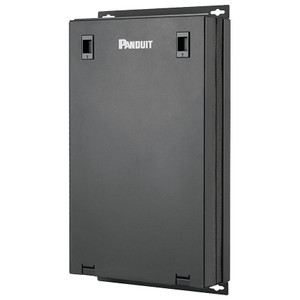
Panduit FY9TP55A005F200 12-Fiber Single-Mode ST Pre-Terminated Trunk Cable — 200 ft
Overview
The Panduit FY9TP55A005F200 is a 200-foot (61-meter) pre-terminated single-mode fiber trunk cable from the Panduit QuickNet HD Flex family, designed for structured cabling environments where speed of deployment and long-term optical integrity are non-negotiable. With 12 fibers terminated on ST connectors at each end, this trunk is built for fiber optic cable runs inside data centers, telecommunications rooms, entrance facilities, and equipment distribution areas — exactly the environments where a contractor-assembled field termination introduces risk and schedule pressure that a factory-terminated assembly eliminates.
Pre-termination means every connector was polished, tested, and verified at the factory before it shipped. That matters on a 200-foot, 12-fiber run: if you're pulling this cable through a raised-floor environment or overhead ladder rack to connect two distribution frames, you don't want to discover a bad splice or a marginal polish job at 2 a.m. during a cutover window. The FY9TP55A005F200 removes that variable entirely.
Key Features
- Single-Mode Fiber (12 fibers): Single-mode glass supports transmission distances that multi-mode cannot match — suited for longer backbone runs between building floors, MDA-to-HDA connections, or entrance-facility-to-core links where you need headroom for future high-bandwidth upgrades without re-cabling. Twelve fibers give you six duplex paths on a single trunk pull, enough to serve a mid-density patch field or connect two 40/100G switch uplink clusters in parallel.
- ST Connector Terminations: The bayonet-style ST fiber connectors are a mature, mechanically robust choice in legacy and mixed-generation infrastructure. ST is still widely deployed in telecommunications rooms and campus backbones where older hardware hasn't been refreshed to LC density. If your patch panels or active equipment already use ST ports, this trunk mates directly without adapter coupling — one less insertion loss point per path.
- 200-Foot (61-Meter) Factory Length: At 61 meters, this trunk spans typical inter-rack distances in large raised-floor data halls or inter-room runs in a commercial building. The factory-specified length means you order to fit the route — no excess coiled on the rack consuming bend-radius budget, no slack that introduces a snag point in a busy cable tray. Measure the route first; if your run is shorter, look at the shorter-length variants in the FY9TP55A family to avoid unnecessary cable management work.
- QuickNet HD Flex Platform: The HD Flex sub-brand signals that this trunk is built for high-density, flexible-deployment environments. HD Flex cables are engineered with smaller outside diameters and tighter bend-radius specifications than earlier-generation trunks, which translates to more cables fitting in the same tray cross-section and easier routing through 90-degree turns in congested pathways. In a fully populated data center row, that physical flexibility is a practical installation advantage.
- Pre-Terminated, Ready to Deploy: Factory termination eliminates field-polishing labor, consumables, and the window of variability that comes with on-site terminations under time pressure. Pull the trunk, seat the connectors, verify with a light source — installation time is measured in minutes per trunk rather than hours per splice. For rapid deployment scenarios (co-location build-outs, equipment refreshes, disaster-recovery activations) this directly compresses the critical path.
- Data Center and Telecom Room Application: The structured cabling application envelope explicitly includes data centers, telecommunications rooms, entrance facilities, and equipment distribution areas. This isn't a general-purpose horizontal cable — it's a backbone and interconnect trunk positioned for the high-stakes, high-density segments of your infrastructure where optical performance and installation repeatability both matter.
Integration and Compatibility
ST-terminated single-mode trunks are compatible with any ST-port patch panel, active switch, or media converter that accepts ST single-mode connectors. Verify that your patch panels and active equipment are also single-mode-rated (OS1/OS2) before installing; a single-mode fiber mated to a multi-mode transceiver will produce link errors or no-light conditions. The FY9TP55A005F200 fits within the broader Panduit structured cabling ecosystem alongside QuickNet cassettes, patch panels, and HD Flex accessories, enabling a consistent fiber infrastructure from one manufacturer — simplifying sparing and support.
For environments with LC-density requirements, ST-to-LC adapters can bridge legacy and modern equipment, but each adapter adds an insertion loss budget item — plan accordingly in loss-budget calculations for longer runs. The 200-foot length should be treated as a fixed factory parameter; field-shortening a pre-terminated trunk degrades the factory-tested end-to-end performance and voids the designed assembly integrity.
Frequently Asked Questions
Q: What fiber type does the FY9TP55A005F200 use — single-mode or multi-mode?
A: The FY9TP55A005F200 uses single-mode fiber (SM designation in the part number). Single-mode supports longer transmission distances and higher bandwidth than multi-mode. Confirm your transceivers and patch panels are also single-mode (OS1/OS2) rated before installing.
Q: How many fibers are in the FY9TP55A005F200 trunk, and how many duplex paths does that provide?
A: The trunk contains 12 fibers, which provides six duplex (TX/RX) paths when paired on ST connectors — enough to serve six independent fiber links from a single trunk pull.
Q: What is the exact length of the FY9TP55A005F200?
A: The overall length is 200 feet (61 meters). This is a factory-fixed length; it cannot be field-shortened without compromising the factory-terminated ends.
Q: What environments is the FY9TP55A005F200 designed for?
A: This trunk is designed for data centers, telecommunications rooms, entrance facilities, and equipment distribution areas. It is a structured cabling backbone/interconnect product, not a horizontal-run or outdoor cable.
Q: Can the FY9TP55A005F200 be used with LC-port patch panels?
A: The trunk terminates in ST connectors. It can be used with LC-port equipment via ST-to-LC adapter couplings, but each adapter introduces additional insertion loss. For native LC-port environments, consider a trunk in the same family terminated with LC connectors instead.
Q: Is the FY9TP55A005F200 part of the Panduit QuickNet HD Flex family?
A: Yes. The FY9TP55A005F200 is part of the Panduit QuickNet HD Flex pre-terminated fiber trunk platform, which is designed for high-density, flexible-routing structured cabling deployments.
The FY9TP55A005F200 is the kind of SKU I specify when a project has a tight commissioning window and no tolerance for field-termination rework. The 200-foot single-mode trunk with ST connectors fills a very specific slot: long-reach backbone pulls in legacy-ST environments where the active equipment hasn't moved to LC density yet, but the infrastructure team still needs factory-grade optical performance on every path.
Technical Highlights:
- 12-Fiber Single-Mode Core: Six duplex paths in a single trunk pull — practical for connecting two distribution frames or spanning an MDA-to-HDA leg without running multiple smaller assemblies.
- 200 ft / 61 m Factory Length: Long enough to cover most inter-room backbone runs in a mid-to-large commercial building or data center floor; short enough that you're not managing excess slack. Order the correct length variant for your route — don't field-cut.
- QuickNet HD Flex Platform: Smaller OD and tighter bend radius than earlier-generation trunks means this cable navigates congested cable trays and 90-degree turns without the micro-bend losses that can degrade margin on a long single-mode run.
Deployment Considerations:
- ST connectors are mechanically durable but lower in density than LC. If you're planning a future migration to 40/100G optics that require LC MPO interfaces, factor in the adapter coupling loss budget now or spec an LC-terminated variant from the start.
- Single-mode requires OS1/OS2-rated transceivers at both ends — installing this trunk on a multi-mode transceiver will produce link failures, not degraded performance. Verify transceiver specs before pulling the cable through conduit.
The FY9TP55A005F200 is the right call for telecommunications room backbone work in established enterprise campuses with legacy-ST patch panels — rapid deployment with factory-grade termination quality, zero field-polishing risk on a 61-meter run.