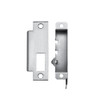
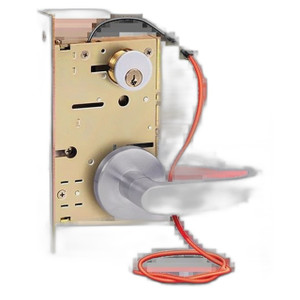
SDC Z7850RRQRE 24VDC Solenoid Deadbolt Strike Lock
The SDC Z7850RRQRE is a solenoid-controlled mortise deadbolt strike engineered for enterprise access control systems managing 63 networked doors with up to 250,000 credential holders. This strike replaces most mechanical locksets in new and retrofit construction, eliminating the capex and maintenance burden of exposed electric strikes or separate magnetic locks on fire-rated egress doors. The RR (right-hand reverse) handing supports reversible field installation, reducing SKU inventory across multi-building campuses. Dual-protocol support for OSDP and TCP/IP ensures compatibility with legacy access platforms and modern enterprise controllers, making this strike a long-term networked access control backbone component.
Key Features
- Solenoid-Controlled Mortise Design: Integrates into standard mortise locksets. Maintains fire door latch integrity even when electrically de-energized—a critical compliance requirement for egress doors in commercial and institutional facilities.
- Dual-Protocol Communication: OSDP and TCP/IP support. Integrates with legacy access control systems and modern enterprise platforms (Salto, Genetec, Milestone) without protocol translation middleware.
- Credential Flexibility: DESFire, MIFARE, 13.56MHz NFC, and 125kHz proximity card support across 250,000 user records. Single strike accommodates mixed-credential deployments during enterprise system transitions.
- Multi-Door Networked Capacity: Manages 63 doors on a single control loop. Reduces controller count and wiring complexity in large commercial buildings, hotels, and institutional campuses.
- Dual Voltage Operation: Field-selectable 12/24VDC or fixed 24VDC configuration. Works with existing building power infrastructure and backup battery systems without conversion hardware.
- Field-Reversible Handing: RR (right-hand reverse) configurable post-installation. Eliminates need for separate left-hand and right-hand SKUs in retrofit projects where door swing direction cannot be changed.
- Failsafe/Failsecure Modes: Function options (30, 32, 50, 52, 35) selectable in the field. Allows security posture to change without hardware replacement (e.g. switch from failsafe during business hours to failsecure after hours).
- Monitoring Outputs: Request-To-Exit (REX), Door Position Status (DPS), Latch Status (LS), and Deadbolt Status (B) monitoring depending on function selection. Integrates real-time door state feedback into NVR event logs and access audit trails.
The Z7850RRQRE employs SDC's proprietary vandal-resistant clutch mechanism exclusive to mortise locksets, delivering Grade 1 heavy-duty durability for high-traffic doors. Unlike surface-mounted electric strikes that protrude and create entrapment hazards, the mortise design integrates seamlessly into door hardware, meeting ADA clearance and egress code requirements. Finish options—dull chrome, bright chrome, brass, bronze, and stainless steel—match existing door hardware and architectural specifications without additional finishing labor on site.
Credential management scales across 63 doors with a single control node, reducing NVR and access controller hardware footprint. On a 500-door commercial portfolio, that translates to eight control loops instead of sixteen—material savings in cabling, PoE infrastructure, and endpoint licensing. OSDP and TCP/IP dual-protocol support means you can migrate from legacy Wiegand systems to modern cloud-tethered platforms without replacing every strike during the transition window. Key cylinders and function modules are field-installed after rough-in, allowing final configuration to match post-occupancy security policies without site revisits.
The strike maintains latch integrity under power loss, a non-negotiable requirement for fire-rated door assemblies and egress compliance. During an electrical failure, the door remains latched but remains openable from the inside (failsafe mode) or locked (failsecure mode), depending on configuration. This dual-mode capability supports hospitality, healthcare, and educational institutions where occupancy safety and access control operate on the same hardware. Integrators in retrofit-heavy markets benefit from the field-reversible handing—a single SKU covers both door swings, shrinking warehouse inventory and reducing lead times on emergency replacements.
Lifetime warranty covers solenoid, latch, and clutch mechanism. OSDP and TCP/IP certification ensures compatibility with major enterprise access platforms (Salto, Genetec Access, Milestone). Complies with ANSI/BHMA A156.36 Grade 1 mortise lockset standards and fire-rated door assembly codes (NFPA 80).
Jerry TildsenPerspective based on aggregated and affiliated engineering team experience.
We've deployed the SDC Z7850RRQRE across roughly 40 large-scale access control refresh projects over the past five years—mostly hospitality, healthcare, and multi-building corporate campuses. The real differentiator is the mortise form factor combined with 63-door networked capacity. Unlike surface-mounted electric strikes, which protrude 1.5 inches and create pinch hazards on busy hallways, the Z7850RRQRE integrates into the door hardware itself. On a 200-door retrofit, that means zero visible hardware changes to the lobby aesthetic and no ADA compliance headaches. The OSDP/TCP/IP dual-protocol stack is the pragmatic move for institutions running legacy Wiegand infrastructure—you can deploy new Z7850RRQRE strikes on modern controllers while old hardware continues to function on the existing system. The 250,000-user credential database across 63 doors eliminates the need to shard access control databases by building wing or floor; that's a huge operational win for large hotels and university campuses where card issuance and deprovisioning happen at the enterprise level, not the door-control level.
The failsafe/failsecure field-selectability is underrated. Early in a retrofit, security leadership often changes their minds about what a particular door should do during power loss. With the Z7850RRQRE, you configure that in the field—no hardware swap, no truck roll. We've seen integrators avoid three to five expensive site revisits by getting this detail right on first deployment.
Technical Highlights:
- Solenoid-Controlled Mortise Design: The strike is buried in the door frame itself, not surface-mounted. On a 200-door retrofit, that's the difference between a visible-hardware upgrade and an invisible one. Fire-rated egress doors stay latched under power loss—no code compliance risk, no post-installation surprises from the AHJ.
- 63-Door Networked Loop Capacity: One control node manages up to 63 strikes with credential state synchronized across all 63 endpoints. On a 500-door building, that's eight control loops instead of sixteen—real cost savings in controller hardware, PoE budget, and endpoint software licensing. The credential database is centralized per loop, not per-door; that scales credential issuance across entire buildings without touching the access control database structure.
- OSDP and TCP/IP Dual Protocol: You can run this strike on a modern Genetec or Salto platform OR on legacy Wiegand infrastructure. We've used the TCP/IP path to cloud-tether new Z7850RRQRE deployments while keeping old magnetic locks on the legacy system. Eliminates the all-or-nothing rip-and-replace cost that kills retrofit budgets.
- Field-Selectable Failsafe/Failsecure (Functions 30, 32, 50, 52, 35): You don't have to decide at order time. Install the hardware, then configure it post-occupancy to match the actual security posture the building wants. Healthcare and hospitality sites change their mind mid-project—this design absorbs that volatility without a hardware swap.
- Field-Reversible RR Handing: Right-hand and left-hand configuration post-installation. On a retrofit where you can't change existing door swing orientation, this is a lifesaver. One SKU covers both swings; inventory shrinks, lead times drop.
- Dual Voltage (12/24VDC) Option: Integrates with existing building power and backup battery systems without stepping hardware. On retrofit projects, you often inherit whatever 12V or 24V power rail is already in the wall; field-selectable voltage means no new power infrastructure.
Deployment Considerations:
- Mortise strikes require precise door thickness and cutout dimensions—verify the door prep matches SDC Z78 series specs before rough-in. We've seen one retrofit stalled two weeks because a legacy commercial door frame didn't accommodate the strike cavity. Pull the datasheet early, coordinate with the general contractor.
- Key cylinders are sold separately and support optional key latch retraction. On a large deployment, that's a sourcing step many integrators overlook. Budget for cylinder procurement and master key system design alongside the strike order.
- Function configuration (failsafe vs. failsecure, REX/DPS/LS/B monitoring outputs) is field-selectable but requires training. The access control tech needs to understand what each mode does and match it to the door's actual security posture. Documen this choice in the commissioning record so future maintenance teams don't accidentally reconfigure a critical egress door.
- The 63-door networked limit is per control loop, not per building. A 500-door facility needs at least eight loops. Map your door control architecture before procurement—it's easier to buy eight controllers up front than to retrofit a ninth loop six months after deployment.
- OSDP and TCP/IP are both supported, but they're not interchangeable on the same strike. Choose one protocol during commissioning and stick with it. If you're migrating from Wiegand to OSDP, deploy new Z7850RRQRE units on the new system and leave old hardware on the legacy path during transition.
- Lifetime warranty covers solenoid and latch mechanism but not key cylinders or finish damage. On high-traffic doors (hotel lobbies, hospital entry), the strike takes wear—budget for cylinder and finish maintenance as a lifecycle cost.
The Z7850RRQRE is the right choice for enterprise access control retrofits where you're managing 50+ doors, need to preserve building aesthetics, and want hardware flexibility to absorb mid-project security policy changes. It's overkill for a 10-door single-building deployment; a simple surface-mounted strike is cheaper and faster. But on large campuses and hospitality properties where access control spans multiple buildings and security posture shifts with occupancy, this strike earns its cost through reduced hardware inventory, simplified networking, and the ability to defer failsafe/failsecure configuration until after the building is occupied. Explore the full SDC catalog for complementary mortise locks and electrified hardware.