SDC WRC-2B Infrared Data Transmitter Access Control Controller
Overview
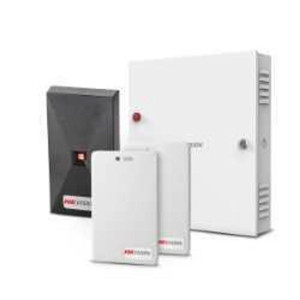
The SDC WRC-2B is a networked access control controller designed to manage multi-door installations where credential processing and wired network integration are requirements. The WRC-2B handles up to 4 doors simultaneously, accommodates up to 250,000 user records, and communicates via OSDP (Open Supervised Device Protocol) and TCP/IP — meaning you can integrate it into standard network infrastructure without proprietary gateways or parallel cabling runs. This is a controller, not a reader; it processes credential data from HID-compatible readers and coordinates strike/lock actuation across multiple entry points. For mid-scale enterprise deployments (campuses, multi-building facilities, large warehouses), this architecture reduces single points of failure compared to hardwired analog panels.
Key Features
- 4-Door Multi-Point Control: Manages credential presentation and access decisions across 4 independent doors. In warehouse or office campus scenarios, this avoids daisy-chaining readers or running separate control runs to distant exits — one controller handles the logic for multiple zones.
- 250,000 User Records Capacity: Large enterprise or multi-site deployments often exceed 10,000–50,000 active credentials. The WRC-2B stores up to 250,000 records locally, reducing dependency on frequent server queries and improving door response time during network hiccups. Offline credential validation is possible when the database is cached on the controller.
- OSDP Protocol Support: Open Supervised Device Protocol is an industry standard for reader-to-controller communication. OSDP is vendor-agnostic, meaning you can mix HID readers with other OSDP-compliant devices without proprietary firmware locks. Compared to Wiegand (older, less secure), OSDP encrypts credential data in transit — a compliance requirement for many enterprise access policies.
- TCP/IP Network Integration: Connects via standard Ethernet, integrating into your existing network security architecture. No separate serial or proprietary network protocol. This simplifies audit logging, remote provisioning, and alarm reporting through your standard VMS or access control management platform.
- HID Credential Compatibility: Works with HID reader hardware (cards, fobs, mobile credentials where HID readers support them). Integrators should verify that existing or planned readers publish HID credentials in the format the WRC-2B expects — not all HID readers are identical.
- Wired Connectivity: Requires physical network cabling; no wireless option. For warehouse sites or buildings with existing conduit and cabling infrastructure, this is straightforward. In retrofits where running new cable is expensive, consider the labor cost upfront.
Integration & Compatibility
The WRC-2B integrates with access control management software platforms that support OSDP and TCP/IP readers or controllers. Before specifying, confirm that your chosen access control panel or management VMS can ingest OSDP events and manage user lists on the WRC-2B. Credential readers must output HID-compatible data (Wiegand HID format, OSDP HID command sets, or equivalent). If you are migrating from older Wiegand-only panels, the WRC-2B represents a step toward encrypted, auditable credential flows — but integration testing with your management software is non-negotiable. For new builds or system expansions, verify door hardware compatibility (electric strikes, mag locks, request-to-exit buttons) with the strike control outputs the WRC-2B provides.
When to Choose a Different Model
If your deployment requires fewer than 4 doors, a simpler single-door controller or reader-integrated control may reduce cost and cabinet clutter. If wireless credential readers are essential (e.g., for loading dock gates without conduit), explore wireless OSDP or proprietary wireless controllers in the SDC line. If the site requires more than 250,000 credentials or multi-controller redundancy, a larger networked access control system (enterprise-class appliance or software-as-a-service platform) may be more appropriate — the WRC-2B is aimed at mid-scale, not enterprise mega-deployments.
Frequently Asked Questions
Q: What is the difference between the WRC-2B and a traditional hardwired access control panel?
A: Traditional panels use Wiegand or serial connections between readers and the panel — point-to-point, analog, and unencrypted. The WRC-2B uses OSDP and TCP/IP, so credential data is encrypted in transit and can be routed over standard network infrastructure. This supports remote provisioning, easier auditing, and integration with network-based VMS platforms. The tradeoff is that the WRC-2B requires Ethernet cabling and network management.
Q: Can I use the WRC-2B with non-HID readers?
A: The WRC-2B is designed for HID credential types and OSDP-compatible readers. If you have legacy readers that output only Wiegand or proprietary formats, you would need a converter or a different controller. Consult the SDC datasheet and your reader manufacturer to confirm compatibility before purchase.
Q: How do I integrate the WRC-2B with my access control management software?
A: The WRC-2B communicates via TCP/IP and OSDP, so it will work with any management platform that supports OSDP readers or controllers (Milestone, Genetec, Kastle, HID Command Center, etc.). Confirm with your software vendor that they have tested integration with SDC WRC-2B controllers. User provisioning and event logging are typically done through the management platform.
Q: What happens if the network connection drops?
A: The WRC-2B can cache credentials and continue to validate users locally during a network outage — provided the credential database was synchronized before the outage. Alarm events and audit logs will be queued locally and synced once the network recovers. For sites where network reliability is poor, this is a strong feature; for sites with redundant network, the benefit is less critical.
Q: Does the WRC-2B support multi-factor authentication (e.g., card + PIN)?
A: The WRC-2B processes HID credentials and can support PIN entry if the management software and readers are configured for it. Refer to your access control management platform for PIN or multi-factor policy configuration — the controller handles the credential validation, but policy is set upstream.
Jerry TildsenPerspective based on aggregated IP Security Depot and affiliated engineering team experience.
The WRC-2B addresses a real deployment gap: you need networked access control but don't want to overspec a full enterprise appliance. The 4-door capacity and 250,000-credential local cache are the standout features here — most mid-scale warehouses or office parks won't exceed either limit, but having that headroom prevents the "we'll upgrade next year" scenario. OSDP + TCP/IP is the right architectural choice for sites migrating away from hardwired Wiegand panels.
Technical Highlights:
- 250,000 Local Credentials: Offline validation continues during network outages; no constant server polling overhead. For a 500-person facility, this is more than enough. For a 50,000-person campus, plan for distributed controllers or a backend database sync strategy.
- OSDP + TCP/IP Dual Protocol: Encrypted credential transit (vs. Wiegand plaintext) + standard network stack means you can use your existing Ethernet infrastructure, network monitoring, and audit logging. No proprietary gateway appliance required.
- 4 Independent Door Outputs: Simultaneous multi-door control without cascading delays. Each door has its own strike/lock control logic, so one reader at Entry A doesn't block processing at Exit B.
Deployment Considerations:
- Verify your access control management software (Milestone, Genetec, etc.) has certified OSDP support for the WRC-2B before committing — not all VMS platforms have full parity yet.
- HID reader lock-in: if you have legacy Wiegand readers on-site, plan for a phased migration or use a Wiegand-to-OSDP converter. The WRC-2B won't speak pure Wiegand natively.
- Network redundancy: the WRC-2B caches credentials locally, but if your network backbone goes down for extended periods, alerting and audit trails still depend on recovery. Plan for network resilience separately.
The WRC-2B works best in new construction or refresh projects at 5–15 building campuses, light manufacturing, and warehouse operations where you're already running Ethernet and want encrypted, auditable access control without the complexity of a full enterprise suite. Don't force it into a 500+ facility or a single-door retrofit where a simpler controller would suffice.