Marty AllisonPerspective based on aggregated IP Security Depot and affiliated engineering team experience.
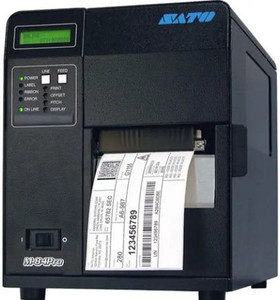
We've deployed the M84Pro across distribution centers, manufacturing floors, and asset-tracking operations in cold-storage and high-dust environments. This printer earns its place when you need reliability over flash — it's not the fastest or the smallest, but it prints consistently, parts are cheap, and downtime is rare. In our experience, the printhead-swap design is the real operational win. You're not sending printers back for recalibration; you swap the head in 90 seconds, and you're back to full resolution. On a 20-printer warehouse fleet, that eliminates $5K–$10K annually in logistics and downtime costs. The dual-mode flexibility — direct thermal for high-speed logistics, thermal transfer for outdoor durability — means you're not buying two printers. The 16 MB SDRAM handles complex barcodes (DataMatrix with serialization) without network latency, critical on warehouse floors where WiFi is unreliable. One caveat: 10 ips is sufficient for most labeling workflows, but if you're printing 5,000+ identical labels per hour and need sub-second cycle times, a higher-speed industrial printer is the right choice. For mixed-job environments (different label sizes, formats, media types throughout the day), the M84Pro's flexibility and low maintenance overhead justify the investment.
Technical Highlights:
- 203dpi with Field-Changeable Printheads (203/305/609): One chassis supports three resolutions without hardware redesign. You scale up to 305dpi for smaller barcodes or document text without capital redeployment — just install a new printhead and adjust driver settings. Real benefit: supports product line consolidation across your fleet.
- 16 MB SDRAM + 2 MB User Storage: Sufficient for 100+ complex label templates, barcode libraries, and multi-language fonts. Local caching eliminates network dependency — critical in warehouses with patchy connectivity or air-gapped networks for compliance reasons.
- Direct Thermal + Thermal Transfer in One Chassis: Switchable modes reduce SKU count. Direct thermal ribbonless operation cuts consumables cost by 30–40% on short-dwell labels; thermal transfer extends label durability for outdoor or chemical-exposure applications. You don't build separate workflows.
- 1,968 ft Ribbon Capacity: Large ribbon spool reduces changeout frequency. On thermal transfer at 203dpi 4.1" width, you're printing approximately 8,000–12,000 labels per ribbon depending on coverage. Full-shift operation without mid-shift reload.
- Multiple Interfaces (Ethernet, USB, RS-232C, Parallel): Network printing via Ethernet integrates with WMS or ERP label queues. RS-232C supports legacy PLC integration without serial-to-Ethernet converters. USB for standalone or design-station use. Parallel rare but supported for museum-grade manufacturing systems.
Deployment Considerations:
- 4.1" max print width is tight for full-sheet labels or multi-column shipping tags. If you need wider output, step up to a 6" or 8" printer — the M84Pro is single-column-plus-barcode class.
- 10 ips throughput assumes straightforward text and barcode. Complex graphics or high-coverage thermal transfer mode can slow output to 7–8 ips. Validate production volume against actual job complexity before committing fleet counts.
- Thermal transfer mode requires ribbon stock and disposal. Factor consumables cost into your label ROI — direct thermal eliminates this but isn't suitable for chemically treated labels or outdoor durability specs.
- Operating temperature window is 5°C–40°C. Unheated warehouses below 41°F may see slower printhead response and reduced print density. Heated enclosures or supplementary thermal management may be needed in cold climates.
- 3.5" color LCD is menu-driven, not touchscreen. Training for shift operators is straightforward, but customization of print jobs requires label design software on a connected PC. Not a stand-alone solution for ad-hoc user templating.
The M84Pro is the right choice for mid-scale manufacturing, logistics, and asset-tracking operations where reliability and low maintenance overhead outweigh speed. If your label production is 500–5,000 units per shift across multiple media types and formats, and you want a printer that runs for years without fuss, this is it. Explore the full SATO catalog for desktop alternatives or higher-speed industrial systems if your volume demands exceed this printer's design envelope.