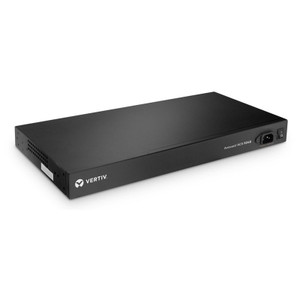
Vertiv VP7N62A1 Switched Outlet-Level Monitoring PDU, 60A 208V 3-Phase, 17.2kW Horizontal Rackmount
Overview
The Vertiv VP7N62A1 is a three-phase, horizontally mounted rack PDU designed for dense data center and enterprise server room environments where per-outlet switching and monitoring are non-negotiable. At 60A input on a 208V delta circuit, it delivers up to 17.2kW of usable power across 12 AC outlets — a meaningful capacity for high-density compute rows, blade chassis, or mixed UPS-fed cabinets. If you've ever had to trace a misbehaving circuit at 2 AM without knowing which outlet is pulling what, the VP7N62A1 directly solves that problem: per-outlet current, voltage, and power visibility is built in, not bolted on.
The unit ships in a 0U horizontal form factor, keeping it flush with the rack's power infrastructure rather than consuming valuable U-space that servers and switches compete for. The front-panel LCD delivers at-a-glance status without requiring a network connection, useful during initial commissioning or a network outage.
Key Features
- 17.2kW Three-Phase Input (60A, 200–240V): A 60A IEC 60309 input on a 208V delta circuit means this PDU handles genuinely high-density loads — think fully populated blade servers or GPU compute nodes. The 200–240V input range accommodates international deployments without rewiring, and 50/60 Hz support means it drops into European colocation facilities as easily as US data centers.
- 12 AC Outlets (C13 + C19 Mix): The outlet complement covers both standard 1U/2U server loads (C13) and high-draw devices like UPS bypass modules, high-end networking gear, or dense storage arrays (C19). A mixed outlet configuration eliminates the adapter clutter that accumulates on single-type PDUs and reduces the failure points on individual circuits.
- Outlet-Level Switching: Each outlet can be individually switched on, off, or sequenced remotely — critical for controlled power sequencing during maintenance windows, remote reboot of locked-up appliances, or staged startup after a power event. Without per-outlet switching, a locked SSH session means dispatching a technician; with it, you issue a remote reboot and move on.
- Current, Voltage, and Power Monitoring Per Outlet: Knowing total inlet load is useful; knowing which specific outlet is driving it is what lets you act. The VP7N62A1 monitors current, voltage, and power at the outlet level, giving operations teams the data they need to balance phases, identify runaway processes, and enforce capacity budgets before a circuit trips.
- LCD Display: The onboard LCD provides local status readout without requiring an active network session. During rack commissioning, brownout events, or network isolation scenarios, local visibility is what prevents guesswork and misconfigurations.
- 3-Meter Power Cord: The 3m (approximately 10 ft) cord length gives you real flexibility in cabinet positioning — long enough to reach overhead busway or a floor-mounted PDU panel in a two-post open frame without extension adapters that can introduce contact resistance at high amperages.
- Serial, Ethernet, and USB Management Ports: One RJ-45 Ethernet port handles SNMP polling, web UI access, and all IP-based management protocols. The RS-232 serial port provides out-of-band access when the network is down — essential in any production environment. The USB port supports local firmware updates or environmental sensor attachments depending on platform.
- Broad Protocol Stack: SNMP v1/v2c/v3 integration slots directly into existing NMS platforms (SolarWinds, PRTG, Nagios, etc.). HTTPS/SSH encrypt management traffic end-to-end. RADIUS, LDAP, and TACACS+ mean user authentication integrates with your existing directory infrastructure — no local account sprawl on individual PDUs. Modbus TCP extends integration to DCIM and BMS platforms. IPv6 support future-proofs network-layer addressing.
- Syslog and SMTP Alerting: Event-driven alerts via Syslog and SMTP mean your monitoring stack gets notified the moment an outlet trips, a threshold is breached, or the unit loses input power — rather than during the next polling cycle.
Integration & Compatibility
The VP7N62A1's SNMP v1/v2c/v3 support and Modbus TCP interface integrate with major rack power distribution management platforms including common DCIM tools, BMS controllers, and NMS systems. RADIUS, LDAP, and TACACS+ authentication hooks mean you can centralize credential management across your entire PDU fleet rather than maintaining local user databases per unit. NTP synchronization keeps event timestamps accurate across distributed deployments — important when you're correlating PDU logs with server event logs during incident analysis.
For environments standardized on the broader Vertiv power infrastructure portfolio — including UPS systems, environmental monitors, and thermal management — the VP7N62A1 communicates natively within that ecosystem. The IEC 60309 input connector is standard on 3-phase power infrastructure in colocation, enterprise, and industrial data centers globally.
HTTP/HTTPS web UI access means no specialized client software is required for day-to-day management — any browser on the management VLAN works. For integrators deploying at scale, SNMP MIBs and Modbus register maps are available from Vertiv to support automated configuration and monitoring workflows. See the network switching category if you need managed PoE infrastructure to pair with this deployment.
Frequently Asked Questions
Q: What input connector does the VP7N62A1 use, and what circuit is required?
A: The VP7N62A1 uses an IEC 60309 input connector rated for 60A on a 200–240V, three-phase delta circuit at 50 or 60 Hz. Confirm your facility's power panel has a compatible 60A three-phase breaker and IEC 60309 receptacle before ordering.
Q: What outlet types are on the VP7N62A1, and how many?
A: The unit provides 12 AC outlets in a mix of C13 and C19 IEC coupler types. The C13 outlets serve standard 1U/2U server loads; C19 outlets handle higher-draw devices. The exact C13/C19 split is not specified in current evidence — confirm with the datasheet or product page for your specific cabling plan.
Q: Does the VP7N62A1 support SNMP v3?
A: Yes. The VP7N62A1 supports SNMP v1, v2c, and v3, allowing encrypted and authenticated SNMP communications for integration with NMS platforms such as SolarWinds, PRTG, or custom polling systems.
Q: Can individual outlets be switched remotely on the VP7N62A1?
A: Yes. This is a switched outlet-level PDU, meaning each of the 12 outlets can be independently powered on, powered off, or sequenced via the network management interface — useful for controlled reboots, staged startup sequences, or remote power cycling of locked devices.
Q: What authentication protocols does the VP7N62A1 support for user management?
A: The unit supports RADIUS, LDAP, and TACACS+ for centralized user authentication, allowing integration with existing enterprise directory infrastructure. Local accounts are also available for out-of-band or standalone scenarios.
Q: Does the VP7N62A1 have a local display?
A: Yes. The unit includes an onboard LCD display for local status monitoring — current, voltage, and power readings — without requiring an active network connection. LED indicators supplement the LCD for quick visual status checks.
The VP7N62A1 is one of those PDUs where the spec that matters most isn't the headline voltage — it's the per-outlet switching combined with outlet-level current, voltage, and power monitoring on a 60A three-phase input. In colocation and enterprise data center deployments, that combination is what separates a managed power infrastructure from a glorified power strip. If you're running high-density compute rows where individual server power draw needs to be tracked, accounted for, and remotely controlled, the VP7N62A1 is purpose-built for that scenario.
Technical Highlights:
- 17.2kW Capacity on 60A / 208V Delta: At 17.2kW, this unit handles a fully loaded rack of dense compute without headroom anxiety. The IEC 60309 input is the global standard for three-phase rack power, so it integrates cleanly into virtually any enterprise or colo power panel.
- SNMP v1/v2c/v3 + Modbus TCP: Dual protocol support means you can poll this unit from a traditional NMS via SNMP and simultaneously feed a DCIM or BMS platform via Modbus TCP — no dual-vendor middleware required. SNMP v3 specifically adds authentication and encryption that v1/v2c lack, which matters in any environment with a security baseline.
- RADIUS / LDAP / TACACS+ Authentication: Centralizing PDU authentication against your existing directory eliminates local account management across a fleet of PDUs. In a 50-rack deployment, that's not a convenience — it's an audit and access-control requirement.
Deployment Considerations:
- The IEC 60309 plug requires a matching 60A three-phase receptacle at the rack. If your facility uses NEMA L21-30 or another connector standard, you'll need a whip adapter — verify before the hardware ships to avoid a delayed commissioning.
- The exact C13/C19 outlet split across the 12 positions is not confirmed in current documentation — map your device power cord types before finalizing outlet assignments to avoid needing C19-to-C13 adapters post-install.
For colocation deployments running mixed high-density GPU or blade compute alongside standard 1U servers, the VP7N62A1's combination of 17.2kW three-phase capacity, outlet-level switching, and full SNMP/LDAP/Modbus integration makes it a strong specification for environments where per-outlet accountability and remote power management are operational requirements, not optional features.