Bosch CBS-RM-DIP4 Remote System Management License for DIP 4000
Overview
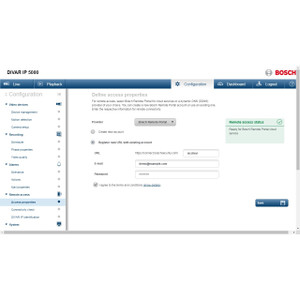
The Bosch CBS-RM-DIP4 is a one-year remote system management license for the DIP 4000 series network video recorder platform. Rather than requiring on-site access for routine administration, this license enables remote configuration, monitoring, and management of DIP 4000 appliances — a meaningful operational advantage for enterprise deployments spanning multiple sites or for managed security service providers handling recorders across a client portfolio.
The CBS-RM-DIP4 (often searched as CBS RM DIP4) is built around a layered security architecture: a hardware-anchored trust root via TPM v2.0, certificate-based identity through x.509 PKI, encrypted communications enforced at TLS v1.2 or higher and DTLS 1.2 or higher, and local data protection via AES-256. Each layer addresses a distinct attack surface — from device identity spoofing to man-in-the-middle interception to unauthorized local access. This is not a single-point encryption bolt-on; it is a defense-in-depth approach aligned with modern enterprise and government network security requirements.
This is an annual subscription license. Plan your procurement cycle accordingly — a lapsed license interrupts remote management capability, which has real operational consequences in multi-site or 24/7 monitored environments. Explore the full Bosch surveillance line for compatible recorders and cameras.
Key Features
- TPM v2.0 Secure Crypto Processor: The Trusted Platform Module anchors all cryptographic operations in dedicated tamper-resistant hardware rather than software. This matters because software-based key storage can be extracted by an attacker with OS-level access; TPM v2.0 binds the device identity to silicon, making credential theft significantly harder even if the host OS is compromised.
- x.509 PKI Certificate Infrastructure: Device and user authentication runs on x.509 certificates — the same standard used in enterprise TLS, code signing, and government PIV/CAC systems. Certificate-based auth eliminates shared-password vulnerabilities and integrates cleanly with enterprise PKI already managing other network infrastructure. No custom credential scheme to maintain separately.
- TLS v1.2 / TLS 1.3-forward Encrypted Transport: All remote management communications are encrypted at TLS v1.2 or higher. This aligns with NIST SP 800-52r2 guidance and common enterprise security policies that explicitly reject TLS 1.0/1.1. If your network security policy mandates TLS 1.2+ across managed devices, the DIP 4000 with CBS-RM-DIP4 meets that requirement without additional configuration gymnastics.
- DTLS 1.2 for UDP-Based Channels: Where real-time management or streaming channels use UDP rather than TCP, DTLS 1.2 provides equivalent cryptographic protection. Many video management platforms rely on UDP for low-latency data paths; DTLS 1.2 coverage means those paths are not left unencrypted while TCP management channels are secured.
- AES-256 Local Encryption: Data stored or processed locally on the DIP 4000 appliance is protected by AES-256 — the same cipher standard mandated for classified government data at the SECRET level. For enterprise deployments in healthcare, finance, or government verticals where stored video constitutes sensitive evidence, AES-256 local encryption directly addresses data-at-rest compliance requirements.
- One-Year License Term: The annual subscription model keeps your remote management entitlement current with Bosch firmware and security updates for the DIP 4000 platform. Pair renewal planning with your broader network video recorder maintenance cycle to avoid management gaps during active deployments.
Integration & Compatibility
This license is purpose-built for the Bosch DIP 4000 recorder platform. Before ordering, confirm the target recorder's model against Bosch's DIP 4000 product family to ensure license applicability — the CBS-RM-DIP4 is not a universal Bosch NVR management license and should not be assumed compatible with DIP 2000, DIP 7000, or DIVAR series appliances without explicit verification from Bosch product documentation.
The TLS 1.2+ and x.509 certificate requirements mean integration with your organization's certificate authority (CA) infrastructure is expected. If your environment uses an internal enterprise CA (Microsoft ADCS, for example), plan the certificate enrollment workflow before deployment. For environments without an existing PKI, Bosch's remote management onboarding process will require establishing that foundation first. Consider pairing this license with compatible PoE switches and reviewing your NVR selection guide for infrastructure planning.
Frequently Asked Questions
Q: What recorder platform is the CBS-RM-DIP4 license compatible with?
A: The CBS-RM-DIP4 is designed for the Bosch DIP 4000 series. Verify compatibility with your specific DIP 4000 model against Bosch product documentation before ordering — do not assume cross-series compatibility with other Bosch DIVAR or DIP platforms.
Q: What encryption standard does the CBS-RM-DIP4 use for local data protection?
A: Local data is protected using AES-256 encryption, the same cipher standard used for classified government data. This addresses data-at-rest compliance requirements in regulated verticals such as healthcare, finance, and government.
Q: What TLS version is required for remote management communications?
A: The CBS-RM-DIP4 enforces TLS v1.2 or higher for TCP-based encrypted transport, and DTLS 1.2 or higher for UDP-based channels. TLS 1.0 and 1.1 are not supported, which aligns with NIST SP 800-52r2 and most enterprise security policies.
Q: How does the TPM v2.0 improve security compared to software-only approaches?
A: TPM v2.0 anchors cryptographic keys in dedicated tamper-resistant hardware. Unlike software key storage, TPM-bound credentials cannot be extracted by an attacker with OS-level access, making device identity spoofing significantly harder.
Q: What happens when the one-year license expires?
A: Remote system management capability for the DIP 4000 appliance will be interrupted until the license is renewed. In multi-site or continuously monitored deployments, this has direct operational impact — plan renewal before the expiration date to avoid management gaps.
Q: Does the CBS-RM-DIP4 require an existing PKI infrastructure?
A: Yes. Authentication relies on x.509 certificates, which requires integration with a certificate authority — either your organization's internal CA or one provided through Bosch's onboarding process. Environments without an existing PKI will need to establish that foundation before deployment.
When I evaluate remote management licenses for recorder platforms, the security architecture is the first thing I look at — and the CBS-RM-DIP4 has the right layers in place. The TPM v2.0 hardware root of trust is what separates this from software-only management solutions; your device credentials aren't sitting in a file on the OS that a compromised admin account can read out.
Technical Highlights:
- TPM v2.0 Hardware Trust Root: Cryptographic identity is bound to silicon, not the OS. Even if an attacker gains OS-level access to the DIP 4000 host, extracting the device's private keys requires physical hardware access — a meaningful barrier in enterprise threat models.
- TLS 1.2+ Enforcement: The CBS-RM-DIP4 won't fall back to deprecated TLS 1.0/1.1 channels. For organizations running security audits or compliance scans that flag legacy TLS, this meets the bar without needing compensating controls or network-level TLS inspection workarounds.
- AES-256 Local Encryption: Stored video and configuration data encrypted at AES-256 satisfies data-at-rest requirements in virtually every enterprise compliance framework I've seen — HIPAA, PCI-DSS, CJIS, and most government IT security policies all accept AES-256 as sufficient for sensitive data.
Deployment Considerations:
- Budget time for PKI onboarding. The x.509 certificate requirement is not a checkbox — if your organization doesn't have an operational CA today, that infrastructure work is on the critical path before you can activate remote management. Don't discover this on go-live day.
- This is an annual license. Set a renewal reminder 60 days out. A lapsed CBS-RM-DIP4 in a managed services environment means loss of remote access to every DIP 4000 under that entitlement — not just degraded functionality, but a complete management blackout until renewal processes.
The CBS-RM-DIP4 is the right call for enterprise security operations centers and MSSPs managing DIP 4000 recorders across distributed sites — particularly in regulated verticals where AES-256 at rest and TLS 1.2+ in transit are compliance requirements, not optional hardening.