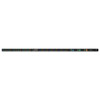
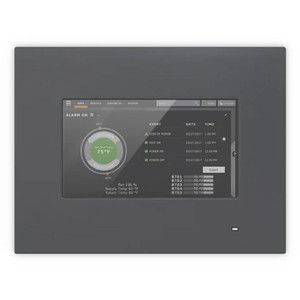
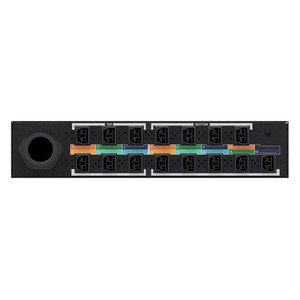
Vertiv CPQ-1039464-01 Custom Switched Redundant PDU
The Vertiv CPQ-1039464-01 is a custom-configured switched rack PDU (rPDU) engineered for high-density data center environments where redundancy, broad input voltage compatibility, and intelligent power management are non-negotiable. Designed to power demanding GPU clusters, high-core-count CPUs, and AI inference nodes from vendors including Nvidia, AMD, and Intel, this unit brings per-outlet switched control and real-time telemetry to racks where unplanned downtime carries a real operational cost. If you are specifying power distribution for a high-capacity compute buildout, the CPQ-1039464-01 belongs early in your design conversation.
Overview
The Vertiv switched rPDU line addresses one of the hardest problems in dense rack deployments: delivering flexible, monitored, and redundant power across a range of global input voltages without requiring separate PDU SKUs per region or per power topology. The CPQ-1039464-01 achieves this through a universal input range and native support for N+1 and N+N redundancy configurations — meaning you can architect power paths so that a single PSU or feed failure does not take down a production workload. At 11.1 kg per shelf, the unit maintains a low-profile form factor that matters when rack U-space is being counted carefully in high-density deployments. For teams managing rack power distribution across mixed compute and storage environments, this translates directly to fewer SKUs to qualify and stock.
Key Features
- N+1 and N+N Redundancy Support: The CPQ-1039464-01 is built to participate in both N+1 (one spare feed covers any single failure) and N+N (fully mirrored feed topology) configurations. For AI training clusters or real-time inference racks where a reboot means hours of lost compute, this is the spec that determines whether this PDU belongs in the design at all. Passive PDUs cannot offer this — it requires active power path management.
- Universal Input Voltage — 200-480V AC / 240-336V DC: Single-phase support from 200-277V AC and three-phase from 200-480V AC, plus a 240-336V DC input range, means this unit can be deployed across North American, European, and Asian data centers without requalification. For global enterprise teams managing standardized rack configs across multiple sites, this eliminates the procurement and compliance friction of maintaining regional PDU variants.
- Vertiv PMM Integration for Real-Time Telemetry: Native integration with the Vertiv Power Management Module (PMM) enables live load monitoring, load balancing, and remote outlet-level control — all accessible without having to be physically present at the rack. In a co-location or multi-tenant environment, the ability to remotely cycle power to a hung server or read per-outlet consumption without a hands-on visit is a meaningful operational advantage.
- Optimized for GPU and AI Compute Loads: High-performance GPU nodes (Nvidia H100, AMD Instinct, Intel Gaudi and similar) draw sustained high current loads that can expose weaknesses in PDUs designed for traditional server rack profiles. The CPQ-1039464-01 is specifically configured to handle these high-capacity draw profiles — a distinction worth confirming with your power architect before spec'ing a generic rPDU into an AI cluster rack.
- Compact 11.1 kg Per-Shelf Weight: At 11.1 kg per shelf, the unit avoids adding significant mechanical load to a rack that may already be near its floor loading limit in high-density deployments. This also eases installation in environments where two-person lifts and load-rated rack rails are a project management consideration rather than a given.
- Switched Outlet Control: Per-outlet switching — the defining capability of a switched rPDU over a metered or basic PDU — allows operators to power-cycle individual devices, sequence startup order during a recovery event, and isolate a failed node without cutting power to the entire rack. For a rack running mixed workloads (storage, compute, networking), this granularity is operationally significant.
Integration & Compatibility
The CPQ-1039464-01 integrates directly with the Vertiv Power Management Module (PMM) ecosystem, enabling centralized monitoring and control across multiple PDU units from a single management interface. This is relevant for data center operators running DCIM (Data Center Infrastructure Management) platforms — Vertiv's PMM exposes telemetry data that can feed into broader data center power planning and capacity management workflows. The broad input voltage range supports deployment alongside UPS systems and power conditioning units from a range of vendors, reducing dependency on matched Vertiv infrastructure throughout the power chain. Confirm outlet type, cord length, and phase configuration against your specific rack layout before ordering — custom rPDU SKUs like this one are configured to a specific application profile.
Frequently Asked Questions
Q: What redundancy configurations does the CPQ-1039464-01 support?
A: The CPQ-1039464-01 supports both N+1 and N+N redundancy setups, enabling continuous power availability even if a single feed or power supply fails. This makes it appropriate for mission-critical compute and AI workloads where unplanned restarts are not acceptable.
Q: What input voltages does the CPQ-1039464-01 accept?
A: The unit accepts 200-277V AC single-phase, 200-480V AC three-phase, and 240-336V DC — covering the major global power standards used in enterprise and hyperscale data centers. This eliminates the need for separate regional PDU variants in multi-site deployments.
Q: Does the CPQ-1039464-01 require the Vertiv PMM module to operate?
A: The CPQ-1039464-01 is designed to work seamlessly with the Vertiv Power Management Module (PMM) for real-time telemetry, load balancing, and remote monitoring. Basic switched outlet functionality may operate independently, but full management and monitoring capabilities require the PMM. Confirm your specific management architecture with Vertiv or a pre-sales specialist before deployment.
Q: How much does the CPQ-1039464-01 weigh, and does that affect rack installation?
A: Each shelf weighs 11.1 kg, which is a manageable installation load but still worth factoring into your rack's total weight budget — particularly in high-density racks near floor loading limits. Two-person installation is advisable for safety and proper mounting alignment.
Q: Is the CPQ-1039464-01 suitable for powering Nvidia GPU servers and AI clusters?
A: Yes — the CPQ-1039464-01 is specifically configured for high-capacity compute loads including high-performance GPUs and CPUs from Nvidia, AMD, and Intel. Its redundancy architecture and switched outlet control are particularly relevant for AI training and inference racks where power interruptions have significant operational consequences.
Q: Is this a standard catalog item or a custom-configured unit?
A: The CPQ-1039464-01 is a custom-configured Vertiv switched rPDU. The CPQ prefix indicates a custom quote configuration — meaning outlet count, cord type, phase configuration, and form factor were specified to a particular application. Verify that the exact configuration matches your rack and power requirements before ordering.
The CPQ-1039464-01 is one of those units I'd put in front of any team designing a GPU-dense rack for AI training — not because of a single standout spec, but because the combination of universal three-phase input (200-480V AC) and native N+N redundancy support means you're not re-engineering the power architecture every time the facility team hands you a different feed spec or the workload profile changes. The CPQ prefix matters here: this is a configured-to-order unit, and the spec set reflects a deliberate design for high-draw compute, not a generic rPDU adapted after the fact.
Technical Highlights:
- N+1 / N+N Redundancy: Active redundancy support at the PDU level means a feed failure doesn't cascade into a compute outage — critical when a single GPU node can cost more per hour of downtime than the PDU itself.
- 200-480V AC Three-Phase + 240-336V DC Input: This range covers virtually every facility power standard you'll encounter globally, including DC-bus architectures increasingly common in hyperscale builds — a genuine flexibility advantage for multi-site procurement teams.
- PMM-Integrated Telemetry: Real-time load data via the Vertiv Power Management Module feeds directly into capacity planning — you can see per-outlet draw before a circuit trips, not after. That's the operational difference between reactive and predictive power management.
Deployment Considerations:
- At 11.1 kg per shelf, factor cumulative PDU weight into your rack loading calculation early — in a fully populated 42U cabinet with high-density nodes, rail and floor load limits can become a constraint before you get to power budget.
- This is a custom-quote SKU (CPQ-1039464-01, also searched as CPQ 1039464 01) — confirm outlet count, phase wiring, and cord configuration against your rack layout. A mismatch on a custom rPDU is not a quick field swap.
For an AI compute cluster or GPU farm buildout where the power design needs to survive a single-feed failure without touching the workload, the CPQ-1039464-01 is the right architecture to bring into the conversation — particularly in facilities running three-phase distribution at the rack level.