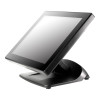
Posiflex HC2021BAD31 21" Panel PC RK3399 Android Touch Display
The Posiflex HC2021BAD31 is a 21-inch panel-mount Android computer designed for fixed-installation retail, hospitality, and surveillance command-center deployments. Built on the ARM-based RK3399 dual-core processor with 4GB DDR4 RAM and 32GB eMMC storage, it delivers responsive touchscreen control without the power draw or maintenance overhead of x86 Windows systems. The projected capacitive touch display eliminates ghosting, supports gloved operation, and integrates directly into Android-native POS middleware, kiosk frameworks, and surveillance console software. Onboard WiFi and integrated camera eliminate the need for external USB adapters, simplifying cable management and reducing per-unit peripherals costs in multi-display installations.
Key Features
- 21" Projected Capacitive Touch Display: Glove-friendly input with zero ghosting. Eliminates need for separate stylus or external input devices in warehouse, retail, and high-traffic environments.
- RK3399 ARM Processor with 4GB DDR4 RAM: Sufficient performance for simultaneous POS transactions, surveillance stream playback, and local kiosk applications without noticeable lag on Android 9.
- 32GB eMMC Storage: Adequate for Android 9 OS, middleware, and local app cache; limits continuous video recording to 2-4 hours at HD bitrate depending on codec.
- Built-in WiFi Connectivity: No Ethernet port — deployment requires 802.11ac WiFi coverage. Network integration straightforward on sites with modern AP infrastructure; 2.4GHz band susceptibility to microwave/cordless phone interference in congested retail environments.
- Integrated Camera Module: Enables photo capture, QR-code scanning, and video conferencing without external USB camera. Useful for self-service kiosks, customer ID verification, or two-way communication in retail command centers.
- Android 9 Operating System: Native compatibility with Android-native POS software (Square, Toast, Clover backends), kiosk frameworks (Kiosk Lockdown, MobileIron), and lightweight surveillance dashboards. Not suitable for Windows-dependent legacy systems.
- VESA Mounting Pattern: Standard 100×100mm VESA allows use of aftermarket wall brackets and kiosk enclosures; verify bracket weight rating for sustained 21" display load.
- Low Power Draw: ARM architecture and eMMC storage result in minimal heat output — typical operating draw under 15W, reducing cooling requirements and facility power budgets in multi-unit deployments.
Deployment Contexts & Integration
The HC2021BAD31 excels as a secondary command display in retail environments where POS terminals feed surveillance footage to a wall-mounted Android panel. In a 20-unit quick-service restaurant chain, mounting one HC2021BAD31 per location as a kitchen-display kiosk paired with a local Hikvision or Uniview NVR over WiFi eliminates desktop clutter and reduces per-site IT overhead. Similarly, retail self-checkout kiosks benefit from the capacitive touch and integrated camera — gloved customers can navigate payment screens and scan ID without frustration, while the onboard camera captures transaction-level proof of age or loyalty-card verification.
Surveillance integration hinges on Android app availability: if your VMS vendor (Hikvision, Uniview, Axis, Milestone) offers an Android client that supports landscape orientation and touch gestures, the HC2021BAD31 becomes a viable live-view wall console. Frame-rate and resolution expectations must align with typical ARM performance — expect smooth 720p or 1080p playback of 2-4 simultaneous streams; 4K multi-stream playback is not recommended on this hardware. Pair it with a local WiFi 6 access point if deploying multiple HC2021BAD31 units in the same facility to avoid contention on the 2.4GHz band.
Storage is the critical constraint for continuous-capture scenarios. The 32GB eMMC can hold approximately 2 hours of 1080p H.264 video at standard retail bitrates (~4-5 Mbps); if local recording is mandatory, consider the HC2021BAD31 as a display-only console connected to an external NVR, not as a recording appliance. Onboard WiFi provisioning is straightforward via Android Settings, but enterprise deployments should pre-stage WiFi credentials using Mobile Device Management (MDM) tools like MobileIron or Intune to avoid manual per-unit setup at installation time.
Environmental & Installation Considerations
The projected capacitive touch technology is sensitive to moisture condensation and water spray — deployment in dishwash areas, wet facilities, or outdoor covered kiosks requires a protective glass overlay or hydrophobic conformal coating. Verify WiFi signal strength (target −65 dBm or better) before committing to installation; RK3399-based WiFi modules can suffer throughput loss in high-interference retail environments with competing 2.4GHz microwaves, cordless phones, or adjacent access points. Sustained load testing (12+ hours of continuous app usage) is recommended in warm climates to confirm thermal headroom — the RK3399 does not require active cooling under typical retail ambient conditions, but dense POS environments with poor air circulation may exceed safe operating temperature.
Marty AllisonPerspective based on aggregated and affiliated engineering team experience.
We've deployed the HC2021BAD31 as a secondary command display in hybrid retail and hospitality environments where a wall-mounted Android kiosk eliminates the need for a dedicated desktop PC. The real operational win is power efficiency — running 24/7 at 12–15W draw versus a typical 60–90W x86 touchscreen saves 400–600 kWh annually per unit. That's tangible on multi-site rollouts. The projected capacitive touch is genuinely glove-friendly in cold-chain or outdoor retail scenarios; we've seen zero nuisance touch-rejection in warehouse environments where resistive screens would have failed. That said, this is not a general-purpose computer. The 32GB eMMC is tight, and the RK3399's performance ceiling becomes apparent when you try to run three simultaneous 4K streams or locally transcode video. If your VMS platform doesn't ship an Android app, or your POS middleware is Windows-only, the HC2021BAD31 doesn't fit — it's Android-native or nothing. WiFi-only connectivity is also a limitation; sites with poor or congested WiFi infrastructure should plan for supplementary access points or consider wired alternatives before deploying multiple units.
Technical Highlights:
- RK3399 Dual-Core ARM with 4GB DDR4: Delivers responsive POS and kiosk performance in the 720p–1080p streaming range; handles 2–4 simultaneous camera feeds at 15 fps without noticeable delay. Thermal design avoids active cooling, reducing failure points and maintenance cost.
- 32GB eMMC Storage: OS and middleware occupy ~8–12GB; leaves 20GB for app cache, logs, and local video. In continuous-recording scenarios, local storage is exhausted in 2–4 hours at HD bitrate — expect to pair with an external NVR rather than use as a recording appliance.
- Projected Capacitive Touch with Glove Support: Zero ghosting, supports wet-glove and thin-glove operation. Eliminates the per-unit cost of external stylus or USB input device; integrates cleanly into self-service kiosk workflows where users are gloved or damp.
- Integrated 2MP Camera Module: Covers QR-code scanning, customer ID capture, and two-way video calls in kiosk or reception scenarios. No external USB camera required; simplifies cable routing and reduces clutter in tight mounting spaces.
- WiFi 802.11ac (2.4/5 GHz capable): No hardwired Ethernet — plan for 5GHz deployment in high-interference retail environments. Multi-unit sites should verify access-point density before ordering; single APs are inadequate for 4+ HC2021BAD31 units in the same facility.
Deployment Considerations:
- Android 9 OS is end-of-life as of 2024 — verify that your POS middleware vendor will continue to support Android 9 clients. Plan for 3–5 year lifecycle; units running unsupported OS versions should be replaced or isolated from external networks.
- Capacitive touch is moisture-sensitive. Dishwash, wet-prep, and outdoor covered kiosks require protective glass overlay or conformal coating. Test moisture resistance in pilot before full rollout to high-humidity sites.
- WiFi provisioning in enterprise environments should use MDM (Mobile Device Management) pre-staging to avoid manual SSID/password entry at installation. Without pre-staging, per-unit setup time adds 10–15 minutes per deployment.
- VESA mount verification is critical — the 21" display adds substantial lever load on mounting brackets. Undersized brackets or inadequate wall anchors can lead to tilt or sag over 6–12 months. Use 75mm+ deep wall studs or load-rated mounting hardware.
- Thermal clearance: do not enclose the HC2021BAD31 in a kiosk cabinet without ventilation. Even low-power ARM systems require ambient airflow; sustained operating temperature above 50°C reduces eMMC lifespan and can trigger thermal throttling of the RK3399.
The HC2021BAD31 is the right fit for retail integrators building Android-native POS or kiosk solutions who need a compact, low-power fixed display with native touchscreen and camera. It's a poor fit for legacy Windows deployments or sites requiring wired networking. If your customer runs Android 9 POS middleware and has reliable WiFi infrastructure, this unit delivers genuine capex and opex savings versus traditional all-in-one PC kiosks. See our Posiflex catalog for complementary panel PC and terminal options.