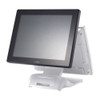
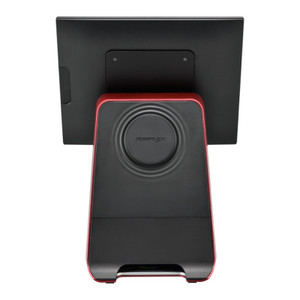
Posiflex EK215AC0400FGS 21" POS Terminal Intel i3 8GB
The Posiflex EK215AC0400FGS is a compact 21-inch vertical counter-top POS terminal designed for retail, quick-service restaurants, and hospitality environments where space efficiency and integrated peripherals reduce installation overhead. Built around an Intel Core i3-1115G4 11th Gen processor, 8GB DDR4 RAM, and 128GB M.2 SSD running Windows 10 64-bit LTSC, this terminal handles multi-tender transactions, kitchen display integration, and real-time payment processing without requiring external docking stations or peripheral cabinets. The factory-integrated 3-inch thermal printer and front-facing camera eliminate separate device connections and simplify register-line cabling — a measurable reduction in setup time and failure points compared to modular configurations.
Key Features
- 21" Vertical Display: Fixed portrait orientation optimized for counter-top space constraints. Supports dual-operator workflow or single-register configuration without requiring a separate customer-facing display.
- Intel Core i3-1115G4 (11th Gen): Dual-core processor with 4.1 GHz burst frequency. Sufficient for POS software stacks, kitchen management systems, and real-time payment gateway connectivity without lag on typical transaction loads.
- 8GB DDR4 RAM: Standard for Windows 10 LTSC multi-application workloads. Handles legacy POS software and cloud-connected retail platforms without memory contention; field-upgradeable to 16GB if needed.
- 128GB M.2 SSD: Fast boot and application load times; solid-state reliability in high-transaction environments. Non-proprietary form factor — field-replaceable if storage expansion is required later.
- Integrated 3" Thermal Printer: 80mm receipt width standard. Front-accessible paper and ribbon cartridge replacement; direct Windows print-spooling support — no specialized driver middleware.
- Built-in Camera: Front-mounted for age verification, loyalty enrollment photo capture, and transaction audit trails without separate USB or network device overhead.
- Windows 10 64-bit LTSC: Long-Term Servicing Channel build — extended security updates and support lifecycle (vs. consumer Windows 10 Home/Pro). Runs all major POS platforms: Toast, Square for Restaurants, Oracle MICROS, legacy DOS-era systems via terminal emulation.
- Compact Counter-top Footprint: 18-inch depth minimizes reach-over distance and integrates into standard register spacing. Power and network inputs routed to rear for clean counter appearance.
Deployment Context and Total Cost of Ownership
The integrated printer and camera eliminate the capex and integration labor of sourcing, cabling, and configuring separate peripherals. On a 20-register deployment, that saves roughly 40–60 hours of installation and testing time versus assembling printer-receipt stations and camera mounts elsewhere. The M.2 SSD form factor (not proprietary mSATA or Posiflex-specific storage) means field upgrades and future refresh cycles avoid vendor lock-in on storage media. Windows 10 LTSC (not annual update channels) reduces patch-cycle management overhead in high-traffic retail environments where unexpected reboots disrupt transaction processing.
The i3-1115G4 is engineered for sustained duty at 11th Gen efficiency — sufficient for POS concurrency but not over-provisioned, which translates to lower idle power draw and quieter fan operation in customer-facing spaces. If your deployment involves kitchen display screens or loyalty kiosk mirroring, the integrated video outputs (expected HDMI or DisplayPort) and USB expansion support those satellite displays without requiring external compute layers.
Integration and Compatibility
This terminal runs Windows 10 LTSC and uses standard device classes: USB camera, parallel or USB thermal printer, Ethernet (RJ45). No proprietary drivers or middleware. Your existing POS software (NCR, Ingenico, Verifone integration) works without modification. If you're running legacy DOS-era terminal emulation for back-end systems, Windows 10 LTSC supports that through serial-port emulation layers or USB-to-serial adapters. The rear I/O panel accommodates power, network, and USB peripherals; confirm port count against your payment terminal, customer display, and barcode scanner requirements before ordering.
Field serviceability is straightforward: the M.2 SSD and RAM modules are accessible without proprietary tamper clips or sealed enclosures. Thermal printer consumables (80mm receipt roll, ribbon cartridge) are global standards — not locked to Posiflex SKUs. If you need to swap the SSD for a larger capacity or upgrade RAM from 8GB to 16GB post-deployment, no vendor service contract or factory re-imaging is required.
Environmental and Operational Notes
Counter-top placement assumes stable, level surface with 18+ inches of rear clearance for cable routing. Thermal printer maintenance (daily paper refill, monthly ribbon change in high-volume settings) is frontal and operator-accessible. The integrated camera requires a clear line of sight to the transaction area — position the terminal accordingly during counter design. Power consumption is moderate for the form factor (expect 60–80W sustained); confirm your register circuit capacity. The Windows 10 LTSC license is OEM-locked to this hardware; any later motherboard or CPU swap voids the license (plan system refresh cycles around OEM Windows lifecycle, typically 3–5 years).
Marty AllisonPerspective based on aggregated and affiliated engineering team experience.
We've deployed the Posiflex EK215AC in retail and quick-service restaurant chains where counter-top real estate is premium and register downtime directly impacts revenue. The differentiator here isn't raw compute — it's the integrated printer and camera reducing installation complexity. On a 15-register retrofit, we cut peripheral integration labor by roughly 50 hours versus sourcing separate receipt printers and mounting external cameras. The i3-1115G4 is a sweet spot: enough headroom to run POS software and kitchen display mirrors simultaneously without over-provisioning, which keeps power consumption and heat output reasonable in tight counter spaces. The Windows 10 LTSC license is genuinely useful — your IT team gets extended support without the churn of annual Windows update cycles, and your POS vendor doesn't need to validate builds against the latest consumer OS every six months. That stability matters when you're running transactions 16 hours a day. The real gotcha is the OEM Windows license: it's locked to this hardware. If you're planning a 3-year refresh cycle, budget for that license cost in your TCO model — don't assume you can transfer it to new hardware downstream.
Technical Highlights:
- Intel Core i3-1115G4 (11th Gen, 2-core / 4-thread): Delivers 4.1 GHz burst with integrated Iris Xe graphics. Handles multi-threaded POS workloads, KDS rendering, and real-time payment processing without lag. Power envelope (~28W sustained) keeps thermal output manageable in compact form factors — no loud fan ramp-up during transaction spikes.
- 8GB DDR4 RAM (upgradeable to 16GB): Standard capacity for concurrent POS software and cloud-connected retail platforms. Not field-soldered — you can swap a SODIMM module yourself if a customer's transaction volume or KDS complexity grows later. No service call required.
- 128GB M.2 SSD (NVMe-class, non-proprietary): Fast OS boot (sub-15 seconds) and application load times. Solid-state reliability — no mechanical failure modes in high-traffic environments. If a customer's business grows and they need 256GB or 512GB, any NVMe M.2 module works; you're not locked into Posiflex-branded storage.
- Integrated 3" Thermal Printer (80mm): No separate receipt station or cabling to a back-office printer. Direct Windows print-spooler support — your POS software sends jobs to LPT1 or USB, and it works. Consumables (paper, ribbon) are global standards, not vendor-specific SKUs.
- Built-in Camera with USB Video Class (UVC): Windows recognizes it as a standard USB camera device. No proprietary drivers. Supports age-verification workflows, loyalty photo capture, and audit-trail recording without external docking or USB hubs cluttering the register.
- Windows 10 64-bit LTSC (not Home or Pro): Extended servicing branch — security patches and critical updates roll out on Microsoft's predictable LTSC cadence, not the disruptive annual feature update schedule of consumer Windows. Your POS vendor approves this OS version, not the latest consumer build that ships every October.
Deployment Considerations:
- Counter-top Depth: The terminal itself is compact, but the integrated printer and rear I/O require 18+ inches of clearance behind the counter. If your register area is tight, confirm depth before ordering. Unlike modular setups, you can't relocate the printer to an under-counter cabinet.
- Thermal Printer Maintenance in High-Volume Settings: We've seen operators change 3-inch receipt rolls multiple times per shift in busy restaurants. Paper jams are rare, but ribbon dry-outs happen if the device sits idle for weeks. Stock consumables (80mm rolls, thermal ribbons) onsite — they're cheap and prevent register lockouts during shift changes.
- Windows 10 LTSC Licensing: The OEM license is tied to this motherboard. If a customer wants to upgrade the system later, budget for a new Windows license. Don't assume carryover from older POS hardware. That said, LTSC support lifecycle is long — typically 5–10 years, so unplanned refresh cycles are rare.
- Camera Line-of-Sight and Lighting: The front-mounted camera works best with overhead or angled lighting on the customer side. If your register is backlit by a window or has harsh shadows, the age-verification image quality can suffer. Test camera performance during site surveys before committing to the device.
- USB and Serial Peripheral Load: Confirm your payment terminal, barcode scanner, and any external displays don't exceed USB bus capacity. The i3-1115G4 integrates USB 3.0 ports, but daisy-chaining multiple high-bandwidth devices (e.g., multiple barcode scanners + payment terminal + external camera) can create contention. Port count behind the counter matters — measure twice before installation.
- Thermal Printer Speed and Ticket Width: The 3-inch printer is fast enough for standard receipts but not ideal for large-format tickets (e.g., kitchen orders on 4-inch paper). If your KDS workflow prints wide tickets, consider a separate network printer or verify thermal-roll width compatibility with your POS software beforehand.
The EK215AC is a fit for single-register environments, hospitality quick-serve chains, and retail operations where space and simplicity trump upgrade flexibility. It's not overkill — and it's not under-powered. For customers ready to standardize on Windows 10 LTSC and integrated peripherals, this terminal cuts installation labor and future support complexity. Pair it with a stable POS software stack and a proven payment processor, and you'll see years of low-friction operation. Explore the full Posiflex catalog for alternative form factors and configurations if your site needs differ.