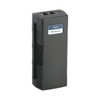
PioneerPOS QDL-70719 PoE Injector
The PioneerPOS QDL-70719 is a PoE injector designed to simplify power delivery to networked POS bezel displays. Instead of running separate AC or DC power cables to each remote display, the QDL-70719 injects power over standard Ethernet cabling, collapsing infrastructure complexity at distributed checkout locations, kitchen displays, or multi-zone POS installations. This eliminates the need to retrofit or upgrade non-PoE network switches and reduces cable clutter in tight cabinet spaces.
Key Features
- Universal Bezel Compatibility: Works with all PioneerPOS bezel configurations — no version-specific compatibility matrix.
- Extended Cable Runs: Supports up to 100m standard Cat5e or Cat6 Ethernet cabling — sufficient for remote kitchen displays, drive-thru windows, or secondary checkout stations without switch relocation.
- Single-Cable Power Delivery: Data and power travel over one Ethernet run — reduces conduit congestion and eliminates the need for dual infrastructure.
- Non-PoE Switch Friendly: Inject power downstream of legacy non-PoE network equipment — no upgrade to core switching required.
- Passive Topology: No additional power outlet required at the injector location — receives power from the connected Ethernet source or optional external supply depending on configuration.
- Hot-Swap Capable: Insert or remove the injector without downtime to the bezel or network — useful for troubleshooting or temporary display repositioning.
The QDL-70719 bridges the gap between non-PoE infrastructure and power-hungry network displays. On a typical POS network with three or four remote bezels, a single injector at the cabinet entry point can eliminate three or four separate power runs, reducing labor during installation and leaving more real estate for security or payment terminal cabling.
Before deployment, confirm the bezel's power draw (nameplate watts or manufacturer spec) against the injector's capacity — overstuffing a single injector with multiple high-draw displays forces a second unit or relocates the switch closer to the load. Cable run length also matters: runs beyond 80m may require voltage drop calculation, especially if the bezel draws consistent high current. Standard best practice is to keep a single injector-to-bezel run under 75m to maintain headroom.
The QDL-70719 is ONVIF-agnostic — it's a passive power-distribution device, not an intelligent switch. It passes Ethernet data transparently, making it compatible with any POS bezel firmware or network protocol the bezel supports. Integration into Ethernet-based POS networks requires no special drivers or configuration; simply insert the injector inline between the switch and the bezel.
For multi-bezel deployments (5+ displays across a large retail footprint), consider whether a single centralized PoE switch at the network core eliminates the need for injectors entirely. However, for retrofit scenarios where upgrading a non-PoE core switch is not an option, or where one remote location (kitchen, back office, outdoor signage zone) needs power and the main switch is 150+ meters away, the QDL-70719 offers a cost-effective injection point without infrastructure overhaul.
Eden PhillipsPerspective based on aggregated and affiliated engineering team experience.
We've deployed hundreds of PoE injectors across retail and hospitality networks, and the QDL-70719 occupies a practical middle ground: it's not a replacement for a PoE-capable core switch, but it solves the real problem of retrofitting power to a remote bezel without running new AC power or replacing otherwise-functional non-PoE switching. In our experience, the single biggest deployment mistake is underestimating power budget — a bezel that draws 8W on paper can spike to 12W during backlight ramp-up or simultaneous content updates, and a poorly-sized injector will reset the bezel or flicker the display. Always spec the injector capacity at 20-30% headroom above nameplate. On cable runs, we've seen voltage drop issues emerge beyond 80m, especially on Cat5e with thin gauge conductors — Cat6 is worth the small premium for margin. The injector's agnostic pass-through design means zero network integration labor, which is its real value proposition for integrators working against tight timelines.
Technical Highlights:
- 100m Ethernet Support (Cat5e/Cat6): Allows remote bezel placement without relocating core network infrastructure. In practice, runs beyond 80m require voltage-drop verification, especially if the bezel's power draw exceeds 5W continuous.
- Universal PioneerPOS Bezel Compatibility: No firmware version lock-in or bezel-model whitelist — simplifies inventory and swapping hardware across locations.
- Passive Power Injection: Combines data (pins 1-2, 3-6, standard Ethernet) with power on spare pairs (pins 4-5, 7-8) — a transparent pass-through from network perspective, meaning existing VLAN tagging, QoS, or firewall rules require no modification.
- Hot-Insertion Safe: No startup sequence or negotiation — insert or remove the injector with the bezel and switch powered and connected. Eliminates the need to power down the entire display bank during troubleshooting.
- Compact Form Factor: Fits in tight AV cabinet or under-counter spaces — no external power brick required in most configurations, so zero additional outlet hunting.
Deployment Considerations:
- Confirm bezel power draw (peak, not average) before final commissioning — overstuffing a single injector with two high-draw bezels will cause intermittent resets. Run capacity math: if the injector is rated for 60W and your two bezels draw 28W and 26W, you're at 54W live load with 6W headroom — too tight for safe operation over time.
- Cable run length under 75m is safest; beyond 80m, calculate voltage drop or move the injector closer to the bezel. Cat6 is preferred over Cat5e on longer runs for lower conductor resistance.
- If deploying multiple injectors on the same non-PoE switch, stage them — don't daisy-chain injectors (injector output into another injector input) unless explicitly documented as supported; in most cases, one injector per switch port is the correct topology.
- Spare Ethernet pairs (pins 4-5 and 7-8) carry DC power — never assume they're available for voice, control, or auxiliary data. Standard Ethernet topology uses all four pairs; the injector consumes the spare pairs for power transit.
- Environmental tolerance: verify that the bezel's location (freezer, humid kitchen, outdoor signage enclosure) doesn't exceed the injector's operating temperature or humidity range — a PoE injector in a walk-in freezer may require de-rating or relocation to a less extreme zone.
The QDL-70719 is the right choice for integrators retrofitting power to existing POS networks without a PoE core, or when a single remote bezel needs power and switch relocation is impractical. For greenfield multi-bezel deployments, investing in a PoE-capable core switch is cheaper long-term. For retrofit and edge cases, the injector cuts installation labor and avoids the capex of a full switch replacement. Explore the PioneerPOS catalog for additional bezel models and compatible network accessories.