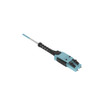
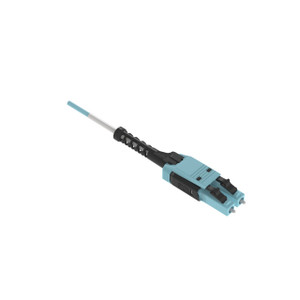
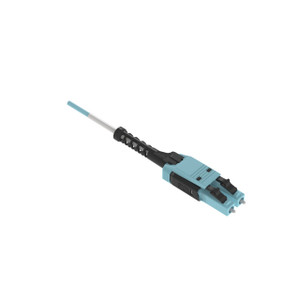
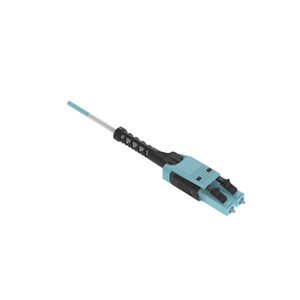
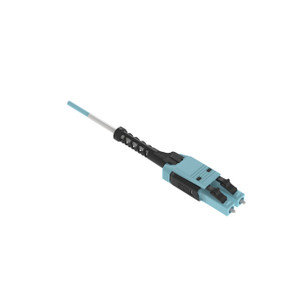
Panduit FS2RLU1U1NNM8.5 OM4+ LC Uniboot Duplex Fiber Patch Cord
Overview
The Panduit FS2RLU1U1NNM8.5 is a duplex OM4+ Signature Core™ fiber patch cord built for structured cabling environments where bend radius, cable management density, and low insertion loss all matter. At 8.5 meters with a 2.0mm cable diameter and LC Uniboot pull-boot connectors, it's designed for high-density rack connections and MDA-to-IDA runs in data centers and enterprise equipment rooms where a conventional duplex cable's two-connector footprint creates real congestion.
The LC Uniboot design consolidates what would normally be two separate fiber strands into a single, compact jacket — cutting occupied panel real estate roughly in half compared to a standard duplex LC assembly. That matters in 96-port or higher-density patch panels where cable management depth and airflow are already under pressure.
Key Features
- OM4+ Signature Core™ Fiber: OM4+ exceeds standard OM4 bandwidth specifications, supporting 100G applications over longer distances than base OM4. If your runs approach the upper end of OM4's 100G reach (typically 150m for 100GBASE-SR4), upgrading to OM4+ adds headroom without switching to single-mode — keeping transceiver costs lower.
- LC Uniboot Pull-Boot Connectors: The pull-boot design allows polarity reversal in the field without disconnecting the cable — you flip the boot rather than re-terminate. This is a significant labor saver during initial commissioning and any subsequent polarity troubleshooting in a Method B or Method C cabling scheme.
- Ultra-Low Insertion Loss: Panduit specifies ultra-low insertion loss on this assembly, meaning each mated connection contributes minimal attenuation to the link budget. In a multi-hop backbone (patch cord → cassette → trunk → cassette → patch cord), low per-connection IL directly translates to more link budget headroom for longer runs or additional connection points.
- 2.0mm Cable Diameter: The slim 2.0mm jacket routes easily through congested cable trays and ladder rack without the stiffness of 3.0mm assemblies. In high-density horizontal management, thinner cables reduce the bend radius at tray transitions and allow tighter bundling without exceeding minimum bend radius.
- LSZH Jacket: Low Smoke Zero Halogen jacket is required by code in many plenum and riser spaces in European installations and is increasingly specified in North American data centers under NFPA 262 and IEC 60754 compliance programs. In the event of a fire, LSZH compounds produce significantly less toxic smoke than PVC — a meaningful factor in occupied equipment rooms and dense data center floors.
- 8.5m Pre-Terminated Length: Factory terminations eliminate field-termination labor, splice loss variability, and quality inconsistency. The 8.5m length suits MDA-to-equipment runs, cross-connect to consolidation point links, and inter-rack connections in medium-sized equipment rooms — long enough to route cleanly through overhead tray without forcing unmanaged slack loops.
- Duplex Configuration: Standard duplex A-B polarity configuration integrates directly with SR transceivers, base-8 cassettes in Method B wiring, and conventional SFP+ or QSFP breakout assemblies without additional polarity adapters in most standard deployments.
Integration and Compatibility
The FS2RLU1U1NNM8.5 terminates with LC Uniboot connectors on both ends and is suited for OM4+ multimode infrastructure — compatible with 10GbE (10GBASE-SR), 25GbE (25GBASE-SR), 40GbE (40GBASE-SR4 via MPO breakout), and 100GbE (100GBASE-SR4) transceivers operating at 850nm. It integrates with Panduit's own Panduit fiber optic cassette systems, patch panels, and OM4+ trunk assemblies, as well as third-party LC-compatible panels from Corning, Leviton, Legrand, and CommScope.
The Uniboot form factor requires LC Uniboot-compatible panel ports or adapter sleeves — confirm your patch panel accepts Uniboot connectors before ordering if mixing with standard duplex LC infrastructure. For broader fiber optic cable planning across your structured cabling deployment, consider the full Panduit OM4+ trunk and cassette ecosystem to maintain consistent glass performance across every link segment.
LSZH jacket compliance makes this assembly suitable for installations under IEC 60794 and EN 50575 fire performance requirements. Verify local AHJ requirements before specifying LSZH vs. plenum-rated (OFNP) assemblies in North American plenum spaces — in some jurisdictions, LSZH does not substitute for OFNP rating.
When planning network infrastructure for high-density 10G/25G/100G environments, pair this patch cord with appropriately rated PoE switches and structured cabling components to maintain end-to-end performance. For guidance on fiber selection across different reach and speed requirements, the fiber optic buying guide covers OM3 vs. OM4 vs. OM4+ vs. OS2 tradeoffs in detail.
Frequently Asked Questions
Q: What fiber type does the FS2RLU1U1NNM8.5 use, and what speeds does it support?
A: The FS2RLU1U1NNM8.5 uses OM4+ multimode fiber, which supports 10GbE, 25GbE, 40GbE, and 100GbE applications at 850nm. OM4+ exceeds standard OM4 bandwidth performance, providing additional headroom for longer 100G runs compared to base OM4.
Q: What is an LC Uniboot connector and why does it matter?
A: An LC Uniboot connector houses both TX and RX fibers in a single boot rather than the traditional two-connector duplex assembly. This halves the panel port footprint in high-density installations and — critically — allows field polarity reversal by flipping the boot without re-terminating, saving labor during commissioning and troubleshooting.
Q: Is the LSZH jacket on the FS2RLU1U1NNM8.5 suitable for plenum spaces in North America?
A: LSZH (Low Smoke Zero Halogen) is commonly required in European installations and is increasingly specified in North American data centers. However, LSZH does not universally substitute for OFNP (plenum-rated) in North American jurisdictions — verify your local AHJ requirements before specifying LSZH in plenum airspaces.
Q: Can I reverse polarity on the FS2RLU1U1NNM8.5 in the field?
A: Yes. The LC Uniboot pull-boot design on the FS2RLU1U1NNM8.5 allows polarity to be reversed in the field by flipping the connector boot — no re-termination required. This is a significant advantage when commissioning or troubleshooting links in Method B or Method C polarity schemes.
Q: Does the 2.0mm cable diameter affect routing in congested cable management?
A: The slim 2.0mm jacket is easier to route through dense cable trays and horizontal managers than standard 3.0mm assemblies. It reduces the effective bend radius at tray transitions and allows tighter bundling while staying within minimum bend radius specifications.
Q: Is this patch cord compatible with third-party LC patch panels?
A: The LC Uniboot connectors are compatible with standard LC adapter sleeves found on most patch panels. However, confirm that your specific panel accepts Uniboot-style connectors — some very high-density panels use proprietary adapter formats. Standard LC duplex panels with split-duplex adapters will accept Uniboot connectors in most cases.
The FS2RLU1U1NNM8.5 is the specific assembly I reach for on high-density 100G multimode deployments where cable management is already a constraint. The 2.0mm LSZH jacket and LC Uniboot format together solve two problems at once: the slim cable routes through congested horizontal management without forcing wider bend radii, and the Uniboot's single-boot profile reclaims panel space that standard duplex LC assemblies waste on every port.
Technical Highlights:
- OM4+ Signature Core™ Fiber: OM4+ provides greater bandwidth headroom than standard OM4 — relevant when your 100GbE runs push toward the 150m reach limit of 100GBASE-SR4. It's the difference between a comfortable link budget and a marginal one that fails in-situ testing.
- Field-Reversible Polarity: The LC Uniboot pull-boot design lets you flip polarity in place — no new terminations, no pulling the cable. In a 96-port or higher-density cassette environment, the time saved across an entire commissioning run is meaningful, and it eliminates a common source of link-up failures.
- LSZH Jacket at 2.0mm: The LSZH compound is code-compliant for occupied equipment rooms under IEC fire performance standards, and the 2.0mm diameter keeps the cable flexible enough to manage cleanly in vertical and horizontal cable managers without the routing stiffness you get from heavier jacket constructions.
Deployment Considerations:
- Confirm your patch panel's adapter sleeves accept LC Uniboot connectors before specifying at scale — some proprietary high-density panels require Uniboot-specific adapters that are not interchangeable with standard duplex LC sleeves.
- LSZH jacket does not satisfy OFNP (plenum) ratings under NEC in North American plenum airspaces — verify AHJ requirements before deploying in ceiling plenums or raised-floor environments with plenum airflow.
This assembly is well-matched for MDA-to-IDA connections in enterprise data centers running 100G multimode backbones, and for inter-rack connections in colocation environments where high port density and cable management cleanliness are standing requirements.